

LAWSUITS NEWS & LEGAL INFORMATION
Automotive Lawsuits
Automobile crashes account for the majority of automotive lawsuits in the US. Each year car crashes kill 40,000 people, and almost 30 people die every day in motor vehicle crashes that involve an alcohol-impaired driver, and the number one killer of Americans under age 34. Automotive law also involves vehicle recalls, vehicle defects, predatory lending, financial fraud, automobile leasing, deceptive marketing, false advertising, and more..
Automotive lawyers can help you get a refund, upgrade or cash settlement for your defective car, truck or SUV. Several states have "Lemon Laws" to protect consumers of new cars, trucks, or SUVs from defects and failures. There may be a statute of limitations on filing lemon law lawsuits or other auto lawsuits so you should contact a lawyer as soon as possible.
Automotive lawyers can help you get a refund, upgrade or cash settlement for your defective car, truck or SUV. Several states have "Lemon Laws" to protect consumers of new cars, trucks, or SUVs from defects and failures. There may be a statute of limitations on filing lemon law lawsuits or other auto lawsuits so you should contact a lawyer as soon as possible.
FREE CASE EVALUATION
Send your automotive claim to a Lawyer who will review your claim at NO COST or obligation.
Get Legal Help Now
Get Legal Help Now
Defective Automobile
Auto defects can cause devastating injuries and wrongful death lawsuits: thousands of people are injured each year due to defectively designed automobiles. Auto accidents are often the result of external causes, such as faulty or defective manufacturing of the automobile. The courts define a defective product as one that is unreasonably dangerous as designed, or the vehicle is not safe for its intended use as designed, or it is more dangerous than an ordinary consumer would expect. A recent example is General Motors faulty ignition switch, which caused many serious injuries and 13 fatalities.
Some common vehicle defects include defective brakes, bad tires and faulty air-bags. Auto defects can result in the following:
- Steering components that break suddenly causing partial or complete loss of vehicle control. ?
- Airbag failure caused by airbags that fail to deploy or do not deploy in a timely manner.
- Door latch failure caused by doors that open during an accident allowing passengers to be ejected
- Gasoline fire caused by a defective gas tank or fuel line.
- Glass breakage caused by weak glass glazing that allows occupants to be ejected from the vehicle.
- Rollover accident caused by vehicles prone to rolling over.
- Roof crush caused by a weak roof that collapses into the occupant compartment during a rollover.
- Seat belt failure caused by seat belts that unlatch, tear, spool out or otherwise fail during an accident; and/or caused by weak seats that collapse backwards, thereby injuring or ejecting its occupants.
- Child safety seats that contain defective safety belts, buckles, or components that create a risk of injury
Defective car lawsuits may be brought against the automaker or dealer responsible for either not fixing the damage or selling it regardless of the knowledge of a defect. Automobiles with recalled parts can cause accidents and injury to purchasers who are unaware of the defects. Manufacturers can be held liable for certain accidents that occur because of faulty design or manufacturing.
In cases where the design is acceptable, there may be problems attributed to the manufacturing process of the vehicles. The manufacturer may have created a flaw in the product during the manufacturing process, whether by accident or by negligence.
Vehicle Recalls
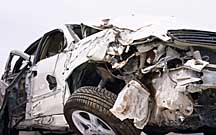 Automobile recalls and vehicle defective equipment recalls are imperative to motor vehicle safety. Since The National Traffic and Motor Vehicle Safety Act was enacted in 1966, more than 299 million cars, trucks, buses, recreational vehicles, motorcycles and mopeds have been recalled to correct safety defects. Add 43 million tires and 84 million pieces of motor vehicle equipment, including child seats that have been recalled.
Vehicle recalls can be initiated voluntarily by the manufacturer, by the National Highway Traffic Safety Administration (NHTSA), or by vehicle owner complaints.
Also, certain design and performance problems may occur as vehicles age with use. Owners often report these problems to NHTSA and can often spur a defect investigation, which can lead to a vehicle recall.
If a safety defect is discovered, the manufacturer must notify NHTSA, as well as registered vehicle owners, dealers, and distributors. If your vehicle is recalled, the manufacturer must notify you by first-class mail and explain potential safety hazards presented by the defect. The manufacturer must explain how to get the problem corrected, that corrections are to be made at no charge, when the remedy will be available, how long the remedy will take to perform, and whom to contact if there is a problem in obtaining the free recall work.
GM Recalls
For the first half of 2014 alone, GM had recalled more than 29 million vehicles involving 54 separate recalls.By July, 2014 the General Motors faulty ignition recall involved 8 million vehicles worldwide, including a separate recall involving different ignition switches on Cobalts and Saturn Ions switches.
GM also recalled almost 30,000 Chevrolet Cruze sedans in June. The inflator in the driver’s front air bag may rupture and/or the air bag may not inflate during air bag deployment.
Chrysler Recalls
Since 2005, Chrysler has issued 10 recalls. In July 2014, almost half a million Chrysler vehicles were recalled, including Dodge Caravan and Chrysler Town and Country models for the ignition switches that may move out of the run position, turning off the engine or causing the air bags to not deploy in the event of a crash.Another recall in June 2014 affects almost 11,000 SUVs (2014 Dodge Durangos and Jeep Cherokees, Grand Cherokees and high-performance Grand Cherokee SRTs assembled between Jan. 16 and April 17) The auto defect can cause unintended acceleration in cruise-control mode, according to Reuters (Jun 5, 2014).
Toyota Recall
On June 11, 2104 the Times reported that Toyota issued a recall affecting 2.3 million vehicles worldwide (766,000 vehicles in the US) because a defective air bag component made by Takata Corporation could injure passengers. Vehicles recalled are the 2003-4 Toyota Corolla, Matrix and Tundra, the 2002-4 Sequoia sport utility vehicle and the 2002-4 Lexus SC 430 luxury coupe.Nissan Recall
Nissan has recalled its LEAF vehicles from 2014 for a problem with the motor control circuit board which may cause the vehicle to suddenly shut down.Other Recalls
July 1: 35,000 Hyundai Elantra Touring vehicles from 2010-2012, Recalled for a support bracket that may become displaced during a side air bag deployment.June 30: 464,712 Chevrolet Camaro vehicles from 2010-2014, Recalled for the switches that may move out of the run position, turning off the engine or causing the air bags to not deploy in the event of a crash.
Visit the National Highway Traffic Safety Administration's (NHTSA) recalls for updates on vehicle recalls and to check whether your vehicle has been recalled.
Defective Vehicle Lawsuit
The manufacturer has three options under the law once a defect has been determined: repair, replace or refund. If damages cannot be rectified, consider filing a product liability lawsuit against the manufacturer. A defective vehicle lawsuit must claim that that the car was defective when you first purchased the vehicle, that you were using the vehicle in a manner intended by the manufacturer, and that you suffered damages as a result of the defect in the vehicle. You should seek legal help sooner than later as the statute of limitations may affect the chances of you filing a lawsuit against the manufacturer.Lemon Law
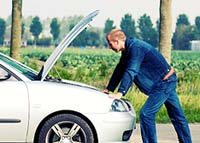 The sale of defective vehicles has a set of rules known as “lemon laws.” A "lemon car" generally means an auto with defects. Given there are about 15,000 components in the average auto, include human error on the assembly line and it's not surprising that a substantial number of "lemon cars" are produced. The lemon law was established to protect your consumer rights by providing legal recourse after the purchase or lease of a defective new motor vehicle which fails to meet the manufacturer's warranty after a reasonable number of repair attempts.
If a manufacturer refuses or fails to offer a replacement or a refund for your lemon car, you have the legal right to file a civil action in a court of law. When you win a lemon law case, the manufacturer must:
- Provide a replacement or a refund
- Pay the consumer's costs and expenses, including attorney's fees
- The manufacturer can also be liable for a "civil penalty" of up to twice the consumer's damages (usually the price of the defective goods)
Financial Fraud
 State and federal rules are in place to protect consumers from auto dealer fraud when they shop for vehicles. Laws are designed to punish dealerships that take advantage of their customers and deal with deception and unfair practices by dealers. Auto dealer fraud law includes the FTC regulations (the Used Car Rule), other federal and state consumer protection laws, and the common law tort of fraud.
 Many car dealers use financial fraud to sell their vehicles. Car dealers can trick you out of a low car loan rate (APR) you thought you had committed to. For instance, you purchase a car and sign for a low APR. A week later the dealer phones and says you didn't qualify for that low interest - apparently the loan you thought you signed was "subject to loan approval". Then they ask you for more money and increase your payments. To avoid this scam, don't finance your car at the dealership.
Another trick, called the "Straw Purchase" happens when the dealer says you have a terrible credit score and need a co-signer. However, the dealer knows your credit score is so bad you would never qualify for a loan. He gets you to find a co-signer for the loan, but in the paper shuffle, it ends up that the "co-signer" is the actual purchaser of the vehicle.
Some car dealers can "forget to pay off your trade-in". You trade in a car that you still owe payments on, and the dealer is supposed to pay off the loan for you and add the amount to your new purchase. Then the bank calls: the dealer has not paid off the loan, the car is still in your name, the bank is charging late payments to your credit rating and you have no contract to prove that the dealer said he would pay off the loan.
Fraudulent Advertising
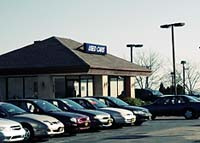 In some cases an unscrupulous dealer will try to sell you a car that has been in a wreck, telling you it is in great shape. The car has the federally required "As Is, No Warranty" sticker on it, which means you cannot return the car because you agreed to accept any damages. Try to get at least a 30 day warranty from the dealer, and always check the car by its VIN (Vehicle Identification Number) number through a service like Carfax.
Some unscrupulous individuals place sale ads for a car on eBay for instance, at a price much lower than similar vehicles. Then they want you to use an escrow service they recommend to send your money to, via Western Union or other wire service. Of course the escrow company is their own company, and once you wire the money, there is no way to get it back. Never wire money, nor use the dealer's recommended escrow service.
Dealers advertise that they can get you out of your current lease or loan. However, what really happens is that the dealer pays off your lease or loan, and then adds that amount to your new lease or loan. Next, they spread out the payments so that you don't notice you are still paying for your previous car, as well as your new car, and have twice the debt you had before. For more information on fraud law, visit the American Association of Motor Vehicle Administrators (AAMVA).
Vehicle Fraud Lawsuit
If you are the victim of auto fraud, consider bringing a civil (tort) action against the auto dealer. An experienced attorney will explain that you must show the dealer omitted or misrepresented material facts, resulting in a financial loss to you. If fraud can be proven, you may be entitled to a number of remedies, including surrender of an unwanted vehicle and having the court order a refund of all payments made toward the purchase.You may also be allowed to cancel any outstanding loan balances or obligations, and receive compensation for wrongful repossession of the vehicle, if that occurred. In some extraordinary cases, you could be awarded punitive damages.
If fraud has been proven, chances are you aren’t the only victim. Once the fraud is made public, other consumers may have similar problems, which can lead to a class action lawsuit alleging Dealership Fraud.
AUTOMOTIVE HOT ISSUES
- Deceitful Auto Emissionsalleging use of defeat devices to pass emissions tests
- California Car Accidents alleging liability for personal injuries caused by car, truck, bus, motorcycle or other vehicle accidents.
- Takata Corporation and Honda Motor Co Facing Defective Airbag Class Action Lawsuit
AUTOMOTIVE LAWSUITS
- California Car Accidents alleging liability for personal injuries caused by car, truck, bus, motorcycle or other vehicle accidents.
- Volkswagen Dealership LawsuitVW Recalled for Cheating on Emission Controls
- General Motors Recalls 2.6 million vehicles for faulty ignition problems
FEATURED LAW FIRM

At Glotzer & Leib, LLP, our Los Angeles personal injury attorneys have decades of combined experience helping accident victims. We handle auto accidents cases, wrongful death claims, and more.
CONTACT THIS LAWYER
Automotive Legal Help
You may have a case. You may receive money for your suffering. Click on the link below to send your complaint to a lawyer whom will evaluate your claim at no cost or obligation.
Updated on