

LAWSUITS NEWS & LEGAL INFORMATION
Whistleblower Laws and Lawsuits
A whistleblower is a person who exposes information or an activity that is deemed unethical or illegal and believed to violate a law or regulation within a public or private organization. Such action can result in a whistleblower lawsuit brought against a public or private entity. The whistle blower, who is often involved in some form of misconduct, can bring information or allegations either internally or externally. Either way, they risk retaliation from those accused of wrongdoing, particularly from the private sector. However, there are laws in place to protect whistleblower rights, including laws to ensure that a whistleblower is not retaliated against.
FREE CASE EVALUATION
Send your whistleblower claim to a Lawyer who will review your claim at NO COST or obligation.
Get Legal Help Now
Get Legal Help Now
Quick-Links to important Employment sections on this page:
Whistleblowers and Whistleblower Laws
 A whistle blower can be anyone who witnesses and reports misconduct to people or entities that can take corrective action through whistleblower policy. A whistleblower is usually an employee, former employee or member of an organization, including a corporation or government agency, who reports wrongdoing either internally (i.e., to other people within an organization) or externally, including lawyers, the federal government, local and state agencies, watchdog and law enforcement agencies, or the media.
 Historically, whistleblowers were viewed by society as disloyal to the company but a cultural shift, and helped by the media, now perceives them more like heroes than traitors. However, whistleblowers can still pay a high price for doing the right thing, so they are often substantially rewarded for their information. (If a whistleblower is terminated or otherwise retaliated against, whistleblower lawyers can help file a wrongful termination lawsuit. Depending upon the quality of evidence provided, whistleblowers can receive between 10 and 30 percent of the amount recovered.
According to qui tam provisions of the False Claims Act, if the federal government recovers money because of information a whistleblower provides, the whistleblower can receive from 15 to 25 percent of the amount recovered. In many states, similar laws reward those who blow the whistle on fraud against the state government. However, 80 percent of cases filed under the False Claims Act end with the whistleblower walking away with nothing, according to Taxpayers Against Fraud, a whistleblower advocacy group.
Many misconduct cases in healthcare fraud, pharmaceutical and defense contractor cases are still brought under the False Claims Act. Since the Dodd-Frank Act was enacted, an increased growth in fraud cases have generally brought under the SEC and CFTC programs.
In 1959, America had one whistleblower law, and it was the only country to have such a law. Today, 59 state and federal laws cover various agencies. The SEC, IRS, U.S. Commodity Futures Trading Commission and the Occupational Safety and Health Administration have their own whistleblower programs. According to the Government Accountability Project, 33 nations now have whistleblower laws and another 60 countries are enacting laws that cover a specific sector, such as health care or finance.
Whistleblower Retaliation Rights and Lawsuits
Whistleblower cases can involve stock/securities fraud, money laundering, health threats, safety violations, healthcare fraud and malpractice, corporate corruption, and more. Each year, hundreds of whistleblower cases are filed and many are settled for millions of dollars. Whistleblower cases are designed to hold public entities accountable while protecting and compensating the victim(s) and/or the whistleblower.Whistleblowers’ rights against retaliation increased in recent years. For instance, workers can bring whistleblower retaliation claims under OSHA in a variety of industries, including banks. A recent successful whistleblower case accused a bank of opening unauthorized bank accounts.
The Whistleblower News Review reported that 2016 saw whistleblower protections strengthen. “Favorable judgments in anti-retaliation claims continue to set important precedents. As companies get creative with new forms of retaliation, the government is sending clear signals that it will go to great lengths to protect whistleblowers. Considering the statistics from the last fiscal year and the 2009-2016 period as a whole, it is clear that the False Claims Act has not only returned billions of dollars to government coffers, but also contributed to transparency, justice, and ethical behavior across America.”
For example, the National Law Journal (June 2017) reported that Sanford Wadler, general counsel of Bio-Rad Laboratories for 25 years, won $14.5 million after claiming he was fired for reporting potential bribery issues to Bio-Rad board of directors. The FCPA whistleblower-retaliation case brought under the Sarbanes-Oxley Act (SOX), the Dodd-Frank Act, and California state law.
Whistleblower Laws
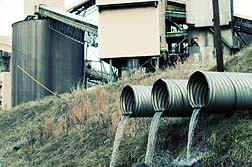 There are a number of laws that protect whistleblowers from retaliation for their actions. These include the Occupational Safety and Health Act, Sarbanes-Oxley Act, Surface Transportation Act, Toxic Substances Control Act and the Safe Drinking Water Act, to name a few.
The Whistleblower Protection Act of 1989 is a U.S. federal law that protects federal government workers who report agency misconduct. A federal agency violates the Whistleblower Protection Act if agency authorities take (or threaten to take) retaliatory personnel action against any employee or applicant because of disclosure of information by that employee or applicant.
In July 2010, the Dodd-Frank Wall Street Reform and Consumer Protection Act went into effect, and contains increased incentives for securities fraud whistleblowers. It authorizes the Securities and Exchange Commission (SEC) to reward those who expose fraud at public companies with from 10 to 30 percent of the amount it recovers over $1 million. The SEC is anticipating a significant increase in complaints, such as of securities fraud, including manipulation of a security's price or volume, Ponzi schemes, insider trading, theft, bribery of foreign officials, and more.
Some states have their own laws regarding whistleblowers. For example, New Jersey has the Conscientious Employee Protection Act, to protect employees who report or threaten to report illegal activity on the part of the employer. California has independent qui tam laws and procedures. The California False Claims Act (CFCA) prevents employers from retaliating against employees who have disclosed information to the government.
The statute of limitations for whistleblower lawsuits varies, depending on the circumstances. For example, the Occupational Safety and Health Administration (OSHA) administers over 20 whistleblower protection laws, one act that prohibits retaliation against employees who complain about unsafe or unhealthful conditions or exercise other rights under the Act. Each law has a filing deadline, varying from 30 – 180 days, which starts when the retaliatory action occurs.
The False Claims Act helps to prevent fraud by those who do business with the federal government. The FCA rewards and protects whistleblowers who expose companies, individuals, and contractors who defraud the government with respect to government funds, including grants and payments from the government for goods and services.
Most whistle-blower laws are intended to protect public-sector employees who report violations affecting public health and safety. Because their work involves public protection, whistleblowing in the public sector organization is more likely to result in criminal charges and possible custodial sentences. A whistleblower who chooses to accuse a private sector organization or agency is more likely to face retaliation.
As of 2017, the s Financial CHOICE Act is working through Congress. Currently the SEC is allowed to make whistleblower awards to co-conspirators even if they were involved in the wrongdoing, so long as the co-conspirators were not criminally charged. The Financial CHOICE Act plans to prohibit awards to co-conspirators regardless of whether they are criminally convicted.
Stocks and Securities
Stock and securities fraud happens when the issuer of a stock or security makes false claims about that stock or security. A whistleblower may come forward to identify either the stockbroker or the brokerage firm that is engaging in securities fraud.The Sarbanes-Oxley Act of 2002, sometimes referred to as the "Corporate and Auditing Accountability and Responsibility Act" is a federal law that sets standards for all US public companies. Among the regulations included in Sarbanes-Oxley are individual responsibility for accurate and complete financial reports (on the part of senior executives), external auditor independence, enhanced financial disclosures and corporate fraud accountability. Sarbanes-Oxley also established new protections for corporate whistleblowers.
Among the protections offered to whistleblowers by Sarbanes-Oxley are: employment-based protections prohibiting companies from wrongfully firing whistleblowers; the creation of internal and independent "audit committees," which include procedures for employees to file whistleblower complaints; regulations requiring attorneys in certain circumstances to become whistleblowers against their client; regulations making it illegal for a company or executive to retaliate against an employee who becomes a whistleblower; and a section allowing the SEC to enforce the Sarbanes-Oxley act, including the whistleblower provisions.
Government/Qui Tam
 Whistleblower cases that take aim at federal government corruption are known as
qui tam whistleblower lawsuits. Qui tam whistleblowers who successfully file an action receive between 15 percent and 30 percent of the money recovered for the government. The qui tam laws also protect the individual from retaliation for filing or investigating a potential qui tam lawsuit. Such situations might arise when a company overbills the government, evades taxes, commits accounting fraud, falsely bills Medicare or the military or submits other fraudulent invoices to the government.
Whistleblower cases that take aim at federal government corruption are known as
qui tam whistleblower lawsuits. Qui tam whistleblowers who successfully file an action receive between 15 percent and 30 percent of the money recovered for the government. The qui tam laws also protect the individual from retaliation for filing or investigating a potential qui tam lawsuit. Such situations might arise when a company overbills the government, evades taxes, commits accounting fraud, falsely bills Medicare or the military or submits other fraudulent invoices to the government.In 2012 alone, almost $5 billion was recovered by the United States Department of Justice through qui tam lawsuits. The year before, the federal government brought in a record $3 billion from whistleblower cases. U.S. Whistleblowers filed over 700 qui tam suits in fiscal year 2016 and received $519 million in awards.
Healthcare Fraud
Whistleblower malpractice lawsuits can be filed alleging that a professional has committed misconduct. Examples of whistleblower malpractice suits include allegations that doctors performed unnecessary procedures, improperly sterilized their equipment or that administration at hospitals and medical centers ignored complaints of wrongdoing on the part of medical staff.Healthcare fraud has become a top priority for the Department of Justice (DOJ). In July of 2017 the DOJ announced a $1.3 billion crackdown on healthcare professionals involved in schemes to defraud Medicaid, Medicare, and healthcare services for US veterans and their families. The DOJ charged 412 healthcare professionals with making false claims. The DOJ claims that those accused wrote and issued prescriptions for “medically unnecessary prescription drugs” and “compounded medications that often were never even purchased and/or distributed to beneficiaries”. The DOJ also alleges individuals were involved in “the unlawful distribution of opioids and other prescription narcotics”.
Healthcare industry recoveries from allegedly dishonest pharmaceutical companies, hospitals, medical device manufacturers, nursing homes, and individual physicians on a federal level amounted to $2.5 billion in 2016. That year saw the DOJ increasingly focus on holding individuals accountable. As well, there is an increasing focus on admissions of guilt from both corporations and individuals.
SEC Fraud
 The Securities and Exchange Commission (SEC) rewards SEC whistleblowers who expose fraud at public companies from 10 to 30 percent of the amount it recovers over $1 million. The SEC has reported a significant increase in complaints, and in particular security fraud including manipulation of a security's price or volume, Ponzi schemes, insider trading, theft, bribery of foreign officials, and more. In a press release(May 2017), the agency announced that, since the program began in 2011, it has levied nearly $1 billion in penalties and awarded some $154 million to 44 whistleblowers. Unlike other kinds of whistle blowers, SEC whistle blowers can remain anonymous forever.
Also since 2011, the SEC has recovered $975 million in enforcement actions ranging from elaborate investment schemes to financial advisors working to benefit themselves rather than their investors. Up until 2015 the SEC received 10,540 with the bulk of the tips coming from California (2,046) with New York State coming in second (950). It also received tips from outside the US – the top five locations were the UK, Canada, China, India and Australia.
Once a tip is received, attorneys in the SEC enforcement division evaluate the information and decide if enforcement action is necessary, then the SEC has nine months from passage to implement rules governing the process.
Tax Fraud and Corporate Corruption
Whistleblower lawsuits may also involve corporate corruption. Allegations against corporations include anti-competitive practices, price fixing, failing to pay taxes, lying about debt and other misconduct. The Internal Revenue Service launched a program focusing on tax fraud in 2006. But the Dodd-Frank Reform Act, which was part of the Obama Administration's financial regulatory reform, provides important incentives for those who discover fraudulent activity in a wide range of securities industry jobs such as brokers, branch managers, compliance officers, quantitative analysts and data system programmers, senior managers and even board members.The Act says that any individual who discloses "original information" that leads to a securities law conviction will be eligible to receive as much as 30 percent of the total sanctions recovered by the CFTC (Commodity Futures Trading Commission) or the SEC (Securities & Exchange Commission).
The Dodd-Frank Act is similar to existing whistleblower programs to report tax fraud and insider trading. It also has an anti-retaliation provision which allows whistleblowers whose employers have retaliated against them to sue for reinstatement of their job, double back pay, costs and legal fees.
In July 2017 The U.S. Department of Labor on Friday ordered Wells Fargo to pay $575,000 and to rehire a whistleblower the bank had dismissed in September 2011 after the former employee raised concerns over the opening of customer accounts without their knowledge, according to Reuters.In a different case, the Department of Labor in April ordered Wells to reinstate a whistleblower, though that former staffer's concerns related to bank, mail and wire fraud -things that were not at issue in the above scandal.
Environmental Fraud, including Health Threats and Safety Violations
Companies might take part in numerous activities that pose a health threat or safety violation. These include acts such as illegal dumping of waste or illegal storage of toxic materials, which could affect the general public, or improper safety procedures that affect the health of employees. Large-scale whistleblower lawsuits involving health threats include lawsuits against the tobacco industry.Other Whistleblower Cases
The most noteworthy whistleblower case involved a former FBI official who leaked information about President Richard Nixon's association with Watergate. The informant's identity was kept secret for 30 years until he identified himself in 2005.The vice-president of Enron, Sherron Watkins in 2001 blew the whistle on Enron's major accounting cover-up. The company and its auditors hid billions of dollars in debt, lied to their shareholders, and avoided paying federal income tax for years.
Depicted in a Hollywood film, The Insider shows the real-life story of how CBS reporters uncovered the malpractice and corruption of the tobacco industry and attempted to push past the corporate politics to have it aired on 60 Minutes.
Other whistleblower cases have involved misconduct in the FBI, the failure of government officials to protect the environment, illegal storage of hazardous waste, dumping of raw sewage and wastewater violations, nuclear accidents, corporate cover-ups, and more.
WHISTLEBLOWER HOT ISSUES
- Whistleblower Lawsuits reporting misconduct or violations of laws or regulations.
- Qui Tam Whistleblower alleging fraud against the government reported by an individual acting as a government whistleblower.
WHISTLEBLOWER LAWSUITS
- Qui Tam Whistleblower alleging fraud against the government reported by an individual acting as a government whistleblower.
- Healthcare Fraud & Healthcare Whistleblower Lawsuits attempts to defraud the government, performing surgeries that are unnecessary, using medical devices that are not approved by the FDA in surgeries, or accepting kickbacks
- Tax Fraud Whistleblowers are protected under the Tax Relief and Health Act of 2006
FEATURED LAW FIRM

Leveraging their vast knowledge and years of seasoned expertise, Bracker & Marcus offer unparalleled guidance, assisting whistleblowers at every stage of their qui tam case journey.
CONTACT THIS LAWYER
Whistleblower Legal Help
Blowing the whistle can get very complicated. Whistleblower attorneys advise anyone with a plan to “blow the whistle” should first seek out a lawyer. If you wait too long or go to the FBI alone there is a chance that you could miss a claim and a whistleblower award, or even worse, you could risk being found complicit in the fraud.
If you have identified illegal behavior by individuals or groups from a corporation or a government agency, please send your complaint to a lawyer by clicking on the link below. All your information will be kept private and confidential, and will only be sent to a lawyer who specializes in Whistleblower cases. There is no cost or obligation to have an attorney evaluate your whistleblower claim.
If you have identified illegal behavior by individuals or groups from a corporation or a government agency, please send your complaint to a lawyer by clicking on the link below. All your information will be kept private and confidential, and will only be sent to a lawyer who specializes in Whistleblower cases. There is no cost or obligation to have an attorney evaluate your whistleblower claim.
Updated on