Pleading Ignorance Archive
The Drugs You Get from Your Kitchen Faucet
February 18th, 2011. By Hunter West
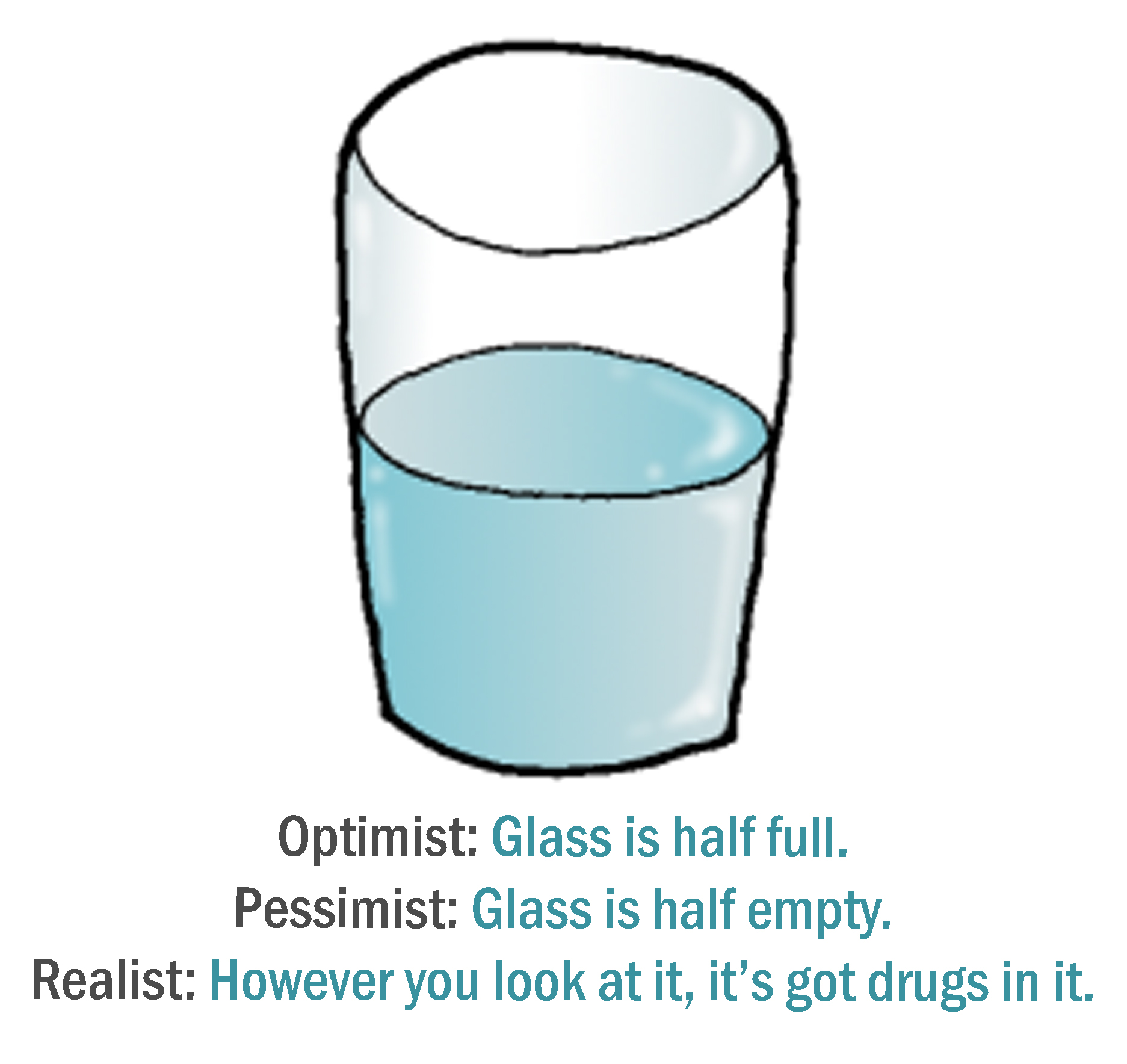 The next time I look to buy fish—and I don’t care if it’s fresh or frozen—I’m gonna want to make sure the fish was happy before it met its ultimate end.
If that fish came from the St. Lawrence Seaway, there’s a good chance my intended dinner was, indeed happy. Probably high on Prozac.
Huh? Fish on Prozac? You’ve got to be kidding, you say. But no, the sad truth is that our fish and aquatic wildlife is on Prozac and lord knows what else from the stuff we put in the water. And we’re doing it to them…
Here’s the deal. A peer-reviewed study conducted by the Universite de Montreal together with Environment Canada and published last month in the journal Chemosphere found that fish swimming in the St. Lawrence Seaway were found to have copious amounts of antidepressants in their systems.
Most of the stuff was found in their liver. A lesser amount was found in their brains. Okay, so maybe they weren’t all that happy after all.
The least amount—and you’ll be happy to hear this—was found in muscle tissue which is typically the stuff we humans eat. UdeM professor Sebastien Sauve, a co-author of the study, said in comments published January 22nd in the Montreal Gazette that he isn’t worried about consumers ingesting Read the rest of this entry »
6 Tips to Avoid a Ponzi Scheme
February 3rd, 2011. By Kristine B
They are two words that no investor wants to hear: Ponzi scheme. As in, your money was invested in a Ponzi scheme. People whose money winds up in a Ponzi scheme often have a lot of difficulty getting their money back, especially if they were among the last to invest. There are ways to watch for Ponzi schemes and avoid them. These tips won’t guarantee that you’ll never invest in a Ponzi scheme, but they’ll at least help to reduce the likelihood of it happening.
What is a Ponzi Scheme?
A Ponzi scheme is an investment scheme in which money from new investors is used to pay out previous (or existing) investors. So, when I invest in the scheme (unknowingly, of course), my money is used to pay the would be “ROI” (return on investment) to the people already invested in the scheme. So, in other words, very little real investing occurs. The Ponzi scheme collapses when one of three things happens: there are not enough new investors to pay out previous investors; when large numbers of previous investors demand to be paid out; or when someone becomes suspicious about where the money is coming from. In recent times, the Bernie Madoff Ponzi scheme made headlines—and Carr Miller is now facing allegations of a Ponzi scheme as well.
The Downside of Ponzi Schemes
Because the money isn’t really invested as it’s purported to be, the scheme requires new investors to keep it going. But those new investors, if no one else invests after them, won’t get their money back. Their money has either gone to previous investors or has gone to fund a lavish lifestyle on the part of the person in charge of the scheme. Nice, huh? All your hard-earned money just bought some guy a fancy car and a trip to a luxury resort, while you thought it was sitting in honest investments.
Even previous investors who were paid out might not be safe. Why? Because the money they were given was illegally gained. So they might have to give some or all of it back to a trustee who then determines how to split up whatever money remains—if any does.
How to Avoid Ponzi Schemes
1) Don’t invest with someone just because your friends/colleagues/associates do.
There’s no guarantee that they’ve done their homework about an investment. Furthermore, if Read the rest of this entry »
Can I still File a Lawsuit if there’s already a Settlement?
January 18th, 2011. By Kristine B
 Good question—and this week, Pleading Ignorance answers it. It’s a question a lot of people have: Can I still file a lawsuit if there’s already a settlement? I spoke with attorney J. Benton Stewart of Stewart Law, P.L.L.C. to better understand the in’s and out’s of class action settlements and when it’s best to file your lawsuit.
Before we can answer that question, we have to first understand how class action lawsuits and settlements work.
Class action lawsuits can be opt-in or opt-out lawsuits.
Opt-in Class Action Lawsuit
If they are opt-in, then you have to ask to be part of the lawsuit. Typically, with an opt-in class action, you have to submit a claim form indicating that you wish to be a part of the class a ction—you have to officially “opt in”. If on opt-in class action lawsuit settles and you weren’t part of the class, you’re still free to bring about your own lawsuit. If you were part of the class, then you can’t bring one of your own.
Opt-out Class Action Lawsuit
In an opt-out lawsuit, you’re automatically part of the class regardless of whether or not you meant to be—you have to tell the claims administrator that you don’t want to be part of the class before you’ll be taken out. In this situation, if you haven’t told them that you do not want to be part of the class and the lawsuit settles, you can’t bring your own lawsuit. Basically, if you’re included in a class that settles, either because you chose to be or because you didn’t opt-out, you can’t bring your own lawsuit.
Bottom line, if you think you may want to file your own lawsuit against the defendant in the class action lawsuit, you cannot have been a member of the class (ie, the plaintiffs) of the class action. Still with me?
Of course, there’s more to it than that because of how settlements normally work.
Class Action Lawsuit Settlements
Once a settlement is announced, usually a pool of money is set aside to pay all the claims. Instead Read the rest of this entry »
Understanding the 120-Day Deadline for VA Claim Appeals
December 15th, 2010. By Kristine B
It’s a lawsuit that could have huge implications for US veterans trying to claim veterans’ benefits: A lawsuit being heard by the Supreme Court asks the justices to rule that lower-court judges can be lenient in extending the 120-day deadline for filing appeals regarding denied claims. Although the issue might seem open and shut to some of us—let’s just do the right thing for our veterans, already—lawyers for the VA say Congress didn’t allow for judges to be flexible with the deadline. This week, Pleading Ignorance looks at the deadline issue and asks when our veterans will be treated fairly. 
So, here’s the issue in a nutshell. A veteran files a claim with the VA and that claim is denied. The veteran then has 120 days to file an appeal of the denial. If he misses the 120-day deadline, he’s out of luck. His appeal won’t be heard. Okay, I know what you’re thinking: a deadline is a deadline. Don’t miss the deadline and you’re fine.
But the problem is this: veterans file claims because of health problems. Let’s say the veteran has been badly injured and is in the hospital for nine months, with no one to help him through the claims process. How is he supposed to file the claim from the hospital when there’s a chance he might not even know the claim was denied? How is he supposed to take care of the paperwork from his hospital bed?
Or, what about veterans who deal with issues such as post-traumatic stress disorder (PTSD) or other psychological problems that impair their ability to understand the deadlines or the paperwork involved? The very condition that requires them to file a claim could be what stops them from being able to submit an appeal after a denied claim.
Look, I’m not saying we should give them 10 years to file appeals. But for crying out loud, they served our country—probably for a lot longer than 120 days. Is there no way we can be flexible in dealing with veterans who have health problems that prevent them from filing an appeal in 120 days?
The case before the Supreme Court is a perfect example of the unfairness of the system. David Henderson was a Korean War veteran who was diagnosed with paranoid schizophrenia and Read the rest of this entry »
What Does Mitigating Damages Mean?
November 29th, 2010. By Kristine B
“Mitigation of Damages”.
It’s a phrase used every so often in relation to lawsuits—or catastrophes: mitigating damages. But, many people don’t understand what mitigation of damages means. This week, Pleading Ignorance explains mitigation of damages and what it means to potential plaintiffs and, possibly, you.
Mitigation of damages means that a person should use reasonable care and diligence to avoid or minimize injury. That means that a victim (or plaintiff) should have done everyt hing reasonably possible to avoid harm, or to at least minimize it. It does not mean that a plaintiff is required to move heaven and earth to avoid injury or harm, but it does mean that he or she must have done whatever is reasonable to avoid injury.
So, let’s take the example of a person injured in a car accident. If the person injured in the car accident does not obtain (or accept) necessary medical help following the accident, then any harm done as a result of not seeking medical help can be viewed as the victim’s fault—and perhaps not the fault of the other driver. It’s sort of like the “you can take a horse to water, but you can’t make him drink” adage. If you (as a hypothetical plaintiff in a car accident case) either refuse medical help or do not seek it out when you clearly should have, then you may be held responsible for it. If the horse doesn’t drink and gets dehydrated (or worse), who’s to blame? The horse.
So what might this mean for the plaintiff? Damages awarded to the plaintiff might be reduced if Read the rest of this entry »

Find us on


Archive by Category
- Accidents (24)
- Airlines (9)
- Asbestos Mesothelioma (262)
- Automotive (25)
- Celebrity (14)
- Class Action (84)
- Complaints/Comments (15)
- Consumer Fraud (84)
- Contest (2)
- Court of Public Opinion (5)
- Crazy Sh*t Lawyers See (61)
- Criminal Law (4)
- Defective Products (111)
- DePuy ASR Hip Recall (2)
- Discrimination (22)
- Drugs/Medical (248)
- Elder Care Abuse (4)
- Emerging Issues (462)
- Employment (54)
- Environment (52)
- Financial (28)
- Food Illness (15)
- Human/Civil Rights (4)
- Insecurities (5)
- Insurance (16)
- Intellectual Property (16)
- Internet/E-commerce (19)
- lawsuits (161)
- Lawyers (20)
- Lawyers Giving Back (43)
- Lex Levity (10)
- Personal Injury (106)
- Pleading Ignorance (53)
- Real Estate (2)
- Recall (6)
- Scam (3)
- Securities (13)
- Settlement (81)
- Tort Reform (2)
- Totally Tortelicious (81)
- Veterans (11)
- Whistleblower (9)