Consumer Fraud Archive
Hunger Pang Lawsuit: Moose Munch Lacking a Bunch?
February 14th, 2017. By LucyC
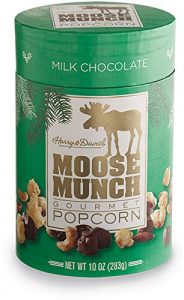 How much air is too much air? Who knows. BUT—we may be about to find out. No, not talking about this blog. Harry & David LLC gourmet foods got slapped with a consumer fraud class action lawsuit over slack fill in their popcorn canisters. There is some small irony here. What is popcorn if not flavored air? Surely that’s why it’s the diet food of choice for so many.
Back to the lawsuit. Filed by New Yorker Bria Brown, the lawsuit claims that an excessive amount of the 10 ounce package of (take a breath) Harry & David Moose Munch Milk Chocolate-flavored Gourmet Popcorn (got all that?) contained empty space—not including the popcorn.
Brown claims that she didn’t receive $7.99 worth of popcorn—expecting—reasonably, I would suggest—that the box would be almost full, if not completely full. Hey, if you’re on a diet, every ounce counts… Not saying Brown was on a diet. But if you’ve just shelled out eight bucks for some flavored popcorn—and you’re hungry—I doubt you’re going to be too pleased to find out you’ve got less food than you expected. Although I’m not sure popcorn is actually considered food. Read the rest of this entry »
5-Hour Energy Lawsuit: Defense Spins a Good One!
January 25th, 2017. By LucyC
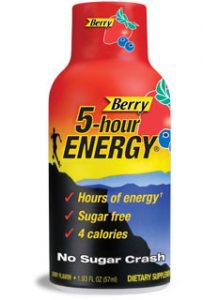 5-Hour Energy? Maybe, maybe not. The energy drink maker is the subject of multidistrict litigation (MDL) alleging consumer fraud, who would have thought? I know, I know. The gripe is that the energy boost ain’t all it’s cracked up to be, and that consumers swallowed the advertising in good faith (sorry, couldn’t resist).
The consolidated complaint was filed in January 2014. It claims that 5-Hour Energy states the drink gives long-lasting energy that “doesn’t jack you up with sugar, caffeine and herbal supplements.” The claim goes on, “defendants admit that the product provides no caloric energy at all.” So where does the energy come from then?
Read on…
Lawyers for the defendant and the plaintiffs recently sat down with the presiding judge to try and work this thing out. Lawyers for 5-Hour claim that it would be impossible for consumers to be deceived about the effects of the product they have purchased hundreds of times. The argument apparently followed the lines of 5-Hour Energy being an “experiential product”. Translation: you have an “experience” drinking 5-Hour Energy that may or may not be like the experience it claims you’re going to have. The consumer knows what that feeling is regardless and continues to buy the product, so they cannot reasonably claim they are being deceived or have made an uninformed choice. Have I got that right? Read the rest of this entry »
Wait, Krispy Kreme Doughnuts aren’t All Natural?
November 15th, 2016. By LucyC
 I have to be honest, the last thing I needed to read about this week was a lawsuit that attacks an institution—a food that has earned the right to be considered junk, in part because it makes no bones about it and in part because anything that tastes that good just has to be bad for you.
But heck, everything is fair game these days, it seems. And somebody has managed to drum up a 32-page, 32 pages—seriously?, Krispy Kreme lawsuit against the doughnuts over claims the doughnut chain is telling porky pies (lies) over the ingredients of its fruit-filled and maple-glazed donuts.
The allegations are that Krispy Kreme conducts “false and misleading business practices” because its “Chocolate Iced Raspberry Filled,” “Glazed Raspberry Filled,” “Maple Bar,” and “Glazed Blueberry Cake” doughnuts and doughnut holes do not actually contain real raspberries, maple, or blueberries. Oh dear. They might be able to call consumer fraud on this one, but not defective products, no siree—a box of Krispy Kremes could never be defective in my mind.
Plaintiff Jason Saidian, who for the record, lives in Los Angeles, is claiming the doughnuts are in fact made with nutritionally inferior ingredients.” WTF does that mean? Guess you have to read the whole 32 pages to find out.
Saidian’s story goes he bought the nutritionally inferior raspberry, maple, and blueberry doughnuts at issue from a Krispy Kreme location in Santa Monica. He claims he bought the doughnuts because he believed the company’s representations about the “premium ingredients” in its donuts.
For a little drama, the lawsuit apparently goes on to explain that the doughnuts are displayed in a tray behind a glass counter, along with a small placard in front of each tray that provides the name of the doughnut variety. But, I’m guessing, no laundry list of ingredients.
According to Saidian, the doughnuts appear as if they contain the “premium ingredients” but Krispy Kreme reportedly does not provide customers with access to information on what the actual ingredients are in the doughnuts. Ok seriously—who’s got time to read all that stuff—if you’re in there buying a doughnut I’m guessing you passed on the Kale smoothie for a reason.
Here’s all you need to know about the ingredients in doughnuts. They are, essentially, dough, fat, sugar, sugar, sugar, dough, fat, sugar and maybe some fruit preserves—with sugar in it—thrown in for good measure. Where’s the grey area? They can rot your teeth, expand your waistline, cause heart disease— if eaten liberally—just put that caveat in there—and for one brief moment, as all those questionably wonderful ingredients melt in your mouth in a kaleidoscopic orgasm of pure bliss—make you forget everything that’s wrong with the world. So you know what, just leave the doughnut alone, please.
But no. Not this guy. “Even when consuming the Products, Plaintiff and other consumers cannot easily decipher whether the filling or glazing they are consuming contain actual raspberries, blueberries, or maple ingredients, because the Defendant has formulated and manufactured the Products in a manner that masks the absence of such ingredients,” the class action states. So where’s the problem? Why worry about it?
It appears the rub is that Krispy Kreme is capable of making doughnuts with “real” ingredients in them—just for the sake of clarity—this is explained in the lawsuit as … the “Glazed Lemon Filled” doughnuts contain lemon juice, the “Cinnamon Apple Filled” doughnuts contain both apple and cinnamon and the “Glazed Strawberry” doughnuts contain strawberries.
Therefore, Saidain alleges, one can deduce that Krispy Kreme is not only capable of making the doughnuts at issue with real ingredients but, one would guess, should have, as people believe that’s what they’re getting. Therefore, Krispy Kreme should also have been aware that its products are falsely advertised and would be deceiving to an unsuspecting customer.
According to the lawsuit, Krispy Kreme allegedly (hopefully) uses sugar, corn syrup, gums and artificial food coloring to “mimic the texture, shape and color” of these “premium Ingredients” instead of naturally occurring products with proven health benefits.
Ok—hold on one fat saturated minute here—in no universe either known or as yet undiscovered are doughnuts considered to have any proven health benefits beyond the placebo effect. Somebody please give this guy some Kool-aid. Or a coffee…and a maple glazed doughnut.
Got a Samsung Washer Explosion Story?
September 9th, 2016. By LucyC
 Is the day to day grind getting you down? Fed up with doing the laundry? Try out a Samsung washing machine—it could put a little Kaboom in your life, and your walls and possibly send a family member to hospital. That’d liven things up!
Yup—Samsung has allegedly cornered the market in exploding, top loading washing machines. Unintentionally, of course. But they’re not really owning the whole issue, well, actually, no part of it all. So, a consumer fraud class action lawsuit has been filed. I know, I know, hard to believe. But Samsung cannot not know about this.
A superquick search on Google (that’s the search where Google finishes your sentence—so you know something’s going on) turns up not one, not two—but dozens of reports of these machines literally exploding. If you’re having a hard time imagining that—just wait. And these reports go back to 2015—possibly earlier. People from across the US–one of the latest out of Bandera, TX—have posted their experiences on You-Tube, local news stations have covered the phenomenon, and CPSC is collecting first hand reports. And amazingly enough, this doesn’t seem to have prompted any action at all—not even a recall.
One news source, applicanceertailer.com, ran the headline: “Samsung washing machines now exploding in the US.” What ? So they had finished their run in Europe? (who writes this stuff?)
One woman counts herself lucky, as she admitted watching her machine at work—literally standing over the glass lid—before it blew itself up. Actually, to be accurate, it blows its sides out, shakes the walls, causing shelving to jiggle and ornaments and pictures to fall. People have thought it was a canon going off, or an earthquake. But there are far worse accounts.
To quote the Applianceretailer.com story…
“The washing machine claimed to have “suddenly and without warning” violently exploded as it completed its final minutes of high-speed spin cycle.” Didn’t know the washing machine could speak as well, but hey—wouldn’t put much past these things.
The article goes on…
“The [Consumer Product Safety Commission] report reads, “The washer lid flew off the machine and slammed into the consumer on her lower back, causing the consumer to collide into a cabinet, where she struck her head, neck, upper body, chin and jaw.
“The entire washer lifted as much as six inches off the ground, spun 180 degrees, striking the consumer, damaging the wall and side of the dryer.”
Holy crap. Not to make light of the situation, but that sounds “Exorcist” worthy. Maybe they’re not defective, but possessed?
The article sites another two CPSC reports, one in which a consumer experienced not one but two explosions “that were felt across the entire house…” The story states that “A safety health and environment professional reported that “all technicians, safety professionals, engineers and laymen were completely impressed with the level of carnage.” Well then. An unfortunate choice of phrasing, but we take their meaning.
The other report indicates that the entire machine exploded and burst into pieces. “The entire top of the unit separated and flew into our hallway, and the unit continued to spin violently around the laundry room, ripping holes in our walls, dryer, cabinets and flooring.” Ok—that’s impressive. At some point you might start to wonder what you put on your Shreddies that morning.
So, no recall, several lawsuits, and some pretty alarming stories.
Wonder what happened to the clothes?
If you’ve experienced your own, personal Samsung exploding washing machine event—we’d love to hear from you.
CVS Aloe Vera: Shouldn’t You be Able to Trust a Label?
July 8th, 2016. By LucyC
Consumer Fraud and the Slippery Slope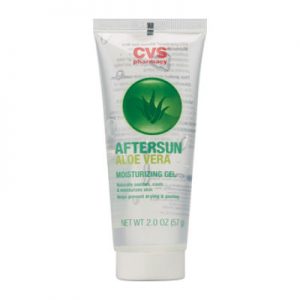
During the past few months there has been what one could call a “rash” of consumer fraud lawsuits filed concerning products that do not contain ingredients as advertised, and / or 100% of the ingredients advertised etc. Case in point, last week CVS Health found itself on the end of a proposed consumer fraud class action lawsuit over allegations it falsely advertised the Aloe Vera content on its moisturizing gel.
The issue, it seems, is that the CVS Aftersun Aloe Vera moisturizing gel does not contain 100 percent aloe vera, but does contain anti-freeze. Seriously. An allegedly non-toxic antifreeze, but antifreeze nevertheless.
The lawsuit was filed by Patricia Bordenet, a customer in Illinois, who went out and had the product tested. So my question is, who does that? I have to admit it’s not the first thought that comes to mind when I’m in the drugstore—or any store for that matter—looking for a specific product to purchase. I trust the label. And, I’m guessing, therein lies the rub.
Hats off to Bordenet for getting the product tested, because likely most of us would not have suspected the product to contain antifreeze. Admittedly, we might have our doubts about just how much Aloe Vera the product contains—everything has a shelf-life, after all—but even if enquiring minds wanted more information—would you have gone to the trouble of having the product tested?
So much for taking things on face value. And face value is, presumably, what many companies depend on when they make the claims they do on their products, and god knows there have been some pretty outrageous ones.
Take, for example, the Kardashian endorsed Waste Gang corsets. The packaging on that, according to the lawsuit, claimed that it would burn fat and help women achieve a smaller waist. Well, I can see you might sweat off the weight, under duress of wearing the product, but that’s not something you would want to advertise.
The Waist Gang Society LLC (Society?) has to pony up a $5 million settlement for not telling it like it is—which is that the corsets redistribute the fat—not “burn fat and control the user’s weight,” Oh, if it was only that easy! Sign me up!
Back to the antifreeze. The other, more serious consideration with failure to disclose all the contents of a product—particularly a product that is either applied to the body or ingested, is that people using it may suffer an allergic reaction—or worse—as a result of exposure to that product. There you are in the ER with no idea how or why you got there. That’s helpful. And likely not something that was thought through when the labeling or advertising was developed. Giving the benefit of the doubt here.
And now we find ourselves at the precipice of the Slippery Slope. Because giving the benefit of the doubt is not always such a good idea, as is evidenced by a slew of drug injury settlements—most recently one for $70 million involving a young man who grew breasts as a result of using Risperdal. The jury found that the maker of the drug, Janssen, knowingly concealed information about the side effects of gynecomastia.
But I digress. Well, no, I just went down the Slippery Slope. So enough. Enough of the exaggerated claims, enough of the lies, why not just make a safe product that is what it claims to be? While that may be an altruistic notion, does that necessarily make it difficult? If it is too difficult—then off to court you go.

Find us on


Archive by Category
- Accidents (24)
- Airlines (9)
- Asbestos Mesothelioma (262)
- Automotive (25)
- Celebrity (14)
- Class Action (84)
- Complaints/Comments (15)
- Consumer Fraud (84)
- Contest (2)
- Court of Public Opinion (5)
- Crazy Sh*t Lawyers See (61)
- Criminal Law (4)
- Defective Products (111)
- DePuy ASR Hip Recall (2)
- Discrimination (22)
- Drugs/Medical (248)
- Elder Care Abuse (4)
- Emerging Issues (462)
- Employment (54)
- Environment (52)
- Financial (28)
- Food Illness (15)
- Human/Civil Rights (4)
- Insecurities (5)
- Insurance (16)
- Intellectual Property (16)
- Internet/E-commerce (19)
- lawsuits (161)
- Lawyers (20)
- Lawyers Giving Back (43)
- Lex Levity (10)
- Personal Injury (106)
- Pleading Ignorance (53)
- Real Estate (2)
- Recall (6)
- Scam (3)
- Securities (13)
- Settlement (81)
- Tort Reform (2)
- Totally Tortelicious (81)
- Veterans (11)
- Whistleblower (9)