Posts Tagged ‘ Negligence ’
Restaurant, Phone Book Settle After Carcass Removal Screw Up
December 17th, 2012. By AbiK
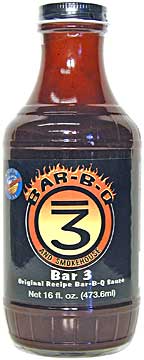 How well do you think your restaurant business would be doing if your phone book listing was tucked under the “Animal Carcass Removal” section in the local yellow pages?
Well, that’s just what this negligence lawsuit in Montana was about.
According to an AP report, a restaurant—Bar 3 Bar-B-Q—which has locations in Bozeman and Belgrade MT (and its own BBQ sauce, see left), was listed under “Animal Carcass Removal” in the yellow pages there. Now, forget about the simple fact that anyone looking under “Restaurants” would simply not see Bar 3 Bar-B-Q listed—that’s only half the issue. What about the people who actually notice the restaurant listed right along with other dead animal removal services?
That raises a whole bunch of questions not the least of which is…what exactly would a restaurant do with those dead animals? Re-purposed roadkill could, imaginably, help defray increasing food costs and give new meaning to “local beef”—though one can only think it would be a matter of time before something else that’s local—the health department—would have something to say about it.
Clearly, someone messed up and Hunter Lacey, who owns Bar 3 Bar-B-Q, was none too pleased. A late-night Jay Leno crack about it didn’t exactly help either—what was a local beef (pun intended) suddenly became a nationally known joke. It also didn’t help that the listing was not only originally printed in the 2009 phone book (when all this began) but that it was subsequently picked up in other phone directories in 2010 and 2011. Ouch.
So Lacey filed a negligence, defamation and slander lawsuit against the phone book company, Dex Media, Inc. And the two (Dex and Bar 3’s parent company, Big Sky Beverage) have finally settled.
According to AP, Dex had said that the listing was erroneous and that they removed the listed upon its discovery. Terms of the settlement have not been disclosed, but reports indicate that it would include a payment to the restaurant owner.
Could Wipes have Killed an Innocent Child?
February 16th, 2011. By LucyC
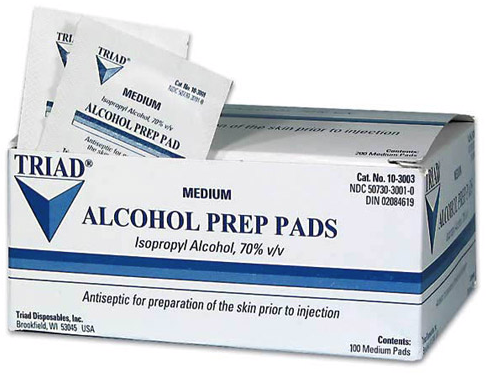 On December 1st, 2010, two-year old Harrison Kothari died from a rare infection while in the hospital recovering from surgery. As if this weren’t bad enough, the kicker is the very real possibility that the infection, acute bacterial meningitis caused by Bacillus cereus, and his subsequent death could have been prevented. So Harrison’s parents are suing the makers of Triad Alcohol Prep Pads, which the hospital used on their son in late 2010, but which were subsequently recalled on January 5th 2011 due to contamination with Bacillus cereus.
While hospitals are infamous incubators of a host of bacterial illnesses, acute bacterial meningitis is not one of them. Rather, Bacillus cereus is typically found in rare food poisoning outbreaks. Hospital officials were at a loss to explain how Harrison had contracted the infection. “They had no explanation as to how he contracted it,” Sandra Kothari, 37, Harrison’s mother told msnbc.com. “They know it’s rare in the hospital.”
Then, in January, a relative caught sight of the recall notice for the alcohol wipes and swabs on the US Food and Drug Administration (FDA) website, which reads:
“Triad Group, a manufacturer of over-the-counter products and FDA notified healthcare professionals and patients of the recall involving all lots of alcohol prep pads, alcohol swabs, and alcohol swabsticks manufactured by Triad but sold as private labels at the consumer level. This recall has been initiated due to concerns about potential contamination of the products with Bacillus cereus. This recall involves those products marked as STERILE as well as non-sterile products. Use of contaminated alcohol prep pads, alcohol swabs, and alcohol swabsticks could lead to life-threatening infections, especially in at-risk populations, including immune suppressed and surgical patients.”
“These wipes were used in his [Harrison’s] care every single day, multiple times a day,” Harrison’s father, 38-year old Shanoop Kothari, told msnbc.com. And officials at the hospital have confirmed that those alcohol prep products were supplied by Triad.
“We’re confident that that’s the cause,” said Kothari. “There was no other explanation that made any sort of sense. He contracted a very rare bacteria. These swatches were tainted with that bacteria.”
This week lawyers representing the Kotharis filed a complaint in U.S. District Court in Houston, charging the Triad Group with gross negligence and seeking damages for the loss of Harrison’s life.
“Our emotional response over this has been horrible,” said Shanoop Kothari said of his family, which also includes Harrison’s 7-year-old sister, Hannah. “We’ve been devastated. We’ve been absolutely crushed.”
This tragic situation brings to light a larger problem: according to FDA spokesperson, Christopher Kelly, who spoke with msnbc.com about this matter, Triad, a 35-year old family run company, “did everything correctly” in notifying government authorities about the recall. The recalled products are reportedly also sold under private labels in Canada and Europe, as well as the US. So what does this mean for you and me—woe betide us if we do not regularly monitor the FDA website?
Understandably, Sandra Kothari is worried that others may have been injured, infected or killed as a result of exposure to these products. “I wouldn’t want any other mother to go what I’ve gone through,” she told msnbc. And it’s possible. To be clear, these wipes and swabs were widely used in hospitals and, “sold in stores including CVS and Walgreens. “People buy alcohol pads and they last a long time in your bathroom. They’re sitting there now,” she said.
The recall notice states the following:
“The affected Alcohol Prep Pads, Alcohol Swabs and Alcohol Swabsticks can be identified by either “Triad Group,” listed as the manufacturer, or the products are manufactured for a third party and use the names listed below in their packaging: Cardinal Health, PSS Select, VersaPro, Boca/ Ultilet, Moore Medical, Walgreens, CVS, Conzellin.
A final caveat—in case you’re wondering whether Harrison had received his bacterial meningitis vaccine—the answer is no—he wasn’t quite old enough at the time he underwent surgery. And even if he had had the vaccine, it doesn’t protect against that strain of the bacteria.
Read the Triad alcohol swab recall notice here.
3 Reasons why a 4 Year Old shouldn’t be Sued for Negligence
November 1st, 2010. By AbiK
 So, did you know a four-year-old can be sued for negligence. It’s a mommy alert if I ever heard one. And even though the decision to allow such to happen is rooted in precedent (see below), there are three reasons why it just seems silly to consider a four-year-old old enough to be a defendant in a negligence lawsuit. Here’s what happened.
It’s sort of a Cindy Adams “only in New York, folks, only in New York” moment. Just last week, Justice Paul Wooten of State Supreme Court in Manhattan ruled that a four-year-old can be sued for negligence. He, of course, is basing this on what’s gone on before in such cases when a four-year-old is being brought to task in our court system—including one case in particular that he cites which dates back to 1928.
You may wonder what in heaven’s name a four-year-old could do to find herself being sued for negligence? Well, little Juliet Breitman and Jacob Kohn were four years old in April, 2009 when they were racing their bikes—as four-year-olds sometimes do—on a New York City sidewalk. They were apparently caught up in the excitement of it all when they accidentally hit an elderly woman, thereby causing the woman to fall and sustain a hip fracture that required surgery.
Reason #1: Uhh…She’s Four Years Old
Let’s just flash back to the age of four for a moment. You probably don’t remember what it was like, so here’s a refresher look at the “official” developmental milestones for a four-year-old…
This list comes the AAP (American Academy of Pediatrics) where they list these cognitive Read the rest of this entry »
Car Accident Fault and Getting What You’re Owed
April 21st, 2010. By Kristine B
 If you’re one of those people who “don’t like to focus on fault”, you’ll quickly find yourself focusing on it should you be involved in a car accident. Not that anyone likes pointing fingers, but unfortunately, the state you live in probably uses a little finger-pointing to determine what damages should be awarded to each party in the aftermath of an accident. Some states use either Contributory or Comparative Negligence to determine damages…and you should know which, if any, your state uses.
Since I spoke with Missouri attorney John Page about comparative negligence, I thought it would be a great idea for this edition of Pleading Ignorance to explain what comparative negligence is, and compare it to contributory negligence. Knowing whether your state uses contributory negligence, comparative negligence—or even modified comparative negligence will help you to determine what damages you are entitled to if you are in a car accident. 
Note—here’s a refresher on negligence in general. Also, a number of you are probably familiar with the concepts of “Fault” and “No Fault” car insurance states—they’re related to this topic, but we won’t cover those here; look for them in an upcoming Pleading Ignorance. Now, back to car accident negligence…
Contributory Negligence
Contributory negligence is a system of fault in which the injured party can only obtain compensation for injuries and damages if he or she did not contribute to the accident in any way. This means that if you’re in a car accident and the driver of the other vehicle is 99 percent at fault but you are 1 percent at fault, you won’t receive any damages. You’re out of luck. You can’t in any way be even a little bit at fault for the accident or you’ll get nothing in monetary damages.
So, to use an example: let’s say that Becky is attempting to make a left turn at an intersection. Chris speeds through the intersection on a red and hits Becky. The jury finds Chris 80 percent Read the rest of this entry »
Legalese & Legal-speak: 10 for 2010
December 23rd, 2009. By Kristine B
With 2009 about to come to a close, it’s a good time to take a little breather and take a look at some of the words or phrases you often hear in relation to a lawsuit—but might not know what they mean. They tend to get glossed over as if everyone out there took Latin for 6 years and loves to speak in legalese. So as we get ready to kick off 2010, here’s 10 for ’10…ten common legal terms you oughta know for 2010 and beyond…in plain English…
Damages 
Most of us are used to thinking of “damage” as what happens after a tornado (or a couple of five year olds on M&M’s) hits town. But the weird thing about “damages” from a legal perspective is that it’s the AWARD that comes after the mess—and the lawsuit. Damages simply refers to money awarded as compensation for a legal wrong. Damages are either compensatory or punitive. Say what? It’s like Pandora’s box…keep reading…
Compensatory Damages
Compensatory damages are awarded to compensate (so that’s where it comes from) the wronged party for money lost, expenses or pain and suffering due to a legal wrong committed by another party. Compensatory damages can include medical expenses, lost wages, loss of future earnings, property damage and pain and suffering. Compensatory = Compensation (well, Read the rest of this entry »

Find us on


Archive by Category
- Accidents (24)
- Airlines (9)
- Asbestos Mesothelioma (262)
- Automotive (25)
- Celebrity (14)
- Class Action (84)
- Complaints/Comments (15)
- Consumer Fraud (84)
- Contest (2)
- Court of Public Opinion (5)
- Crazy Sh*t Lawyers See (61)
- Criminal Law (4)
- Defective Products (111)
- DePuy ASR Hip Recall (2)
- Discrimination (22)
- Drugs/Medical (248)
- Elder Care Abuse (4)
- Emerging Issues (462)
- Employment (54)
- Environment (52)
- Financial (28)
- Food Illness (15)
- Human/Civil Rights (4)
- Insecurities (5)
- Insurance (16)
- Intellectual Property (16)
- Internet/E-commerce (19)
- lawsuits (161)
- Lawyers (20)
- Lawyers Giving Back (43)
- Lex Levity (10)
- Personal Injury (106)
- Pleading Ignorance (53)
- Real Estate (2)
- Recall (6)
- Scam (3)
- Securities (13)
- Settlement (81)
- Tort Reform (2)
- Totally Tortelicious (81)
- Veterans (11)
- Whistleblower (9)