Posts Tagged ‘ Actos ’
Top 10 Drug Legal News Topics For 2012
December 24th, 2012. By AbiK
 LawyersandSettlements.com recently shared its list of the hottest consumer-related pharmaceutical legal news stories during the last year. Of note is that while the top drug-related topic on the legal news website in 2011 had been Tylenol—prompted by concerns over a series of Tylenol recall notices as reported by The New York Times; for 2012, the most sought out pharmaceutical topics have shifted to women’s health.
Third-generation contraceptives such as Yasmin/Yaz, NuvaRing and Mirena top the list this year as numerous birth control lawsuits either settled, or began the process of consolidation into multi-district litigation (MDL).
Reader interest in Yaz/Yasmin rose in response to Yasmin lawsuit settlements that were announced in April (In re Yasmin and Yaz (Drospirenone) Marketing, Sales Practices and Product Liability Litigation, 09-md-02100, U.S. District Court, Southern District of Illinois, East St. Louis). Bloomberg reported Bayer AG settled about 500 Yasmin lawsuits over claims of blood clots that had, in some cases, led to stroke or heart attack.
Along with Yaz, readers remained concerned about NuvaRing (etonogestrel/ethinyl estradiol) and blood clot risk even as a new study on non-oral hormonal contraception, published in the British Medical Journal (BMJ 2012;344:e2990), was presented at the annual meeting of the American College of Obstetricians and Gynecologists (May, 2012). The study, aimed at quantifying NuvaRing blood clot risk, indicated no significant difference in risk of venous thromboembolism when compared to oral contraceptives.
Still, NuvaRing lawsuits continue and have been consolidated into a federal MDL court in Missouri (In re: NuvaRing Products Liability Litigation, No. 08-md-1964, JPML, Eastern District Missouri). As of September 5, 2012, according to the U.S. Panel on Multidistrict Litigation, more than 1,000 NuvaRing lawsuits have been filed.
Mirena IUD (levonorgestrel) saw an increase in reader interest after August 2012, as Bayer Healthcare Pharmaceuticals, Inc. submitted an Application for Centralized Management of Certain Cases involving Mirena. As FoxNews reported (11/11/12), the request seeks to create a multi-district litigation (MDL) for 16 pending Mirena lawsuits in NJ that allege Mirena caused uterine perforation, infection and hemorrhaging injuries.
After the top three women’s health-related drugs, Pradaxa (dabigatran), an alternative to warfarin, joined the list this year making the Top 5. In November 2012, the FDA issued a Drug Safety Communication regarding Pradaxa bleeding events which in turn helped drive reader interest.
Thousands of LawyersandSettlements.com monthly readers have followed the latest legal news and information on these topics, many of which have fallen from the radar of traditional media outlets.
“We believe these issues are of great importance to the public, mostly due to the life-changing impact they can have on an individual,” said Stephen King, CEO. “Some of our most interesting stories of the year related to pharmaceuticals. Many of them have pending lawsuits or have had substantial settlements related to their life-altering side effects and it’s important to get this information out to the public. While many pharmaceutical companies continue to earn significant profits, people are suffering. They may think they have no recourse but in many cases they do. By keeping these topics alive, LawyersandSettlements.com is helping people stay up-to-date on these important topics every day.”
The LawyersandSettlements.com Top 10 Pharmaceutical Topics of 2012, along with the potential side effects readers were seeking information on, are:
1. Yasmin/YAZ (gall bladder disease, blood clots, deep vein thrombosis, pulmonary embolism)
2. NuvaRing & Mirena (blood clots, infection, perforation of the uterus)
3. Pradaxa (uncontrollable bleeding, lack of an available antidote)
4. Granuflo (elevated bicarbonate levels, risk for metabolic alkalosis)
5. SSRIs (birth defects including heart defects, spina bifida, cleft palate, club foot, PPHN)
6. Actos (bladder cancer, heart failure, kidney failure, rhabdomyolysis)
7. Diethylstilbestrol/DES (cancer)
8. Crestor / Statins (diabetes, cardiomyopathy, rhabdomyolysis)
9. Fosamax (bone fractures, esophageal cancer)
10. Propecia (sexual dysfunction, erectile dysfunction, sterility, prostate cancer)
LawyersandSettlements.com readers are looking for the latest and most comprehensive legal news available. Those seeking legal help can request assistance by completing a form which is then distributed to attorneys specializing in these cases. Over two and a half million people visit the site yearly, and hundreds of thousands of request forms have been submitted by qualified readers looking for legal guidance.
What’s Making You Fat? 2 Popular Drugs could be Packing on Pounds (or Worse)
July 29th, 2012. By AbiK
 You’re wondering what’s going on, right? It’s not like you’re doing a solo flight with a pint of Häagen-Daz every night before bed or blowing through the Taco Bell drive-thru each day rattling off an order for a couple dozen 99¢ Beefy Nacho Burritos (in a large shopping bag, thanks). But something’s making you gain weight or keep it on…
Indeed, obesity has become what some would call an epidemic. Heck, all you need to do is turn to the media to find words like “diabesity” being used to realize how much obesity—or discussion about it—has infiltrated our lives. But could there must be something else going on?—something other than a big food orgy that most of us didn’t even know we were attending?
Perhaps. That something could be a vicious cycle you’re in—where, by treating a condition that’s potentially related to weight gain, the treatment you’re on can actually lead to more pounds. Unfortunately for some, the treatment can also lead to harmful drug side effects—which in turn can lead to a drug-related personal injury lawsuit. A vicious cycle, indeed. The following two conditions and treatments are examples of vicious cycles that could be causing weight gain and putting you at risk for some unwanted side effects:
1. Antidepressants are Making You Gain Weight
Somehow it’s easy to link depression to weight gain—it’s that “emotional eating” theory. But treating depression with antidepressants can also lead to weight gain. That’s right—the very drug you might be taking to help you avoid emotional eating might also be causing your weight gain. Paxil, Prozac and Zoloft each have possible weight gain as a side effect (in addition to other serious potential side effects like SSRI birth defects or suicidal thoughts). And it’s estimated that about 25% of those taking an antidepressant will experience some weight gain.
Additionally, atypical antipsychotic medications Zyprexa, Abilify, Risperdal and Seroquel have been linked to rapid (and dangerous) weight gain in children.
2. Diabetes Medication is Making You Gain Weight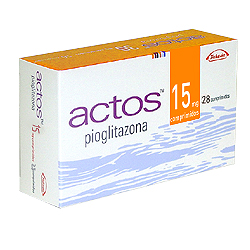
Remember that 70’s Billy Preston song, “Will It Go Round In Circles”? Well, diabetes and treating diabetes have that ‘going around in circles’ thing going on. Unfortunately, being overweight or obese can be a precursor to type 2 diabetes. Once diagnosed, some diabetes patients are put on a thiazolidinedione drug such as Actos. One of the more common side effects of Actos can be weight gain—the very thing that may have contributed to onset of type 2 diabetes in the first place (see it coming full circle?) The Actos labelling info also includes “rapid weight gain” as a possible serious side effect which requires immediate medical attention.
Weight gain may be the least of the worries for Actos side effects, though. Actos has also been associated with bladder cancer, heart failure and liver problems.
As always, before stopping any medication, or when noticing any concerning side effects, talk to your doctor.
Actos Lawsuit Angles: How Many Can You Come Up With?
May 14th, 2012. By AbiK
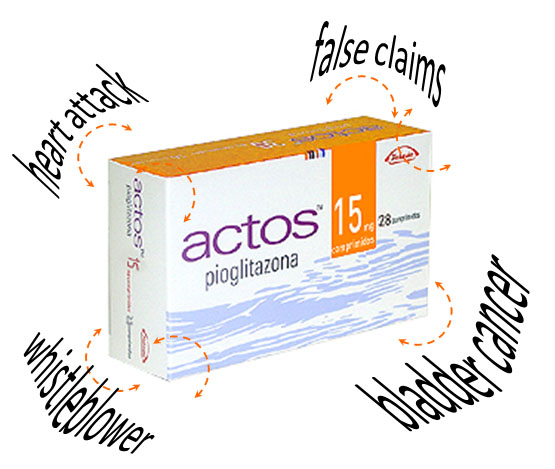 If you’ve tried to figure out what’s going on with Actos—and more specifically, Actos lawsuits–you’ve probably found it can get a bit confusing. This drug has more lawsuit angles now than a tetrahedron. So here’s a list of Actos lawsuit angles:
Actos Bladder Cancer Lawsuits
Actos bladder cancer lawsuits are not class action lawsuits. These are lawsuits filed by individuals who allege they now have bladder cancer because of taking Actos to treat their type 2 diabetes.
When there are many individual lawsuits claiming similar injury (i.e., Actos bladder cancer) brought on by the same defendant(s), it’s a mass tort not a class action. The reason for that is because even though all the victims have bladder cancer, each individual case will be different—for example, the extent of harm will be different from one victim to another, and any damages paid needs to reflect that. In a class action lawsuit, everyone in the class receives the same exact damages.
Typically, parts of a mass tort that are in common across all injured parties will be consolidated into what’s called ‘multi-district litigation’ (MDL). Once the common aspects of all the lawsuits have been resolved, any individual lawsuit differences can be addressed.
Actos Class Action Lawsuit
While there is not an Actos class action lawsuit for bladder cancer injury itself, there has been an Actos class action filed that alleges Takeda, the manufacturer of Actos, engaged in wrongful conduct when it designed, manufactured and marketed the drug–because the drug wound up being linked to bladder cancer and getting an FDA warning because of it.
Actos Whistleblower Lawsuit
Moving right along, a former consultant for Takeda, Dr. Helen Ge, came forward in a whistleblower lawsuit stating that Takeda knew about and yet either did not report or underreported cases of both Actos bladder cancer and Actos myocardial infarction (i.e., Actos heart attack).
According the lawsuit, Ge asserted that “Takeda instructed its medical reviewers not to report hundreds of non-hospitalized or non-fatal congestive heart failure cases as ‘serious adverse events and thus avoided its responsibility of accurately analyzing and reporting these hundreds of serious adverse events to the FDA.
Actos Heart Attack Lawsuit
Like the song “One Thing Leads to Another”, the Actos whistleblower lawsuit sheds light on another potential Actos lawsuit angle: myocardial infarction. Initally, in 2007, the FDA placed a warning on Actos (and Avandia) for congenital heart failure. That warning, however, did not include mention of mycardial infarction (i.e., heart attack). Yet, there had been complaints of Actos heart attack, and those complaints more or less hung in limbo. With Dr. Ge stepping forward, however, it would appear that her allegations could spell more lawsuits for Takeda—this time from Actos heart attack victims. If, in fact, Takeda knew that there was an increased risk for myocardial infarction given their own adverse event reports but did not report that risk, the potential for additional Actos lawsuits is there.
And that could perhaps mean a whole other Actos lawsuit…in the form of an Actos class action. After all, remember how Takeda aggressively advertised that it was a “safer” alternative to Avandia once Avandia took the hit for heart side effects? Stay tuned.
Actos Heart Attack Victims Back in the Ring for Round #2?
April 26th, 2012. By AbiK
 Not long ago the diabetes drug Avandia had all the media focus. Patients who were on the drug were hit with a barrage of information—sometimes confusing, sometimes scary—about Avandia’s link to heart attack. And thus began the mad dash to switch over to Actos. After all, while there were also some studies linking Actos to heart attack (along with the infamous TIDE trial), they were reported to be “inconclusive”. Not concrete enough to stop a flurry of prescriptions.
And the black box warning that Actos received (along with Avandia) back in 2007 was only regarding heart failure risk in the form of congestive heart failure—not heart attack or myocardial infarction.
But some Actos patients had already suffered heart attack. And many had submitted complaints in hopes of an Actos lawsuit v. Takeda, the drug’s manufacturer. But their complaints, for all intents and purposes, seemed to fall on deaf ears—at least where lawyers were concerned.
How could it be? As lawsuits about Actos bladder cancer were sprouting up, Actos heart attack complaints fell by the wayside. And yet, given they share a drug class, thiazolidinediones, there seemed to be such similarity between Avandia and Actos—why, it would be almost intuitive that they could perhaps have similar side effect or adverse event profiles, right? And what about some of those studies—was there anything to them?
Then, something unforeseen happened in the form of former Takeda consultant, Dr. Helen Ge—the Actos whistleblower.
And suddenly, everything—sadly—made sense for those Actos patients who had tried to file Actos heart attack complaints. Only now, was it too late? They had already tried to contact lawyers who had rejected them or not taken up their cause simply because there wasn’t much the lawyers could do with them.
Now, however, there might be.
The Actos whistleblower lawsuit (U.S. ex rel. Helen Ge v. Takeda Pharmaceutical Co., 10-cv-11043, U.S. District Court, District of Massachusetts (Boston)) has shone light on Dr. Ge’s assertion that Takeda knew about instances of Actos heart attack but downplayed them—for the sake of increasing their profits.
Dr. Ge claims she was let go from Takeda after she raised concerns over the company’s handling of the Actos safety data—and that officials at Takeda tried to direct medical reviewers, including Dr. Ge, to “change their professional opinion” regarding the potential dangers of Actos heart problems—specifically Actos myocardial infarction.
The whistleblower lawsuit is, in effect, a game-changer for Actos litigation. And former Actos victims might find that where there once was no direct path to an Actos lawsuit, there now might be.
Welcome to Round #2.

Top 10 Drugs with Heart Side Effects on LawyersandSettlements.com
January 31st, 2012. By AbiK
 In recognition of American Heart Month, which kicks off tomorrow (Feb. 1st), and National Wear Red Day (Feb. 3rd), LawyersandSettlements.com takes a look at our most-viewed drug lawsuit topics for 2011 in which heart attack or heart side effects were the alleged primary injuries.
Unfortunately, while a lot of focus this month will be on the positive measures we all can take to improve heart health—and that’s certainly important—it can be easy to overlook the negative heart side effects some drugs can have—and attention should be given to those as well.
As the chart at left depicts, Actos, Paxil and Zoloft accounted for the majority of 2011 traffic related to heart side effects, with Actos receiving the most at 25 percent. The Type 2 diabetes drug was released as an alternative to Avandia, which as you’ll recall came off pharmacy shelves as a result of the new FDA REMS program that became effective in November, 2011. Still, Avandia came in as the fourth most popular heart lawsuit topic.
Paxil, the popular antidepressant, has been linked to heart birth defects in infants and the drug drove in 18 percent of traffic last year. Ditto Zoloft, which accounted for 10 percent of the pageviews among readers concerned over the potential for heart birth defects.
The ten prescription drugs on the list fall into four distinct classes: Actos and Avandia are prescribed for the treatment of Type 2 Diabetes; Vytorin helps to control cholesterol, which has a direct impact on heart health; Trasylol is used during surgery to mitigate blood loss; the remaining drugs address depression and anxiety.
Reader interest in Prozac, Lexapro, Effexor, Celexa, Zoloft and Paxil shows continued concern surrounding pregnant women using selective serotonin reuptake inhibitors (SSRI) drugs and potential heart birth defects.
Here’s the full list:
Top 10 Drug Lawsuit Topics for Heart Side Effects in 2011
- Actos (Pioglitazone HCl)
- Paxil (Paroxetine)*
- Zoloft (Sertraline)*
- Avandia (Rosiglitazone)
- Celexa (Citalopram)*
- Effexor (Venlafaxine)*
- Lexapro (Escitalopram)*
- Prozac (Fluoxetine)
- Trasylol (Aprotinin)
- Vytorin (Ezetimibe/Simvastatin)
*SNRI (serotonin-norephinephrine reuptake inhibitor) or SSRI (selective serotonin reuptake inhibitors) drugs associated with heart birth defects when taken during pregnancy

Find us on


Archive by Category
- Accidents (24)
- Airlines (9)
- Asbestos Mesothelioma (262)
- Automotive (25)
- Celebrity (14)
- Class Action (84)
- Complaints/Comments (15)
- Consumer Fraud (84)
- Contest (2)
- Court of Public Opinion (5)
- Crazy Sh*t Lawyers See (61)
- Criminal Law (4)
- Defective Products (111)
- DePuy ASR Hip Recall (2)
- Discrimination (22)
- Drugs/Medical (248)
- Elder Care Abuse (4)
- Emerging Issues (462)
- Employment (54)
- Environment (52)
- Financial (28)
- Food Illness (15)
- Human/Civil Rights (4)
- Insecurities (5)
- Insurance (16)
- Intellectual Property (16)
- Internet/E-commerce (19)
- lawsuits (161)
- Lawyers (20)
- Lawyers Giving Back (43)
- Lex Levity (10)
- Personal Injury (106)
- Pleading Ignorance (53)
- Real Estate (2)
- Recall (6)
- Scam (3)
- Securities (13)
- Settlement (81)
- Tort Reform (2)
- Totally Tortelicious (81)
- Veterans (11)
- Whistleblower (9)