

LAWSUITS NEWS & LEGAL INFORMATION
Elder Care and Nursing Home Abuse
You may have gone to great lengths and expense to find the right elder care facility or nursing home for a member of your family or someone you know. It is a traumatic and difficult decision to place someone in a nursing home and you can only hope that they will receive the best possible care. Unfortunately, nursing home abuse is more prevalent than you might think. Often, due to a shortage of staff or staff that has not been adequately trained, the best nursing home care is not always readily available, and nursing home residents become victims of the "hidden crime": Elder Abuse.
Institutional entities include skilled nursing facility (SNF) or homes, foster homes, group homes, and board and care facilities. Abusers may be staff members, other patients and even visitors.
If a staff member refuses to allow family or friends to see the resident or insists on being present during the visit, it is possible that abuse is taking place. Other examples of abuse are:
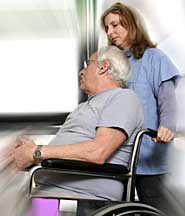 Emotional: behavior and/or personality changes; withdrawn and uncommunicative; dementia; depression; anxiety and agitation.
Physical: Unexplained accident or injury; Decubitus Ulcers (Bedsores); Frozen joints; Contractures; Brittle bones or Fracture; Muscle atrophy; Burns; Fearfulness; Broken eyeglasses; Rapid, unexplained weight loss; Unwarranted use of physical restraints
Sexual: Unexplained venereal disease;Genital infections;Vaginal or anal bleeding;Torn or stained underclothing;Bruising around breasts, upper abdomen, or inner thighs
Failure to comply with elder law has resulted in abuse that in turn caused illness, discomfort and death. This abuse is often referred to as "institutional abuse".
State laws typically require a nursing home to be licensed in order to operate, provides for annual inspections, sets up a procedure for handling complaints, prohibits discrimination, and imposes sanctions for violation, such as licensure suspension and revocation. The state regulatory agency investigates any reports of alleged abuse or violations.
 In 1987, the federal government passed the Nursing Home Reform Act (NRA), and nursing homes that receive federal funds must comply with the act. The NRA sets standards for care, establishes a list of rights for residents, such as the right to be treated with dignity and to exercise self-determination, sets up a monitoring system for nursing homes, and specifies sanctions for non-compliance. The Act covers resident care and rights, staffing, the quality of care, restraints, privacy, and record keeping. The law applies to all the various types of nursing homes who receive funds under Medicaid or Medicare programs.
Under the Nursing Home Reform Act, nursing homes must also do the following in order to meet the basic tenet of the Act:
The report also showed a greater percentage of For-Profit nursing homes were cited for deficiencies than non-for-profit and government nursing homes from 2005-2007.
Last updated on
FREE ELDER CARE LAWSUIT EVALUATION
Send your Elder Care claim to a lawyer who will review your claim at NO COST or obligation.
GET LEGAL HELP NOW
GET LEGAL HELP NOW
Nursing Home Abuse and Neglect
Nursing home residents often require constant attention, and may not be able to communicate nursing home abuse or neglect from their caregivers. And they are unaware of elder care law. Nursing home neglect is often unreported because it isn't always physical abuse. Emotional, psychological, and financial abuse or exploitation is all too frequent.Institutional entities include skilled nursing facility (SNF) or homes, foster homes, group homes, and board and care facilities. Abusers may be staff members, other patients and even visitors.
If a staff member refuses to allow family or friends to see the resident or insists on being present during the visit, it is possible that abuse is taking place. Other examples of abuse are:
- Witholding food or not providing food according to prescribed schedule
- No access to water / dehydration
- Medication errors
- Poor toileting facilities
- Inadequate daily care and grooming, or abandonment
- Failure to diagnose or recognize heart attack or stroke
- Failure to treat or provide emergency care for stroke or heart attack
- Elopement or wandering, where the patient leaves the nursing home without authorization
- Intimidation or use of threats
Emotional: behavior and/or personality changes; withdrawn and uncommunicative; dementia; depression; anxiety and agitation.Physical: Unexplained accident or injury; Decubitus Ulcers (Bedsores); Frozen joints; Contractures; Brittle bones or Fracture; Muscle atrophy; Burns; Fearfulness; Broken eyeglasses; Rapid, unexplained weight loss; Unwarranted use of physical restraints
Sexual: Unexplained venereal disease;Genital infections;Vaginal or anal bleeding;Torn or stained underclothing;Bruising around breasts, upper abdomen, or inner thighs
Nursing Home and Elder Law
By law, nursing homes must provide care to maintain the highest practicable physical, mental and psycho-social well-being of each resident. Federal and state laws were designed to protect nursing home residents and the abuse or neglect that occurs there and in other assisted living facilities. Many states also require that nursing homes meet individual state standards relating to the type and quality of care required.Failure to comply with elder law has resulted in abuse that in turn caused illness, discomfort and death. This abuse is often referred to as "institutional abuse".
State Elder Law
Most states have addressed the institutional abuse issue with laws that require doctors, nurses and other health care professionals to report suspected neglect to a designated state office. Laws further require nursing homes to investigate and report any abuse incidents that occur within their facility. Physicians, hospitals, nurses, therapists, aides, orderlies and administrators must provide adequate care, medical treatment and protection to the residents and patients in their facility.State laws typically require a nursing home to be licensed in order to operate, provides for annual inspections, sets up a procedure for handling complaints, prohibits discrimination, and imposes sanctions for violation, such as licensure suspension and revocation. The state regulatory agency investigates any reports of alleged abuse or violations.
Federal Elder Law
In 1987, the federal government passed the Nursing Home Reform Act (NRA), and nursing homes that receive federal funds must comply with the act. The NRA sets standards for care, establishes a list of rights for residents, such as the right to be treated with dignity and to exercise self-determination, sets up a monitoring system for nursing homes, and specifies sanctions for non-compliance. The Act covers resident care and rights, staffing, the quality of care, restraints, privacy, and record keeping. The law applies to all the various types of nursing homes who receive funds under Medicaid or Medicare programs.Under the Nursing Home Reform Act, nursing homes must also do the following in order to meet the basic tenet of the Act:
- Employ sufficient nursing and other staff in order to provide nursing and related services
- Be administered in a way that enables the nursing home to use resources effectively and efficiently
- Within 14 days of admission, perform an initial comprehensive, accurate, standardized, reproducible assessment of each resident's functional capacity. After significant changes in the resident's physical or mental status and/or at least once every 12 months, perform such an assessment.
- Develop comprehensive individualized care plans for residents. Care plans must include measurable objectives and schedules to meet each resident's medical, nursing, mental and psychosocial needs as identified in the comprehensive assessment discussed above. The care plan must be developed within 7 days after completion of the comprehensive assessment. It must detail the services that are to be provided. The care plan must also be periodically reviewed and revised by a team of qualified persons after each assessment.
- Provide pharmaceutical services (including procedures that assure the accurate acquiring, receiving, dispensing, and administering of all drugs) to meet the needs of each resident.
- Provide supervised medical care by a physician. The nursing home must provide or arrange for the services of a physician on a 24 hour per day basis in case of an emergency.
- Prevent the deterioration of a resident's ability to bathe, dress, groom, transfer and ambulate, toilet, eat, speak or otherwise communicate.
- Provide necessary services and assistance in order to maintain good nutrition, grooming, and personal and oral hygiene if the resident suffers from any impairment daily living activities.
- Ensure that residents do not develop pressure sores. If a resident has pressure sores, the nursing home must provide the necessary treatment to promote healing and prevent infection and development of new sores.
- Provide treatment and services to incontinent residents to restore as much normal bladder functioning as possible and to prevent urinary tract infections.
- Ensure that residents receive proper treatment and any devices to maintain hearing and visual abilities.
- Ensure that residents receive adequate supervision and assistive devices to prevent falls.
- Ensure that residents maintain acceptable parameters of nutritional status, such as body weight and protein levels.
- Provide residents with enough fluid to maintain hydration and health.
- Prevent medication errors.
- Care for residents in a way that promotes maintenance or enhancement of their quality of life.
- Promote resident care in a way and in an environment that enhances each resident's dignity and respect in full recognition of individuality.
- Ensure that residents can choose activities, schedules, and health care consistent with individual interests, assessments, and plans of care.
- Maintain clinical records on each resident in accordance with accepted professional standards and practices that are complete, accurate, accessible, and systematically organized.
The report also showed a greater percentage of For-Profit nursing homes were cited for deficiencies than non-for-profit and government nursing homes from 2005-2007.
Nursing Home Lawsuit
A nursing home lawsuit can be filed by the resident (if that individual is judged to be mentally sound and capable of testifying), but most nursing home lawsuits are filed on behalf of the resident by a family member or other loved one. Elder care law and nursing home lawsuits can be complicated and are best handled by attorneys familiar with nursing home laws and regulations. If you know someone who has been abused in a nursing home or other facility, you should report abuse immediately and consider a nursing home lawsuit.Elder Care Legal Help
If a loved one has suffered abuse or neglect in a nursing home, please click the link below to send your complaint to a lawyer to evaluate your claim at no cost or obligation.Last updated on
ELDER CARE LEGAL ARTICLES AND INTERVIEWS
Aegis Nursing Homes Offers $16M Elder Care Abuse Deal

New Jersey Nursing Homes Operator Counting on Protocol to Dismiss Lawsuit
Repeated Sexual Abuse in Nursing Home Criminal

May 12, 2021
Residents of the nursing home chain “Aegis Senior Communities” have asked a California federal judge to approve a 16.25 million settlement that would resolve care center lawsuits alleging nursing home abuse. READ MORE
New Jersey Nursing Homes Operator Counting on Protocol to Dismiss Lawsuit
March 28, 2021
The Andover nursing homes operator is facing a proposed class action lawsuit claiming poor treatment of residents before and during the COVID-19 pandemic. He argued in federal court to dismiss the nursing home abuse complaint based on state and federal law virus protocol. READ MORE
Repeated Sexual Abuse in Nursing Home Criminal
March 2, 2021
A female resident in Pontiac Nursing Home in Oswego suffering from dementia was sexually abused three times by another resident who was admitted to Pontiac in 2019. Management declined to tell Pontiac’s doctor and other employees that he was a known sexual offender. READ MORE
READ MORE Elder Abuse Settlements and Legal News
READ MORE Elder Care Settlements and Legal News
READ MORE Personal Injury Settlements and Legal News
READ MORE Elder Care Settlements and Legal News
READ MORE Personal Injury Settlements and Legal News
READER COMMENTS
Anonymous
on
My husband died two weeks ago. His death was hastened by clearcut nursing home abuse and neglect. No attorney will take this case because he was not wealthy.
Anonymous
on
when the m.d does not respond the notes which suggest no immediate response are destroyed and the new record shows that the m.d has in fact responded. my demeanor was to tell her to call an attorney .she said that all the nurses were aware of this practice and did not complain in fear of losing their job.
the fact that this practice is common at her facility led me to tell her to take notes when the head nurse forces any change to a chart, notes, etc. how wide spread is this practice?the answer is very wide spread and common practice in certain facilities that do not adhere to patients rights. the results are obvious: destroy the signs of malpractice.