
LAWSUITS NEWS & LEGAL INFORMATION
Heparin Contamination leads to Two Heparin Recalls
Read our Heparin FAQ
Were you looking for Seven Lots of Heparin Recalled lawsuits?
Heparin is used to decrease the clotting ability of a patient's blood, and is widely referred to as a "blood thinner". Heparin injections may be given to patients before and after cardiac surgery; patients undergoing kidney dialysis and treatment of other medical conditions, including pulmonary emboli and Deep Vein Thrombosis (DVT). Heparin IV bags--used for a Heparin drip--are typically given before or after cardiac surgery; they are not given during surgery. In two separate Heparin contamination recalls spanning approximately two years, both Heparin syringes and Heparin IV bags have been associated with Heparin allergic reactions.
 In October 2010, B. Braun Medical Inc announced a nationwide recall of seven lots of Heparin drip Sodium USP Active Pharmaceutical Ingredient (API) after being notified by its supplier, Scientific Protein Laboratories LLC (SPL) that testing of one lot of API sold to Braun indicated a trace amount of over-sulfated chondroitin sulfate (OSCS) contaminant. The recalled Heparin IV lots were manufactured in 2008 and expire on October 31, 2010 and November 30, 2010. It should be noted the the Heparin supplier, SPL, who gave Braun the contaminated Heparin drip lots resulting in this Heparin recall, was the same supplier involved in the 2008 Heparin contamination recall for Heparin injection with Baxter (below).
The recalled Heparin IV drip bags are mainly used in hospitals before and after cardiac surgery. To date, Braun has not received any reports of Heparin side effects, but customers who have the recalled lots of Heparin are urged to discontinue use immediately and be on alert for any potential Heparin allergic reactions.
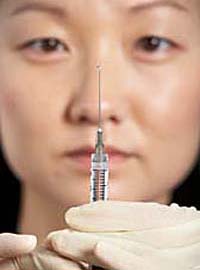 In January 2008, after receiving reports that a number of patients experienced severe –and even fatal—Heparin allergic reactions, Baxter International recalled nearly all its heparin injections in the US and suspended production of multi-dose vials of the blood-thinning drug. (Since that time, the FDA initiated 13 recalls of multiple contaminated medical products containing Heparin from several companies.)
One month later, the FDA reported 21 deaths and approximately 350 allergic reactions linked to heparin. The Heparin allergic reactions included difficulty breathing, nausea, vomiting, excessive sweating and rapidly falling blood pressure that could lead to life-threatening shock and death. Eighty-one US deaths were ultimately tied to the contaminated Heparin.
Chondroitin sulfate
By March 2008, the FDA confirmed that oversulfated chondroitin sulfate (OSCS) contaminant was found in samples of the active ingredient used in Baxter Heparin. Patients had been exposed to the contaminant via Heparin syringes filled with a product that was not actually Heparin but mimicked Heparin and was therefore not detected.
Heparin is made with raw pig intestines from China. OSCS was added when there wasn't enough raw material, i.e., pig intestines, to meet the Heparin demand. (Swine flu had decreased the pig population and pig populations typically fluctuate; as well, Heparin demand had increased.) Chondroitin sulfate is a widely used, over-the-counter dietary supplement made from animal cartilage and used to treat joint pain. When chondroitin sulfate is altered, or "oversulfated," it mimics the blood-thinning action of Heparin.
Although it isn't clear whether oversulfated chondroitin sulfate was added deliberately or accidentally, the FDA confirmed that the doctored Heparin did not occur naturally or as a result of the manufacturing process. Furthermore, there were some reports that the cost of Heparin had risen dramatically, thanks to an outbreak of swine flu in China. And oversulfated chondroitin sulfate is reportedly cheaper to produce than Heparin.
The FDA said the chondroitin sulfate was molecularly changed to mimic Heparin's blood-clotting properties. That ingredient was supplied to Baxter by Changzhou SPL, a Chinese plant partially owned by Wisconsin-based Scientific Protein Laboratories LLC (SPL).
The FDA approved the plant in Changzhou to provide Heparin to the US in 2004 but the agency never actually inspected it prior to approving it. Now, the FDA is now under fire for approving Baxter's Heparin without inspecting the plant. The agency has admitted that it violated its own policies by neglecting to inspect SPL's Chinese plant before approving the drug for sale in the US.
Soon after the Baxter recall, B. Braun Medical Inc., a supplier of Heparin in Canada, began recalling Heparin solutions. Both companies used the same supplier—SPL. At the same time, Health Canada announced that the company's Heparin products were tainted. Braun recalled 23 lots (of 25,000 units each) that were distributed to Canada, Australia and the US.
Symptoms of Heparin allergic reaction include a swollen throat, increased sweating, unconsciousness and even death. Heparin side effects also include abdominal pain, decreased blood pressure, burning sensation, chest pain, diarrhea, dizziness, drug ineffectiveness, dyspepsia, dyspnea, erythema, flushing, headache, hyperhidrosis, hypoesthesia, hypotension, loss of consciousness, malaise, nausea, pallor, palpitations, paresthesia, pharyngeal edema, restlessness, vomiting/retching, stomach discomfort, tachycardia, thirst, trismus, and unresponsiveness to stimuli.
Last updated on
En Español HEPARIN CONTAMINADAS
FREE HEPARIN LAWSUIT EVALUATION
Send your Heparin claim to a lawyer who will review your claim at NO COST or obligation.
GET LEGAL HELP NOW
GET LEGAL HELP NOW
Heparin IV Drip Recall (B. Braun, 2010)
In October 2010, B. Braun Medical Inc announced a nationwide recall of seven lots of Heparin drip Sodium USP Active Pharmaceutical Ingredient (API) after being notified by its supplier, Scientific Protein Laboratories LLC (SPL) that testing of one lot of API sold to Braun indicated a trace amount of over-sulfated chondroitin sulfate (OSCS) contaminant. The recalled Heparin IV lots were manufactured in 2008 and expire on October 31, 2010 and November 30, 2010. It should be noted the the Heparin supplier, SPL, who gave Braun the contaminated Heparin drip lots resulting in this Heparin recall, was the same supplier involved in the 2008 Heparin contamination recall for Heparin injection with Baxter (below).
The recalled Heparin IV drip bags are mainly used in hospitals before and after cardiac surgery. To date, Braun has not received any reports of Heparin side effects, but customers who have the recalled lots of Heparin are urged to discontinue use immediately and be on alert for any potential Heparin allergic reactions.
Heparin Injection Recall (Baxter, 2008)
In January 2008, after receiving reports that a number of patients experienced severe –and even fatal—Heparin allergic reactions, Baxter International recalled nearly all its heparin injections in the US and suspended production of multi-dose vials of the blood-thinning drug. (Since that time, the FDA initiated 13 recalls of multiple contaminated medical products containing Heparin from several companies.)
One month later, the FDA reported 21 deaths and approximately 350 allergic reactions linked to heparin. The Heparin allergic reactions included difficulty breathing, nausea, vomiting, excessive sweating and rapidly falling blood pressure that could lead to life-threatening shock and death. Eighty-one US deaths were ultimately tied to the contaminated Heparin.
Chondroitin sulfate
By March 2008, the FDA confirmed that oversulfated chondroitin sulfate (OSCS) contaminant was found in samples of the active ingredient used in Baxter Heparin. Patients had been exposed to the contaminant via Heparin syringes filled with a product that was not actually Heparin but mimicked Heparin and was therefore not detected.
Heparin is made with raw pig intestines from China. OSCS was added when there wasn't enough raw material, i.e., pig intestines, to meet the Heparin demand. (Swine flu had decreased the pig population and pig populations typically fluctuate; as well, Heparin demand had increased.) Chondroitin sulfate is a widely used, over-the-counter dietary supplement made from animal cartilage and used to treat joint pain. When chondroitin sulfate is altered, or "oversulfated," it mimics the blood-thinning action of Heparin.
Although it isn't clear whether oversulfated chondroitin sulfate was added deliberately or accidentally, the FDA confirmed that the doctored Heparin did not occur naturally or as a result of the manufacturing process. Furthermore, there were some reports that the cost of Heparin had risen dramatically, thanks to an outbreak of swine flu in China. And oversulfated chondroitin sulfate is reportedly cheaper to produce than Heparin.
The FDA said the chondroitin sulfate was molecularly changed to mimic Heparin's blood-clotting properties. That ingredient was supplied to Baxter by Changzhou SPL, a Chinese plant partially owned by Wisconsin-based Scientific Protein Laboratories LLC (SPL).
The FDA approved the plant in Changzhou to provide Heparin to the US in 2004 but the agency never actually inspected it prior to approving it. Now, the FDA is now under fire for approving Baxter's Heparin without inspecting the plant. The agency has admitted that it violated its own policies by neglecting to inspect SPL's Chinese plant before approving the drug for sale in the US.
Canada Heparin Recall
Heparin Side Effects
Heparin Legal Help
If you or a loved one has suffered damages in this heparin contamination case, please click the link below to send your complaint to a lawyer to evaluate your claim at no cost or obligation.Last updated on
HEPARIN LEGAL ARTICLES AND INTERVIEWS
China Continues Crackdown on Bogus Drug Manufacturers
.jpg)
The Heparin Contamination Hangover Continues to Persist

Mother Believes Disabled Daughter Suffered Heparin Contamination

August 6, 2012
A report out of China Sunday pertaining to a government crackdown on counterfeit drugs and tainted food supplies would understandably leave health advocates in the US concerned about the quality of imports coming into the country from that part of the world. READ MORE
The Heparin Contamination Hangover Continues to Persist
February 22, 2011
It's a hangover of sorts from the Heparin Contamination scare of three years ago. That's when tainted heparin was traced back to the unsanitary production of pure heparin via unregulated sweatshops in China and the introduction of a mystery contaminant. But what of the checks and balances that would help to catch a problem and stop it dead in its tracks before it gets to market? READ MORE
Mother Believes Disabled Daughter Suffered Heparin Contamination
December 10, 2010
In May 2009, Cathy's mentally disabled daughter was rushed to the hospital with severe abdominal pain and the doctors found blood clots. "Right away she was given Heparin IV and she started bleeding outwards—there was blood everywhere," says Cathy. "Then she had a heparin allergic reaction—her abdomen was severely swollen and covered in a scarlet rash. READ MORE
READ MORE Drugs/Medical Settlements and Legal News
ADD YOUR COMMENT ON THIS ISSUE

READER COMMENTS
Cathy Komarzynski
on
My question is simple; can you help me?
Robert Strickland
on
Mississippi
on
Texas
on
had several complications while having it administered to
him. He was taken off at one time but the unit was using it
again prior to his death. He died of a Heart attack.
Massachusetts
on
Anonymous
on
From the second day of use in February 08, I knew something was wrong. I began feeling a sensation like heart burn in my right chest, where the P.I.C. line entered my superior vena cava. Along with difficulty taking a deep breath I ran low grade temps and often felt flushed.
In the next 6 weeks things escalated to the point that I had excrutiating chest pain with burning sensation, progressively worse joint pain on the right side of my body, shoulder pain on the right side, palpitations, increased blood pressure,swelling in my left arm, neck and thyroid area along with redness.I felt like an elephant was on my chest and I had trouble breathing with every breath. My thymus made an appearance within ten days of the start of flushing on a P.E.T. scan.That didn't show on a previous C.T. Scan, therefore, indicating an inflamatory response. At my age, I shouldn't have had a thymus. I had stranding of tissue. My Sed rate was elevated to the point comparable to that of a person with rheumatoid arthritis.
Finally, 6 weeks later the pain was worse than I had seen with any end stage Cancer patient. Because of the swelling in my left arm, I decided to have my P.I.C. line pulled. I had seen several doctors telling them about this pain and these events. No one suspected the Heparin or knew what was happening with me. Luckily, I blamed my pic line. Thank God for the swelling and the severe pain that made me listen to my body and have the P.I.C. line pulled. This stopped the flushing of the poison Heparin into my body. Then two days later the hospital discovered that I had blood clots in my brachial, axillary, internal juglar and subclavian veins.
I spent two visits in I.C.U., 2 visits on a Med. /Surg unit, and was released in early April.
Finally April 15th, I was notified that I had been using the contaminated Heparin daily for 6 weeks.That explained everything! However, it doesn't explain, why these syringes weren't recalled much sooner since the crude Heparin was made at the same facility in China that Baxters was made. If they had been recalled in a timely fashion, all this would have been avoided.
I thank God daily that I survived the heparin, and I feel badly for those that didn't.
I now have hypothyroidism, am on synthroid, and may need to take coumadin for the rest of my life. I have had to delay my chemo three times and unable to take the regular chemo protocal normally used for colon cancer.
Many questions remained about the ongoing effects of heparin on our bodies.We probably can never take any kind of Heparin again.
Although, I appear to be healthy now, my future is uncertain and so is the future of the survivors of the heparin holocaust.
Nebraska
on
Since I had to be put on other meds from almost dying, I was unable to breastfeed my child the first few days of his life. Therefore they had to feed him formula, and I had to struggle to try to breastfeed him.
Virginia
on
Michigan
on
California
on
I had to take heparin because of PAI-1 abnormality (excessively high). I have other health issues, but this has caused me great embarrassment, and exceedingly great discomfort. My doctor has done NOTHING to help me except to say that my reaction was "unusual" and now I am finding out that it is NOT!?