

LAWSUITS NEWS & LEGAL INFORMATION
Financial Elder Abuse
Were you looking for Variable Annuity lawsuits?
Financial elder abuse occurs when people cheat senior citizens out of their money or their property. Such elder exploitation can be committed by people the senior knows, such as family members, or complete strangers. Elder abuse cases are often underreported, for a number of reason, but seniors who are victims of financial elder exploitation can file lawsuits to recover their lost money and property.
 Financial exploitation of seniors occurs when a person is victimized because the senior's age makes them vulnerable to exploitation. Seniors are vulnerable to crime because they may be dependant on other people for their care or because they are not capable of fully understanding their financial situation. Unfortunately, financial elder abuse may be committed by people the senior loves and trusts, such as children, or by strangers looking to profit from another person's vulnerability.
Anyone who is in a position of trust, control or authority and uses that position to profit from the senior's dependence or vulnerability may be guilty of financial elder abuse.
Senior citizens may be victimized by their children, grandchildren, spouses, siblings or caregivers. Such activities may involve unauthorized use of the senior's funds or properties, including stealing cash, income checks or household items, forging the senior's signature, identity theft, convincing the senior the sign over property or money, or threatening not to care for the senior unless he signs over property or money.
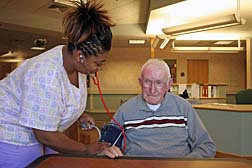 According to a 2003 study by the National Center on Elder Abuse, two thirds of elder abuse cases are committed by a family member.
One of the most high-profile court cases regarding financial elder abuse involved Brooke Astor and her son, Anthony D. Marshall. Marshall was accused by Astor's friends and other family members of creating a fraudulent will that increased his inheritance by tens of millions of dollars when Astor, a New York socialite and philanthropist, was not capable of understanding the changes to her will.
The New York Times (12/21/09) reports Marshall was found guilty and sentenced to one to three years in prison for first-degree grand larceny. The grand larceny charge stemmed from Marshall giving himself a retroactive lump-sum raise of approximately $1 million as compensation for managing Astor's finances.
Financial elder abuse can also be perpetrated by people the senior does not know. This includes identity theft, investment fraud, phony charities or convincing the senior to buy something he cannot or will not use, such as a lifetime membership to a gym.
Although most instances of financial elder abuse involve someone known to the victim, some financial abuse occurs in the form of scams. Seniors may be victimized by email or telephone scams, sweetheart scams, investment scams, home repair scams or other types of scams designed to steal the senior's money.
Some common scams include strangers contacting the senior by telephone or email and requesting money being paid up front as taxes on lottery winnings or a deposit on helping someone escape from a corrupt country. The senior pays money up front with the expectation of receiving more money in the future, but the money is never sent. If a check is sent to the senior, it may be deposited into the account but the check later bounces and the senior is liable for the insufficient funds
A similar scam that is done in person is known as a pigeon drop, in which the scammer approaches the senior and flashes money in front of him, claiming not to know what to do with the money. The scammer asks the senior to hold onto the money after the senior gives the scammer some money in good faith. The scammer takes off with the good faith money and the senior is left with worthless paper.
Seniors may also be victims to a variety of investment or loan scams, including Ponzi schemes, pyramid schemes and real estate scams. Frequently, these investments come with the promise of massive interest and a 100 percent guarantee on return of the investment. Investments can involve anything from real estate to foreign currency to personal loans to gold mines. These investment schemes may be perpetrated by a trusted friend or an investment consultant.
Seniors may be victimized by a sweetheart swindle, in which the perpetrator agrees to marry or befriend the senior. The scammer will claim to be coming into money, but needs a loan to pay for a family emergency, promising to pay it back once the money appears. The senior may give the money—or sometimes the title to their house—and the scammer takes off.
Perpetrators of elder abuse may disguise themselves as employees of a utility company and use that to gain entry to the senior's home. Once inside, they may steal from the senior or distract the senior so someone else can gain entry to the home and take the senior's belongings.
Other scams targeting seniors include funeral and cemetery fraud, in which funeral homes add unnecessary charges and fees to a funeral; fraudulent anti-aging products, in which bogus products are sold to seniors to prevent aging; and reverse mortgage scams, in which scammers steal equity from a senior or use the senior to steal equity from another property.
For elderly people who have fallen victim to financial elder abuse, a lawsuit can provide a variety of remedies. First, the victim can recover money that was taken or can recover property itself, such as when a valuable item is taken. Second, victims can recover attorney's fees because the statute protecting elderly citizens provides for attorney's fees in a lawsuit. Third, although rare, victims may be able to recover punitive damages.
 The National Center of Elder Abuse notes that approximately 1 in 25 financial elder abuse victims ever report the abuse, suggesting that there may be at least five million financial abuse victims every year. The senior may be embarrassed at having been victimized or may be conflicted if the perpetrator is a family member or close friend. The senior may also fear retaliation or believe that if he reports the abuse, no one will take care of him. Usually, it falls to family members who become suspicious that their loved one has been cheated or a friend who notices unusual behavior to contact authorities.
Following are some signs that financial elder abuse may be occurring:
Every state has at least one toll-free number—either an elder abuse hotline or helpline—that people can call to report elder abuse. California has the Elder Abuse Act, which provides a remedy for elders who have been financially abused.
Last updated on
FREE FINANCIAL ELDER ABUSE LAWSUIT EVALUATION
Send your Financial Elder Abuse claim to a lawyer who will review your claim at NO COST or obligation.
GET LEGAL HELP NOW
GET LEGAL HELP NOW
Financial Elder Abuse Law
Financial exploitation of seniors occurs when a person is victimized because the senior's age makes them vulnerable to exploitation. Seniors are vulnerable to crime because they may be dependant on other people for their care or because they are not capable of fully understanding their financial situation. Unfortunately, financial elder abuse may be committed by people the senior loves and trusts, such as children, or by strangers looking to profit from another person's vulnerability.
Anyone who is in a position of trust, control or authority and uses that position to profit from the senior's dependence or vulnerability may be guilty of financial elder abuse.
Financial Elder Abuse by Family Members or Caregivers
Senior citizens may be victimized by their children, grandchildren, spouses, siblings or caregivers. Such activities may involve unauthorized use of the senior's funds or properties, including stealing cash, income checks or household items, forging the senior's signature, identity theft, convincing the senior the sign over property or money, or threatening not to care for the senior unless he signs over property or money.
According to a 2003 study by the National Center on Elder Abuse, two thirds of elder abuse cases are committed by a family member.
One of the most high-profile court cases regarding financial elder abuse involved Brooke Astor and her son, Anthony D. Marshall. Marshall was accused by Astor's friends and other family members of creating a fraudulent will that increased his inheritance by tens of millions of dollars when Astor, a New York socialite and philanthropist, was not capable of understanding the changes to her will.
The New York Times (12/21/09) reports Marshall was found guilty and sentenced to one to three years in prison for first-degree grand larceny. The grand larceny charge stemmed from Marshall giving himself a retroactive lump-sum raise of approximately $1 million as compensation for managing Astor's finances.
Financial Elder Abuse by Strangers
Elder Financial Scams
Some common scams include strangers contacting the senior by telephone or email and requesting money being paid up front as taxes on lottery winnings or a deposit on helping someone escape from a corrupt country. The senior pays money up front with the expectation of receiving more money in the future, but the money is never sent. If a check is sent to the senior, it may be deposited into the account but the check later bounces and the senior is liable for the insufficient funds
A similar scam that is done in person is known as a pigeon drop, in which the scammer approaches the senior and flashes money in front of him, claiming not to know what to do with the money. The scammer asks the senior to hold onto the money after the senior gives the scammer some money in good faith. The scammer takes off with the good faith money and the senior is left with worthless paper.
Seniors may also be victims to a variety of investment or loan scams, including Ponzi schemes, pyramid schemes and real estate scams. Frequently, these investments come with the promise of massive interest and a 100 percent guarantee on return of the investment. Investments can involve anything from real estate to foreign currency to personal loans to gold mines. These investment schemes may be perpetrated by a trusted friend or an investment consultant.
Seniors may be victimized by a sweetheart swindle, in which the perpetrator agrees to marry or befriend the senior. The scammer will claim to be coming into money, but needs a loan to pay for a family emergency, promising to pay it back once the money appears. The senior may give the money—or sometimes the title to their house—and the scammer takes off.
Perpetrators of elder abuse may disguise themselves as employees of a utility company and use that to gain entry to the senior's home. Once inside, they may steal from the senior or distract the senior so someone else can gain entry to the home and take the senior's belongings.
Other scams targeting seniors include funeral and cemetery fraud, in which funeral homes add unnecessary charges and fees to a funeral; fraudulent anti-aging products, in which bogus products are sold to seniors to prevent aging; and reverse mortgage scams, in which scammers steal equity from a senior or use the senior to steal equity from another property.
Financial Elder Abuse Lawsuits
The National Center of Elder Abuse notes that approximately 1 in 25 financial elder abuse victims ever report the abuse, suggesting that there may be at least five million financial abuse victims every year. The senior may be embarrassed at having been victimized or may be conflicted if the perpetrator is a family member or close friend. The senior may also fear retaliation or believe that if he reports the abuse, no one will take care of him. Usually, it falls to family members who become suspicious that their loved one has been cheated or a friend who notices unusual behavior to contact authorities.
Signs of Financial Elder Abuse
- Senior is not allowed to spend money the way the senior wants
- Senior's bills are not paid on time even though the senior has financial resources to pay bills
- Senior is forced to sell or give away property
- Senior is forced to sign over Power of Attorney
- Senior is offered care in exchange for property or access to bank accounts
- Senior's account shows activity the senior couldn't have done, such as making an ATM withdrawal when the senior is bedridden
- Senior's financial situation suddenly changes
- Senior's account shows significant withdrawals
- Senior suddenly changes title of property to someone else
- Senior's belongings are missing
- Senior's will is suddenly changed
- Senior's bank account shows unusual activity
- Senior makes changes to financial decisions but seems incapable of comprehending those decisions
- Senior is isolated from friends and/or family
- Senior is afraid to speak in front of caregiver/companion/family member
Elder Abuse Laws
Financial Elder Abuse Legal Help
If you or a loved one has suffered damages in this case, please click the link below and your complaint will be sent to a lawyer who may evaluate your claim at no cost or obligation.Last updated on
FINANCIAL ELDER ABUSE LEGAL ARTICLES AND INTERVIEWS
Lawyer Tackles Elder Abuse in Financial Services Industry

LawyersandSettlements.com Interviews Elder Fraud Attorney With Regard to Financial Exploitation of Seniors

LawyersandSettlements.com Interviews Elder Financial Abuse Attorney Regarding Elderly Financial Fraud
June 30, 2015
A 2015 report produced by True Link Financial estimates that the amount lost by senior citizens through financial elder abuse in the US is at a staggering $36.48 billion annually. That number surges well past a previous MetLife Institute report in 2011 that estimated the amount to be $2.9 billion. READ MORE
LawyersandSettlements.com Interviews Elder Fraud Attorney With Regard to Financial Exploitation of Seniors
January 19, 2014
Walnut Creek, CA (January 19, 2014): Consumer fraud against the elderly is already a multi-billion dollar problem that’s poised to grow even bigger each year, thanks to the overall aging of what CNN.com notes as the largest single generation of Americans born in US history, the Baby Boomer.* And California-based attorney Craig Niven winces at some of the ways in which various hucksters and even cold-hearted family members take advantage of seniors. READ MORE
LawyersandSettlements.com Interviews Elder Financial Abuse Attorney Regarding Elderly Financial Fraud
December 9, 2013
Beverly Hills, CA (December 09, 2013): It’s a formula that can be fraught with risk. As Americans age through their retirement years and begin showing signs of physical and cognitive frailty, they often need to rely on family members or trusted advisors to help take care of their financial accounts and obligations. However, financial advisors have been known to take advantage of an elder’s reduced cognitive capacity, directing elderly investors toward financial products that might be ill-suited for them. And family members have been known to take advantage an elderly individual’s trust. Sometimes the trust is misplaced. READ MORE
READ MORE Elder Abuse Settlements and Legal News
READ MORE Elder Care Settlements and Legal News
READ MORE Financial Settlements and Legal News
READ MORE Elder Care Settlements and Legal News
READ MORE Financial Settlements and Legal News
READER COMMENTS
Sharon cassan
on
Frederick B. Bradley
on
WL
on
Andrew morgan
on
Karol Fitzgerald
on
Debbie
on
Adrianne V. Leake
on
Chris
on
Christina Marohl
on
Mom had TONS of signs she was entering early stages of Dimensia. Darlene got PoA over my mom, Isolated her out in Chehalis away from me n my Father in Tacoma. Took all her money. Gave her 60$ a month to live on as she lied to her about the moving costs.
Darlene changed Moms life insurance which was going to me as I am the ONLY child.
Mom died weeks after because her body stopped making its own blood, she failed the test for receiving a bone marrow transplant. Darlene refused her the blood transfusion she needed to live and if she had all her money w/ her medical could afford without any issues.
We called to talk to her that night and Darlene picked up, mom wailing for us in agony in the background. She refused us contact and hung up. Next day she tells me moms dead. gets her cremated and took all she owned even her ashes. Offered to meet me half way out to olympia to give me a box of my moms coloring books only.
I've been looking for help getting justice against my Aunt Darlene since. I was suddenly made homeless as I used to care for my parents when this all started, Aunt even called APS on me who told her never to call on me again after investigating me. She told the family I beat my Mom. Darlene Isolated their youngest sister too my Aunt Darcy and stole her money during Darcys stroke before darcy took away her PoA. Darcy is still alive today because of that action. Darcy will testify against Darlene without hesitation. Darlene calls and emotionally abuses her on the phone daily trying to twist Darcys mind into believing Darcy is in the wrong.
When Mom died I was finally stable and taking care of my father who is currently dying and thankfully I have full PoA on him. Kept Darlene away from him or knowing his condition as best as I can.
I WANT my inheritances back, even the home was supposed to be mine. Darlene took all the money she gave them for the home saying they could stay there but I had to go. she gave them 30day notice to leave because I came over 2 times one week after a man attacked me weilding what was a Japanese looking short sword *already legally delt with that event*
My Aunt Darlene is a cold greedy Hormone pill addicted woman.
She got a face lift with moms n darcys cash and she is 73-74yrs old and now dont look it. I can't get my moms records thanks to new Hippa laws. I know for a fact however if anyone investigated Darlene Ruddy's, Darcy's and my mother Judiths financials for the past 6 years alone they would find MORE than what was needed to throw my aunt behind bars. She's gotten my Uncle Bobbys funds as well when I was younger.
If I can't be recompensed then I would like to see Darlene Ruddy with felony charges, possibly even murder neglect of elderly charges cus my mom took a whole day slowly dying in pain, I was told she called for me repeatedly as she was frightened. My mother was not ready for death. she died because of Darlenes excuse of not believing in Blood Transfusions.
Anonymous
on
Anonymous
on
New York
on
Florida
on
Anonymous
on
I rescued my aged mother, Kingsley Hubby, to Savannah from Connecticut, where she was relentlessly abused and exploited through the state’s probate courts, which allow elders to be imprisoned in their homes and nursing homes while their estates are attacked. It’s called “granny snatching.”
What Mom was rescued from
Kingsley’s loving caretakers were fired for trying to protect her. Verbally abused with her household full of threats and intimidation, her friends banished, Kingsley spent days in isolated torment, oft found on the floor in the morning, neglected at night.
The life she loved to lead of friends in for Scrabble, supper, wine and the crocodile guy on TV was turned into a living hell by those who seized power over her. Symbolizing how they felt for Kingsley, her once lovely house was allowed to deteriorate from water rot, all this without interference by the courts in deference to the powerful.
In the CT granny snatching system, abductions are resorted to, including from New York, Michigan, and now Georgia, with Kingsley Hubby’s kidnapping from St. Joseph’s, the hospital with a soul it says on the billboards.
Connecticut’s granny snatching system is so disastrous that Yale Law Professor, John Langbein, advises elders with money to establish residency in other states.
Because Kingsley was withdrawn from protection of law, there was no chance of restoring humane treatment, commanding me to rescue Mom aboard a medical bus for Savannah, where as a staff physician, I admitted her to St. Joe’s as a way station for an emergency guardianship hearing.
With fury I’d let the public know the hospital’s “cardiac institute” didn’t have any cardiologists in it, hospital officers allowed Kingsley’s pursuers to seize her in secrecy from her physicians at 2:30 AM February 29, 2012. This blocked the guardianship hearing from opening so she could be returned to CT for more torment as her estate was accessed.
The federal kidnapping stature
Kingsley’s abduction satisfied all elements of the federal kidnapping statute in that she was taken against her will; across state lines; knowingly in a clever middle of the night seizure; to raid her estate.
The door had to be opened
For Kingsley to be kidnapped at 2:30 AM her abductors had to be allowed in the door when properly run hospitals are locked tight.
As officials shunned their duty to prevent the catastrophe of handing an elder to her abusers, Kingsley was tossed in a motel for two hours, then flown back to CT to keep her from rescue at probate court that very day.
The legal authority relied upon was a living will that provided power only to turn off machines were Kingsley was terminally ill or irreversibly comatose. She had neither condition. Even if there were a legal authority—and there wasn’t--- end of life instruments mustn’t be used against elders who crafted them. And no legal instrument may block a judicial hearing called to consider an elder’s mistreatment.
Human baggage
An exhibited artist at the Lyme Museum, world class cook, who did repairs and started cars on cold mornings, solver of London Times crosswords, tremendous friend, wonderful wife to Frank Hubby and mother, Kingsley was treated as human baggage at an institution portraying itself as valuing human life.
In Kingsley’s ejection from hospital, no due diligence was performed to learn conditions that warranted her rescue, nor was there pretense of caring for her as a human being, thrown into prison like conditions 1000 miles away from her only progeny who loved her. Anguished for months, Kingsley died of a broken heart December 4, 2012, whereas she may have survived considerably longer if placed in a safe, supportive and loving environment arranged for her.
For Kingsley’s seamless journey to Savannah in a medical bus, with monitoring of vital signs and comfort care, an attempt was made to obtain a permanent restraining order to keep her from ever seeing me again.
With help by one of Connecticut’s great lawyers, Jeremiah Donovan, the effort was defeated, but not without the presiding judge erroneously stating I saw Mom only twice a year (the judge was referring to other relatives). Whereas, as terrible behaviors against Mom exploded, I literally commuted to Connecticut to ward off harm imposed upon her.
President Obama was wrong
In 2011, President Obama wrote: “We are not a nation that locks up its citizens without charge” but in the granny snatching system, elders are locked up without charge.
I
Marilyn Plank, in her eighties, was seized from her farm in Michigan and flown to Connecticut, where Greenwich probate court placed her under a guardianship. Though not a citizen of that state, she was imprisoned in a locked facility that charged her $9,000/month while multiple lawyers billed $300-400/hour. It took upwards of a year to free Marilyn.
No hospital that allows
Although officers of St. Joe’s didn’t realize it, a kidnapping is the taking of the life the victim wishes to live. But the officers claimed to decide Kingsley Hubby didn’t have the right to be free from abuse and neglect; and must be returned to imprisonment in Connecticut, no matter the suffering to come.
No hospital that allows an elder to be placed in a cauldron of mistreatment may be considered wholesome until the public is told why policies bearing on patient safety were thrown over; until the hospital board is re-constituted for giving tacit approval of what was done to Kingsley Hubby; the leadership and culture permitting the kidnapping is replaced; apology is made to staff for the black mark placed on the hospital; and safeguards are instituted to prevent a kidnapping from ever happening there again.
What will it take for Connecticut to be safe?
With husband Frank, Kingsley put down roots in Connecticut in the late 1940’s and assumed she’d be kept safe, but her life and security were sacrificed for pieces of silver in a zone carved by government, where law and constitutional rights don’t apply.
As long as Connecticut elders are subject to kidnappings, imprisonment, and plundering of their estates, they will never be safe until the governor, attorney general, legislature, business and religious leaders, the legal fraternity and celebrities, who live in Connecticut with blinders on, end their slumber and demand iron clad reform.
*****
Please don’t forget Kingsley Hubby and root for a change in Connecticut and at St. Joseph’s Hospital where hardness of heart has taken hold. And please help Marjorie Partch save her mother, locked in a Connecticut nursing home, by contacting Bring Dorothy Home on the Web or Facebook.
PS: I do have photographs that make the above story so much more enjoyable.
Ben Hubby MD
Savannah GA
hubby@ix.netcom.com
912 352 1088
Wisconsin
on