

LAWSUITS NEWS & LEGAL INFORMATION
Excessive Bank Overdraft Fees
Were you looking for Capital One Excessive Overdraft Fees lawsuits?
By Deb Hipp
Several banks and credit unions have faced allegations that they used deceptive practices in charging customers excessive overdraft fees. Allegations have been made about excessive bank overdraft fees. Specifically, customers of some banks allege that they have been the victims of excessive overdraft fees and that banks have used misrepresentation of account balances and reordering of credits and debits to push customers into overdraft, allowing the banks to collect bank overdraft fees. Now, some customers have filed bank overdraft fees lawsuits to fight back against the banks. Some customers have filed bank overdraft fees lawsuits, claiming that the financial institutions used deceptive practices related to excessive overdraft fees.
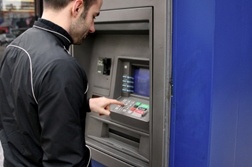 Under recent changes in the law, a bank cannot charge overdraft fees on debit purchases or ATM withdrawals unless the consumer specifically agrees. Federal rules that took effect in 2010 no longer allow banks and credit unions to charge overdraft fees on ATM or debit card transactions unless the bank customer agrees to "opt-in" to overdraft protection. However, banks and credit unions are still allowed to charge when checks or certain recurring electronic payments overdraw an account, even when the customer didn't opt-in to overdraft protection.
There is no legislation regarding how much money can be charged for overdraft fees, meaning customers who opt into the program could still pay up to $35 for transactions that take them even $1 into overdraft.
Overdraft fees are charged when customers attempt to conduct a transaction from their bank account that they do not have the financial means to cover.
Bank accounts go into overdraft when more money has been taken out of the account than was actually in it. It can happen quite easily: a bank account has $100 in it, but the customer makes a debit card purchase for $110, pushing the account $10 into overdraft.
Consumer Financial Protection Bureau reported in 2013 that 61 percent of bank profits from consumers come from overdraft and insufficient fund fees.
 The problem is that some customers say they never asked their banks to provide overdraft protection they assumed that if they tried to make a purchase they could not afford the purchase would be declined. Instead, customers say more and more frequently, such purchases are being approved and the customers are left with hefty overdraft fees.
Those fees can be as much as $35. That means that $10 into overdraft—overdraft the customer might not have asked for—is costing that customer an extra $35. What's more, customers say they are charged overdraft fees for every overdraft transaction. So, they may be in overdraft without knowing it, continuing to spend on their accounts and being charged $35 every time they do so—pushing them even further into overdraft. That can add up to hundreds of dollars in fees.
According to a December 2016 Consumer Protection Report published by the US Public Interest Research Group (US PIRG), 626 large banks reported collecting $8.4 billion in revenue from overdraft and insufficient fund (NSF) fees, an increase of 3.6 percent over the same period the previous year. Some of the nation's largest banks, along with some smaller institutions, accounted for 67 percent of the total reported overdraft revenue.
According to the US PIRG report: "The 10 banks that collected the most overdraft revenue through the first three quarters of 2016, in order, were: Chase Bank, Wells Fargo, Bank of America, TD Bank, US Bank, PNC Bank, Suntrust Bank, Regions Bank, Branch Banking and Trust, and Woodforest National Bank."
In 2015 the three largest banks collected $5.1 billion in overdraft fees alone. The average overdraft fee is $34 dollars, but according to a 2014 report from the Consumer Finance Protection Bureau (CFPB), the majority of debit card overdraft fees are handed out on transactions of $24 or less and are repaid within three days.
Put in lending terms, if a consumer borrowed $24 for three days and paid the median overdraft fee of $34, such a loan would carry a 17,000 percent annual percentage rate (APR), the CFPB noted in 2014.
Excessive bank overdraft fees lawsuits have been filed and/or settled against a variety of banks, including Wells Fargo, Bank of America, M&T Bank, HSBC, UMB Bank and Wachovia. The lawsuits allege that banks charge excessive overdraft fees when customers' accounts go into overdraft. They further allege that the banks use a number of unethical practices to push their accounts into overdraft, such as misrepresenting customers' account balances and reordering debits and credits to accounts.
One tactic that banks are accused of using to increase their profits from overdraft fees is reordering transactions on accounts. That means that regardless of what order transactions occurred in on a single day, some banks process the largest transactions first. That can lead to a lot in extra fees for a person to pay.
For example, say a man spends $10, $20, $50 and $100 (in that order) in four transactions on one day, having $140 in his account. Either way, the account will likely still go into overdraft. But, if the account is debited in the order the purchases occurred, then only the final transaction will result in an overdraft fee of $35. However, if the transactions are processed from largest to smallest, then only the $100 purchase will be covered, leaving the customer to pay $35 for each of the final three transactions—for a total of $105 in charges.
Not all banks charge a flat $35 overdraft fee. Fees run from $19 up to $35. Some banks have tiered overdraft fees, so that the first overdraft transaction in a certain period costs one amount but any more overdraft transactions cost more.
 Another practice that banks are alleged to have used to push customers into overdraft is authorization holds. Authorization holds occur between the time a bank card purchase is made and the time the merchant settles the transaction. Prior to the merchant settling the transaction, the amount of the purchase is held, but it has not actually been withdrawn from the buyer's account yet. Once the merchant settles the account, which can occur a few days after the purchase is made, the funds are transferred to the merchant and the customer no longer has the money in his account.
For example, a customer with a $100 in his account makes a purchase of $40. That $40 is held immediately for the merchant, but is not actually taken out of the account because the money has not yet been transferred to the merchant. The customer cannot access this money, but it is still, technically, in his account. When the merchant submits her batch of transactions, the money is then taken from the account and transferred to the merchant.
This is all completely legitimate. However, some customers have complained that their banks back-date transactions to the date they occurred, not the date they were settled. They say this pushes their account into overdraft because they may not have had the funds necessary on the date the transaction occurred but did have the funds necessary by the day the transaction was settled.
 Another complaint is that banks have been irregularly posting debits and deposits on customers' accounts. For example, banks are required by law to make a check deposit available to a customer within a certain number of days. However, they can choose to make the deposits available sooner. Customers have complained that check posting is occurring inconsistently meaning that customers cannot predict when a deposit will be posted to their account. Sometimes, they say, the check is posted immediately while other times the check is not posted until after the account holder goes into overdraft.
Credit unions, which are not-for-profit organizations run cooperatively by members, operate differently than banks but may still face similar legal issues as banks such as lawsuits claiming excessive overdraft fees. According to the Credit Union Times, a wave of overdraft lawsuits has struck credit unions across the country.
"At least one dozen credit unions in nine states have been hit with class action lawsuits over their overdraft practices, Credit Union Times reported in Jan. 2016. "Often, the dispute is over how credit unions disclose the methods under which they apply overdraft fees."
In Nov. 2015, Tracy Fry, a Florida resident, filed a federal class action lawsuit in US District Court, Middle District of Florida, Tampa Division, against MidFlorida Credit Union, alleging that the credit union abused overdraft policies, breached its contract with members and charged customers overdraft fees when they had sufficient money in their accounts to cover the transactions.
 The banks have said they are clarifying their overdraft policies and procedures to help customers manage their finances. Customers, for their part, have filed lawsuits against some of the financial institutions, claiming their overdraft policies are illegal, and that banks have used egregious tactics such as reordering of transactions to maximize profits from overdraft fees.
Financial Institutions that could potentially face lawsuits regarding their overdraft procedures include:
Since 2013 Pew Charitable Trusts has outlined its set of best and good practices for overdraft services in 2013 and has evaluated banks each year since to track the practices of the largest 50 banks that offer consumer checking accounts. According to Pew, since it began examining overdraft issues, the largest banks have adopted many of Pew’s good practices, but few meet all the best-practice standards, especially with regard to declining ATM and debit point-of-sale (POS) transactions.
A recent study found that the largest percentage of bank overdraft fees are collected from bank customers who earn the lowest incomes. According to a 2016 issue brief from Pew Charitable Trusts, consumers often incur unexpected overdraft fees that exceed the original transaction amount.
Consumer protection attorneys are investigating claims that TD Bank charges excessive overdraft fees through a trick called ordering. Anyone with a TD Bank checking account who has been charged multiple overdraft fees on the same day may have been charged these fees improperly and may have claims against TD Bank.
TD Bank allegedly changes the ordering to cause the consumer to overdraft their account multiple times in the same day, when really they didn’t overdraft.
For example, say you have $50 in your checking account and make purchases of $10, $20, $15, and $100 in that order. You have only gone into overdraft on that last purchase. But TD bank has been accused of this” ordering” by processing the $100 charge first, and causing four overdraft fees.
TD Bank has 1, 301 locations, including branches in Connecticut, Delaware, Florida, Maine, Maryland, Massachusetts, New Hampshire, New Jersey, New York, North Carolina, Pennsylvania, Rhode Island, South Carolina, Vermont, Virginia, and Washington, D.C.
In Jan. 2017, The Consumer Financial Protection Bureau (CFPB) filed a lawsuit against TCF National Bank, accusing the bank of obscuring fees and adopting a loose definition of consent to preserve overdraft revenue. According to CFPB, TCF designed its application process to obscure the fees and make overdraft seem mandatory for new customers to open an account. Further, TCF allegedly adopted a loose definition of consent for existing customers in order to opt them into the service and pushed back on any customer who questioned the process. The CFPB lawsuit seeks redress for consumers, an injunction to prevent future violations, and a civil money penalty.
In May 2017, a hearing was slated for final approval of a $7.8 million settlement in a class action Ratzlaff et al v. BOKF, NA et al, Case No. CJ-2015-00859, Tulsa County District Court against BOK Financial (BOKF)with former bank customers who claimed the bank charged them excessive overdraft fees.
In July 2011, Fifth Third Bank agreed to a settlement of $9.5 million in a class action lawsuit Shannon Schulte et al. v. Fifth Third Bank, Case No. 0:09-cv-6655, US District Court, Northern District of Illinois, Eastern Division filed in November 2009.
In the lawsuit, Fifth Third accountholders claimed that Fifth Third Bank improperly assessed overdraft fees for insufficient funds on debit card purchases and ATM withdrawals by "re-sequencing" the order of transactions to maximize the number of overdraft fees.
Various banks have now settled lawsuits alleging they charged excessive overdraft fees or reordered transactions to push consumers into overdraft more quickly. The following banks reportedly agreed to pay:
Last updated on
FREE EXCESSIVE OVERDRAFT FEE LAWSUIT EVALUATION
Send your Excessive Overdraft Fee claim to a lawyer who will review your claim at NO COST or obligation.
GET LEGAL HELP NOW
GET LEGAL HELP NOW
Bank Overdraft Fees Regulations
Under recent changes in the law, a bank cannot charge overdraft fees on debit purchases or ATM withdrawals unless the consumer specifically agrees. Federal rules that took effect in 2010 no longer allow banks and credit unions to charge overdraft fees on ATM or debit card transactions unless the bank customer agrees to "opt-in" to overdraft protection. However, banks and credit unions are still allowed to charge when checks or certain recurring electronic payments overdraw an account, even when the customer didn't opt-in to overdraft protection.There is no legislation regarding how much money can be charged for overdraft fees, meaning customers who opt into the program could still pay up to $35 for transactions that take them even $1 into overdraft.
Overdraft Fees
Bank accounts go into overdraft when more money has been taken out of the account than was actually in it. It can happen quite easily: a bank account has $100 in it, but the customer makes a debit card purchase for $110, pushing the account $10 into overdraft.
Consumer Financial Protection Bureau reported in 2013 that 61 percent of bank profits from consumers come from overdraft and insufficient fund fees.
The problem is that some customers say they never asked their banks to provide overdraft protection they assumed that if they tried to make a purchase they could not afford the purchase would be declined. Instead, customers say more and more frequently, such purchases are being approved and the customers are left with hefty overdraft fees.Those fees can be as much as $35. That means that $10 into overdraft—overdraft the customer might not have asked for—is costing that customer an extra $35. What's more, customers say they are charged overdraft fees for every overdraft transaction. So, they may be in overdraft without knowing it, continuing to spend on their accounts and being charged $35 every time they do so—pushing them even further into overdraft. That can add up to hundreds of dollars in fees.
Excessive Bank Overdraft Fees
According to the US PIRG report: "The 10 banks that collected the most overdraft revenue through the first three quarters of 2016, in order, were: Chase Bank, Wells Fargo, Bank of America, TD Bank, US Bank, PNC Bank, Suntrust Bank, Regions Bank, Branch Banking and Trust, and Woodforest National Bank."
In 2015 the three largest banks collected $5.1 billion in overdraft fees alone. The average overdraft fee is $34 dollars, but according to a 2014 report from the Consumer Finance Protection Bureau (CFPB), the majority of debit card overdraft fees are handed out on transactions of $24 or less and are repaid within three days.
Put in lending terms, if a consumer borrowed $24 for three days and paid the median overdraft fee of $34, such a loan would carry a 17,000 percent annual percentage rate (APR), the CFPB noted in 2014.
Excessive Bank Overdraft Fees Lawsuits
Reordering Transactions
For example, say a man spends $10, $20, $50 and $100 (in that order) in four transactions on one day, having $140 in his account. Either way, the account will likely still go into overdraft. But, if the account is debited in the order the purchases occurred, then only the final transaction will result in an overdraft fee of $35. However, if the transactions are processed from largest to smallest, then only the $100 purchase will be covered, leaving the customer to pay $35 for each of the final three transactions—for a total of $105 in charges.
Not all banks charge a flat $35 overdraft fee. Fees run from $19 up to $35. Some banks have tiered overdraft fees, so that the first overdraft transaction in a certain period costs one amount but any more overdraft transactions cost more.
Authorization Holds
Another practice that banks are alleged to have used to push customers into overdraft is authorization holds. Authorization holds occur between the time a bank card purchase is made and the time the merchant settles the transaction. Prior to the merchant settling the transaction, the amount of the purchase is held, but it has not actually been withdrawn from the buyer's account yet. Once the merchant settles the account, which can occur a few days after the purchase is made, the funds are transferred to the merchant and the customer no longer has the money in his account.For example, a customer with a $100 in his account makes a purchase of $40. That $40 is held immediately for the merchant, but is not actually taken out of the account because the money has not yet been transferred to the merchant. The customer cannot access this money, but it is still, technically, in his account. When the merchant submits her batch of transactions, the money is then taken from the account and transferred to the merchant.
This is all completely legitimate. However, some customers have complained that their banks back-date transactions to the date they occurred, not the date they were settled. They say this pushes their account into overdraft because they may not have had the funds necessary on the date the transaction occurred but did have the funds necessary by the day the transaction was settled.
Irregular Deposits
Another complaint is that banks have been irregularly posting debits and deposits on customers' accounts. For example, banks are required by law to make a check deposit available to a customer within a certain number of days. However, they can choose to make the deposits available sooner. Customers have complained that check posting is occurring inconsistently meaning that customers cannot predict when a deposit will be posted to their account. Sometimes, they say, the check is posted immediately while other times the check is not posted until after the account holder goes into overdraft.Credit Union Excessive Overdraft Fees Lawsuits
"At least one dozen credit unions in nine states have been hit with class action lawsuits over their overdraft practices, Credit Union Times reported in Jan. 2016. "Often, the dispute is over how credit unions disclose the methods under which they apply overdraft fees."
In Nov. 2015, Tracy Fry, a Florida resident, filed a federal class action lawsuit in US District Court, Middle District of Florida, Tampa Division, against MidFlorida Credit Union, alleging that the credit union abused overdraft policies, breached its contract with members and charged customers overdraft fees when they had sufficient money in their accounts to cover the transactions.
Bank Overdraft Fees Lawsuits
The banks have said they are clarifying their overdraft policies and procedures to help customers manage their finances. Customers, for their part, have filed lawsuits against some of the financial institutions, claiming their overdraft policies are illegal, and that banks have used egregious tactics such as reordering of transactions to maximize profits from overdraft fees.Financial Institutions that could potentially face lawsuits regarding their overdraft procedures include:
- Ally Financial
- Bank of Hawaii
- First Hawaiian
- People's United
- Union Bank
- Bank of the West
- Bank of Oklahoma
- Capital One Financial Corp.
- Commerce Bank
- Fifth Third
- HSBC
- UMB Bank (AZ, CO, IL, KS, MO, NE, OK, TX)
- Valley National Bank (NJ)
- New York Community Bank (NY)
- Community Bank, N.A. (NY)
- NBT Bank, N.A. (NY)
- First Niagara Bank, N.A. (NY)
- Umpqua (OR and CA)
- Citizens Bank (MI and OH)
- Bank Midwest (MO)
- Stillwater (OK)
- Vectra (CO)
- Santa Barbara Bank and Trust (CA)
- City National (CA)
- Sandy Spring (MD)
- Bank of the Ozarks (AR)
- EverBank (FL)
- Tri Counties Bank (CA)
- NBT Bank (NY and PA)
- Banco Popular
Annual Pew Charitable Trusts Bank Evaluation
A recent study found that the largest percentage of bank overdraft fees are collected from bank customers who earn the lowest incomes. According to a 2016 issue brief from Pew Charitable Trusts, consumers often incur unexpected overdraft fees that exceed the original transaction amount.
TD Bank Overdraft Fee Lawsuit
TD Bank allegedly changes the ordering to cause the consumer to overdraft their account multiple times in the same day, when really they didn’t overdraft.
For example, say you have $50 in your checking account and make purchases of $10, $20, $15, and $100 in that order. You have only gone into overdraft on that last purchase. But TD bank has been accused of this” ordering” by processing the $100 charge first, and causing four overdraft fees.
TD Bank has 1, 301 locations, including branches in Connecticut, Delaware, Florida, Maine, Maryland, Massachusetts, New Hampshire, New Jersey, New York, North Carolina, Pennsylvania, Rhode Island, South Carolina, Vermont, Virginia, and Washington, D.C.
TCF National Bank Lawsuit
Bank Excessive Overdraft Fees Settlements
In July 2011, Fifth Third Bank agreed to a settlement of $9.5 million in a class action lawsuit Shannon Schulte et al. v. Fifth Third Bank, Case No. 0:09-cv-6655, US District Court, Northern District of Illinois, Eastern Division filed in November 2009.
In the lawsuit, Fifth Third accountholders claimed that Fifth Third Bank improperly assessed overdraft fees for insufficient funds on debit card purchases and ATM withdrawals by "re-sequencing" the order of transactions to maximize the number of overdraft fees.
Various banks have now settled lawsuits alleging they charged excessive overdraft fees or reordered transactions to push consumers into overdraft more quickly. The following banks reportedly agreed to pay:
- Capital One: $31.8 million to settle allegations of deceptive overdraft practices.
- American Savings Bank: to settle a class action lawsuit filed against it for $2 million
- HSBC Bank USA: to settle overdraft lawsuits. HSBC Bank USA's settlement will see the financial firm pay $30 million to settle claims.
- Bank of America: $410 million to settle claims of more than 13 million customers that the company used unethical overdraft practices. (Plaintiffs in the 2011 class action lawsuit alleged that Bank of America processed its debit card transactions in the order of highest to lowest dollar amount in order to maximize profit collection from overdraft fees, which were usually $35 each.)
Excessive Bank Overdraft Fee Legal Help
If you or a loved one has suffered damages by one of the banking institutions listed, please click the link below and your complaint will be sent to a lawyer who may evaluate your claim at no cost or obligation.Last updated on
EXCESSIVE OVERDRAFT FEE LAWSUITS
- Wells Fargo Excessive Bank Overdraft Fees alleging Wells Fargo Bank used deceptive practices in charging customers excessive overdraft fees
- UMB Overdraft Fees
- Bounced Check Recovery Lawsuit
- Credit Union excessive overdraft fees lawsuits
- BOK Financial Excessive Overdraft Fees Lawsuit alleging reordering transactions to push customers into overdraft more quickly
- Capital One Excessive Overdraft Fees Lawsuit allegedly reordering transactions to push customers into overdraft more quickly
- TD Bank Faces Overdraft Fees Class Action Lawsuit
- Umpqua Bank Faces Overdraft Fees Class Action Lawsuit
- Fifth Third Bancorp Excessive Overdraft Fees Lawsuit alleging use of deceptive practices in charging customers excessive overdraft fees
EXCESSIVE OVERDRAFT FEE LEGAL ARTICLES AND INTERVIEWS
Credit Union of New Jersey Hit with Excessive Overdraft Fees Lawsuit
Insufficient Funds Charges Threaten Small-Balance Accountholders
Texas Sues Griddy Energy for Deceptive Advertising

April 6, 2021
Laronda Hickmond filed a bank overdraft fees lawsuit against Credit Union of New Jersey in New Jersey District Court on March 17. Hickmond v. Credit Union of New Jersey alleges that the credit union repeatedly charged Ms. Hickmond $30 overdraft fees even though, according to the monthly account statements prepared by the credit union, her account balance never dropped into the negative. She seeks class action status for the lawsuit on behalf of herself and all similarly situated accountholders. READ MORE
Insufficient Funds Charges Threaten Small-Balance Accountholders
March 31, 2021
Excessive bank fees that are based on insufficient funds (NSF) charges may pose a greater threat to checking accountholders than overdraft fees. Recent lawsuits recognize that, without protections based largely in state contract law, consumers have little protection from NSF fees that result when checks or electronic payments that are presented and re-presented multiple times without the accountholder’s permission. READ MORE
Texas Sues Griddy Energy for Deceptive Advertising
March 12, 2021
On March 1, the State of Texas filed a lawsuit in Texas state court, alleging that Griddy Energy LLC misled energy consumers in violation of the Texas Deceptive Trade Practices—Consumer Protection Act (DTPA). In the aftermath of the massive February winter storm, Griddy customers found themselves with the astronomical electrical bills. One Houston resident complained that Griddy debited her credit card $4,677 in one week for electricity in her 800 square foot, one-bedroom apartment: “I do not have the money to pay this bill. We need help.” Griddy also auto-debited hundreds, sometimes thousands, of dollars from consumers’ checking accounts in a period of days. These massive daily withdrawals triggered cascading bank overdraft fees. READ MORE
READER COMMENTS
Christina
on
Kelley Allison
on
They have probably charged me thousands of dollars gaslighting me like this. And if they've done it to me, they've done it to others.
I guess the CEO needs a third yacht, am I right?
Sean
on
Justin R Evens
on
MELISSA J MONFREDA
on
Myriam Pierre
on
Cruz
on
TESTIMONY OF HOW I GOT MY LOAN FROM A LEGIT AND TRUSTED LOAN COMPANY
My name is Cruz Anabel Emiliano from South Africa . I want to thank Mrs Michelle Silva who helped me to get a loan. For the past five months, I have been searching for a loan to settle my debts, everyone I met scammed and took my money until I finally met Mrs Michelle Silva . She was able to give me a loan of R25,000.00 She can also help you. she has also helped some other colleagues of mine. If you need any financial help, kindly contact his company through email: (michelle.silvaservice@usa.com} , I believe she can help you. Contact her to get help just as he helped me. She doesn't know that I am doing this by spreading his goodwill towards me but I feel I should share this with you all to free yourself from scammers, please beware of impersonators and contact the right loan company. below are his words of encouragement to those seeking for a legit and honest private loan lender.
Myriam Pierre
on
Myriam Pierre
on
Norm Weiss
on
Connie
on
How convenient, 5 minutes after the transactions! The teller informed me "We have until 9:00A.M. to post your deposit". She agreed to waive one fee as a courtesy. I insisted on all of them being waived and finally she spoke to her "overdraft manager" who agreed but she warned me they will no longer be giving me this courtesy. I think they did this for me in the past when my acct. went over by a few cents.
Again, I do not fully understand this state charter, but as my intuition said, it cant be good. Sunmark is like all these other banks listed here, in my opinion. Imagine charging overdraft fees for the measly ATM fee as well as the ATM withdrawal . That angered me more than any of this, yet all the while , there was a federal paycheck of almost $2000 right there in my acct. just waiting to post. I will definitely be changing credit unions in the near future.
henry
on
Anonymous
on
I am really hoping we can gather a group of customers from the same bank, to create a class action lawsuit against them.
Laken mckinney
on
Kanoeolokelani Barker
on
Stephanie Cate
on
Kayla
on
Michael Senn
on
Ruth
on
Donna
on
I had money in the other account that is linked to this account. There was more than enough money to cover any charges. Instead, however, they put these measly charges onto the account, didn't move the money over, as they had before. Didn't inform me that there was an overdraft until this morning, which is 2 days later, and then there was $360 in overdraft fees for an over draft of $200 total, which was an additional overdraft due to the original overdraft fee. No email. No phone call. Nothing until they had charged me.
Anonymous comment
on
Amanda
on
John
on
Jennifer Vandeven
on
Blessings, Jenni
RC
on
I need my deposit released by BOA and funds available immediately to pay other bills. BOA is playing with the float. I called BOA and they said there is nothing they can do until they hear from Chase. I called Chase and they said my account is fine. The check cleared Chase and they have received nothing from BOA asking to verify that the check is good. I am self employed and BOA is causing a hardship for me. I have been a customer with BOA for over 20years. A lawsuit is needed for the banks to give the option to void the phone deposit if it will take longer than the regular deposit time 1 to 3 days. I called and asked them to void the deposit once I received the alert (that it would not clear in a day or two) and BOA said there was nothing they can do. I asked them to call Chase to verify my personal check I deposited into my BOA personal account cleared and they said they don’t do that. Yesterday after I received the alert, I could have ran to Chase to withdraw the cash needed to cover my mortgage payment but then the Chase check would have bounced. So I had to borrow $1,100 to cover my mortgage. Now the $1,100 BOA put on a hold for 9 days is causing a hardship On me and I am unable to pay my utilities and now they are about to be turned off.
Adam -NJ
on
Karen Rockafellor
on
Kerry
on
Louise A Avery
on
Dawn
on
JC
on
NSFs are designed to extract capital from the poor through bogus excuses known as "policy". The fact they make more than 25% of their net profit from this is asinine. Why can't ZERO mean ZERO? If the money isn't there, say there isn't. The cost to check an account to see if it has enough of a balance to cover a cost is nothing to the banks.
Any BBB member that is a bank which conducts business like this should lose their status, and all insurance companies should therefore stop insuring them.. for anything! See how that shit works. (Not talking about FDIC)
Arkansas
on
Pennsylvania
on
hernandez, amy
on
Rachel Brockman
on
we closed on our loan, and the first time I tried to use our heloc, she chuckled and said no Mrs Brockman, before you can use your credit line you have to pay down the interest. So Heloc was absolutely no use to us, in fact, we are now in default on the loan and all our equity was gone. The heloc was a very very bad decision on our part.
Moving forward, my husband works in the oilfield and it was in a downturn. During this time we lost 60% of his income. The first month that we saw the reduction in income I was negative over $2000 in my account. i had paid my bills like i normally do and then set up 3 transfers to an external account. Iberiabank canceled the 2nd 2 transfers and paid the first one to my other account and returned every bill payment I made. They moved the transfer in front of everything. At that moment our credit was ruined, our credibility went to shit and it happened to be December 2015 so our kids Christmas was nonexistent. We had been paying the overdraft fees to this bank to the tune of $6000 in 2015. I went in on many occasions to try and get relief and one time the area manager commented that we sure had a lot of money going in and out of our account. That was a very inappropriate comment, in light of her position. When I had finally had enough, i told the area manager that I would be hiring an attorney. My account was great as long as i kept my mouth shut and kept bouncing checks. The moment I said attorney it changed. I received a letter stating they would be canceling our acct in 30 days. in the mean time, I went to drive through and they would not cash my check because it was written in the wrong ink. This bank has never been to grocery store with me and have always cashed my checks. So all in all this bank has destroyed our lives and everyday we are still fighting to put the pieces back together.
Christina Lynn Ritchie
on
Karen Hentz
on
-$36.00 overdraft
$9.07 balance
$41.79 debit
-$32.72 balance
$36.00 overdraft
-$68.72 balance
Suntrust has been charging my overdraft fees on positive debits. When I call of send them a message SOMETIMES they reverse the overdraft fees, sometimes they don't. I need a lawyer. This always happens 8 days or so from payday so they get me again after seven for extended overdraft fees.
David
on
Lp
on
Lartharee Thompson
on
James Thomas McEntyre Jr.
on
THEN KNOWINGLY HAVE US THINKING THE MONEY HAS BEEN TAKEN OUT OUR BANK ACCOUNTS , BUT IN REALITY THEY WAIT DAYS AT A TIME UP TO A DAMN WEEK IN SOME CASES TO REALLY WITHDRAW THE MONEY OUT OF YOUR BANK ACCOUNT"!!!!) DON'T GET ME WRONG I'M PARTLY TO BLAME FOR NOT KEEPING UP WITH MY TRANSACTIONS , BUT WITH MY BUSY SCHEDULE IT'S ALMOST IMPOSSIBLE TO CHECK ON EVERY TIME YOU MAKE A PURCHASE WITH YOUR DEBIT OR CREDIT CARD,AND IT CAN BE QUITE FREQUENTLY ON SOME DAYS!!!!÷
Dennis kim
on
The bank I used to work at, no less, has hit me with a ton of these charges (upwards of 900) and are claiming they did their part because they sent me one notification to my permanent address which I gave them coming straight out of college.
It had been 45 days, and I only found out bc I called them!
Andrew B
on
Melissa
on
THEN, when the item that had been pending posted, of course the money was no longer there because of the OD fees, so they hit me with another. I contacted them to ask about this, and the woman just kept telling me I could "opt out" of overdraft protection. Why, when they'll still charge me $36 NSF fees, and NOT pay for things? I just want them to release MY money when things actually come out of MY account!!!
Gail m Barnhill
on
MELISSA A WENGER
on
Carl S. Dunn
on
Chelsea Beljic
on
Minnesota
on
Amazon and Walmart has switched to this bank for their CC.
I've never seen such low marks for a bank EVER. 2300 and some feedbacks...EVERY SINGLE ONE WAS ONE STAR.
I had a no interest account at Amazon which I paid off before the 24 months was up. Hundreds of people were charged interest from day one...simply by delaying or not recording payments on time. I sent my payment in 2 weeks in advance & did not get screwed like the others. I WILL NEVER AGAIN CHARGE ANYTHING AT AMAZON OR OPEN AN ACCOUNT AT WALMART UNTIL THEY DUMP SYNCHRONY. You can't even find their street address if you wanted to. Somewhere in Florida..What a joke.
Patricia
on
Why is there no regulation? all of these people have problems with so many banks yet no one does anything, I don't understand it, it's nuts. I'm happy to be a part of a class action or lawsuit; however, these banks are making so much money off of their customers that they don't care if they have to pay $400 million, it doesn't affect them so they keep doing it. what ever happened to customer service in this country?
Paul Glover
on
SJM
on
Georgeann Selander
on
Joseph Zhe-Dr.
on
Anon Y Mous
on
-
The trick is to run two sets of books (so to speak). Your transactions post to your account on THEIR database instantly! However, the customer viewed database is DELAYED! This sometimes causes low-fund accounts to go into NSF condition. But for some reason your view of the database (online banking) shows the INCORRECT data. So you do too many transactions with your debit card.
-
I brought this to their cust serv dept and always was told this was SOP and they did nothing wrong. Then slowly the overdrafts line up one by one and you get charged $30 O.D. fee for EVERY item EACH!!! I have seen over $250 once in O.D. fees.
-
They agree to refund SOME of them but not all. Why agree to do that if you are not doing something wrong at the bank.
-
You tell them to just REJECT any debit card transactions that are unfunded. They say they do but it seems that is false as they allow the NSF transaction KNOWING the deposit has not cleared yet. You think the funds are there when they are not. They say you should have keep a ongoing check register on a debit card. Who does that?
Sandy B Jennings
on
Emma Jean thomas
on
For Cheating people
HW
on
So fight them. To all of you out there asking for help, looking for advice.... I saw someone else say it in the comments. Take these robbers to court. Make them answer for stealing your money, taking your livelihood. I'm seeking legal counsel and I will do everything to make sure those cretinous bloodsuckers get nothing more from me than they already have!
Dee Dee
on
Lloyd
on
Sherice
on
Near homeless in San Diego
on
Liana Padilla
on
Nicole
on
Sybrash1
on
William Jones
on
Cape Cod Massachusetts
on
Cape Cod Massachusetts
on
California
on
My understanding has always been that CREDITS -- in this case, a Soc.Sec. direct deposit, immediately available -- are always posted before debits occurring on the same day.
ChristineM
on
Johnathan Tyler
on
Ikenna Anyabolu
on
Emahni w Herring
on
MN
on
Something must be done about this.
gerald cunningham
on
I deposited $12,853 from an attorney title company on December first.2015
PNC Bank paid four checks..of $2,397 total that day Decemeber 1, 2015..
Then On Dec 2,2015 Charge me over draft fee of $133..the following day saying my account did not have any funds in it...Yet they paid $2,397 in checks...Why ?..would they do that
My account had money in it..
I am going sue them in court.
Kris ramos
on
Ryan Lee Warriner
on
I will be filing a small claims against KeyBank here in WA on January 4, 2016. I will show manipulation in order to increase profits.
Take your bank into court. If one person does this, nothing happens, but imagine now, across the country 10,000 and more do this, and it is a movement.
The courts are there for the American people to be heard. Do it there. Don't talk. Do. I applaud your fortitude in advance.
K.T.B
on
carl m. anderson
on
Charlotte Jones
on
Lori
on
loietta
on
New York
on
Maui, Hawaii
on
Gretta
on
Then, stop paying by way of checks, & stop automatic bill paying by the bank. Then, each month after your funds come in, draw money out of your new account to pay your monthly bills. By money orders for them at grocery stores, where they are much cheaper than at banks.
Cancel all automatic payments. Mail money orders to everyone you owe, instead of checks or automatic payments. You should have no more problems with overdrafts if you do this. If every-one paid by money order like this, that would put a screeching halt to this little scheme of theirs.
I realize the money-order process involves more work for you--bookkeeping, etc., but it will save you bundles of $$$.
I am looking at ways under the law to ding these guys big time, without having to go to court. You can't win in court, because it is rigged. The "judges" etc. all work in collusion with the bankers. You have to learn to do administrative processes, using affidavits. You can shut the bastards down by learning how to do administrative processes because this puts you into common law where you have rights--and how!
We don't have to take anymore crap from the system when we learn how to wield the sword. I will post more after I consult with some law gurus I know. There is a way to cut these criminals into little pieces. I believe there are ways to foreclose on these banks who do this, too.
ash
on
After that was settled and my account was back on the positive side, I did another transaction where I was a negative $0.17. I was going to have over $1000 deposited in my account in two days. The day before the transaction was to come through, I made two more purchases which would have cleared my account this morning, after the $1000 deposit. So to summarize, Sat, I had a -$0.17...then Monday I had a total of -13.33 all transactions were still pending at 2am, so these transactions had not yet cleared my account. This morning, I log into my account, and show I have two overdraft fees of $34...The bank took them off as a courtesy, but I don't think they should have been there in the first place...they told me that the transactions cleared at 11pm est..they did not, I did not go to bed till after 2am, and they had not yet cleared my account...
DColbert
on
Americans everywhere should stop and demand that government officials get off their overpaid elected butts and legislate a ban or regulatory caps on all financial banking institutions!
AMERICA STOP TAKING THE banking CRAP!
SPEAK UP! DEMAND! INSIST!
Kristopher
on
I have not been overdraft in over a year despite the efforts of Bank of America. Here are the weird things I have seen them do to manipulate my account and try to overdraft me in the last 6 months alone.
I should also say that this effort seems to be highly focused on accounts with Direct Deposit which routinely spend down the balance to less than $20 prior to the next Direct Deposited paycheck.
#1: Repeatedly altering the transaction dates for purchases. In one case I still had the store receipt from the far side of town which showed the date of the transaction, yet my account was showing it as processed the prior day which put me less than 1 dollar away from an overdraft.
#2: Transactions which were showing as "processing" would suddenly disappear and the funds would show as available and not be on hold anymore. Then when I spent money the "MISSING" transaction would pop back onto my account and the funds would be held again. (they almost got me a couple times with this one!) (It only happens the day prior to my direct deposit and when my balance is below $20)
#3: Misrepresenting the Available Balance, (I have seen this one twice) I will be monitoring my account closely and know the balance is lets say, $9 the balance will be the same for several days with no transactions having happened because I know I only have $9, then one day prior to my direct deposit, my account will be altered to reflect an available balance that is around $15 higher. The transactions on the history will not explain the balance at all. I'm 100% sure that if I were to spend into that ghost balance that it would revert to normal and put me into over draft.
Its completely shady and should be investigated. But why would Bank of America ever stop? They rack up $35,000,000 to $100,000,000 every year on shady overdraft fees. Their CEO has stated publicly that "Our customers understand that we have the right to make a profit" Why would they want to stop? They only have to pay back 10% every few years when they get sued by the victims.
This is all truthful info that I have witnessed repeatedly on my account. There is ABSOLUTELY no reason for my available balance to inflate by $15 right before my direct deposit. when there has been no activity on my account for a week, to see the balance increase, and then go back to normal when I get my deposit. Thats like putting food in front of a starving dog. Are they hoping that someone is out of groceries and assumes they have enough money for a gallon of milk and some food? Is it trying to tag overdraft fees on the poorest people who are least likely to raise a fuss or even realize they were just extorted for a $35 fee that was 100% generated by manipulating their account? I'm not an expert and these are just serious question to be investigated further. but everything I state as having witnessed on my account is 100% true. I'm going to starting taking screen shots and photos on my phone when this manipulation happens. Or perhaps just go to a credit union that isn't trying to rob me.
Violet Jefcoat
on
Nevada
on
Instead of sending checks to our creditors, on several occasions they sent checks to us, with the creditors name upon them. When we called with complaints, they told us to forward their checks on despite the fact they are paid by the Bank of the West to perform the Billpay service. They were terribly rude and we had to pay late fees due to the delays in the mail. Bill Pay never resolved this issue with the fees. It cost us hundreds of dollars in late fees.
Due to the continuing problems with Bill Pay and the costs we had to pay, we finally closed our account with Bank of the West. The account was closed on April 29, 2015. All Bill Pay items for May were cancelled so there would be no issue with them. We paid our creditors ourselves for the May payments, through our new bank.
On June lst, despite having closed the account more than one month earlier and having a zero balance, Bill Pay reconstructed all our accounts and paid them. Realizing their error the next day, on the 2nd, they pulled back the funding resulting in hundreds of dollars in “returned check fees” from the creditor to us.
Only one account, Home Depot, cashed their FiServ payment of $150. All the rest they notified us about returned the funds to them. However, there were accounts which they did not notify us about which also charged us returned check fees. They suspended our account, despite the fact we had no account with them. We had an account with Bank of the West who contracts with them. And that account was closed five weeks prior to them paying creditors.
Apparently, to pay our creditors they must have had our information on a separate database, or they were allowed access to our personal accounts by Bank of the West. They paid last year's charges, not this year's.
On the 6th of June, after they claimed the the account was suspended on June 2nd, four days earlier (of which our account had been closed five weeks earlier) they again paid a creditor, our home mortgage company despite the account being "suspended" four days earlier and the account being closed with a zero balance at the end of April. This was for thousands of dollars. We were extremely concerned a fraud was occurring, especially since FiServ is paid per transaction with some creditors.
We have been assessed check return fees from many of the people Bank of the West's contractor paid. Why they paid by check, we do not know. All had online payment capabilities.
FiServ is now engaged in a harassment campaign of, calling daily and threatening us by telephone. There are several calls a day coming into one of our homes and they are now leaving threatening voice mails upon our cellular phones.
We insist on resolving this with Bank of the West, with whom we have a contract, not FiServ. Their contractors should not be harassing us. Today, they agreed to look into the matter. It is complicated as their contractor has racked up more than $4000 in fees and expenses as a result of what occurred.
We are also awaiting an apology, which has not come, as of yet. The first few steps we went through with Bank of the West was them stating we owed a debt. Now, they owe one to us which is almost double, as a result of FiServ.
Arkansas
on
Anonymous
on
Anonymous
on
Date: 03/03/2015 11:10AM
Subject: Branch Manager, Post Falls Idaho US BANK
March, 03
To Whom it may concern,
Just received a phone call from the "District manager" of US bank in Post Falls. "NOTHING she can do" she said. Been banking with US bank for MANY years....And get this treatment. I don't care about the "Fees" anymore. My goal now is to get this bank a "POOR" customer service rating in EVERY on-line forum, BLOG and media outlet.
Edward M. Vaillancourt
http://www.usbank-5starscrewed.0catch.com/US_Bank_Sucks/US_Bank_Custox.html
> From: edward.vaillancourt@gmail.com
> Date: March 2, 2015 at 4:16:33 PM PST
> To: "richard.davis@usbank.com"
> Subject: Branch Manager, Post Falls Idaho US BANK
>
>>>
>>> Date: February 28, 2015 at 12:18:03 PM PST
>>>
>>> February 28,2015
>>>
>>> To : Richard K. Davis, CEO.
>>>
>>> This is to address an issue of personal service at US bank in Post Falls Idaho. This may be an insignificant issue, but I would like to tell you what happened in my case.
>>>
>>> On February 25, 2015 I had made a call to the post Falls branch to let them know that a check was supposed to be direct deposited in my account on February 8th. This check was not deposited as expected due to an error from my Corporate office.(Universal Hospital Services) located in Minnesota. I explained to the "Assistant Manager" my real concern in possible overdraft charges. (I'm a person who does sometime sends out checks in the expectation of a deposit) She, the assistant manager, told me that she couldn't help me unless my account was in a "Positive balance". She made a "Note" in my account (So she said) of my situation.
>>>
>>> On February 27, 2015, I had called back after my account was in a "Positive balance" according to the assistant managers direction. (A payroll check was deposited) to cover my accrued overdraft charges due to my previous check not being direct deposited into my account from the 8th of February. I spoke with Julie, who looked at my account information and proceeded to "sigh" and make other noises perceived to be that of disgust. I again explained my situation and how the "assistant manager" told me she could help me on the overdraft charges if my account was in a positive balance. "Julie" began to lecture me on my banking practices and that my account is "Not Worthy" of this kind of assistance or personal attention from her.
>>>
>>> Sometimes I think of the "Race Card" and my nationality in cases like this, but I didn't even think "Julie" cared. If I had walked into the branch with my suit and tie on, maybe things would have been different. I do pay my bills, I own my house and my cars. (my credit is on the mend from being unemployed) this should not matter. I'm a good person and family man. Perhaps "Julie" needs to learn humility. "Regular People" that have been in this town for 42 years want to be treated as just that. My account will be closed and moved to a local "Hometown" bank in the next few days.
>>>
>>>
>>> Thank you for your time,
>>>
>>>
>>> Edward M. Vaillancourt
>>> 1396 N. Brookhaven Ln.
>>> Post Falls, Idaho 83854
>>> C:509.998.3681
>>> C:509.481.8880
>>>
New York
on
North Carolina
on
California
on
Wisconsin
on
Anonymous
on
Alabama
on
Anonymous
on
They should be investigated again!
Anonymous
on
When using the card instead of cash, there are a lot of smaller charges such as coffee or lunch. If for whatever the reason your account hits negative, any small purchase, even $1 will cause the same check charge that a $500 purchase would.
I can understand the bank takes some risk and they deserve some recompense but 2500% interest is more than usury. They will gladly continue to add up the charges with out any limit. I suspect the banking industry makes more money from overdraft fees on small accounts than they do on the interest from larger accounts.
I think there should be some regulation on overdraft fees and part of that regulation should include the fees being based on the amount of the overdraft. I think 10% up to $35 would be reasonable. So then if your account had five overdraft fees of $1 the total overdraft fee would be $.50 instead of the $175 currently charged.
If anyone knows of a law suit to reform the overdraft fee regulation in such a way I would gladly sign up.
Virginia
on
New Jersey
on
Illinois
on
Arizona
on
Florida
on
California
on
Anonymous
on
Pennsylvania
on
Ohio
on
Anonymous
on
Anonymous
on
Again this is impossible because if this online transfer had in fact created an overdraft at the time it was done the bank would never have let me do it. It's only after the bank backdate’s the 10 dollar gas purchase and restates history, that the overdraft is able to occur. They are effectively rewriting history-injecting a transaction from one day into the previous day's transaction history and re-dating it to cause the overdraft in order to generate the fee.
What makes this particularly annoying and frustrating is the fact that I can use my Paypal card to make a purchase which then generates an ACH debit which is sent to Bank of America to pass along to my account. I wake up the next morning, confirm the debit has taken place which also happens to bring my BOA account negative. But here's the frustrating difference: in this alternative scenario I am aware of the negative balance-I cover the overdraft by making a cash deposit before 8 p.m. and Bank of America in this scenario CHARGES ME NO FEE.
Here's the difference in the two scenarios. In scenario number one, I am NOT made aware of the negative balance on the day that it occurs and am unable to resolve it because IT NEVER ACTUALLY EXISTS ON THAT DAY BECAUSE IT ONLY EXISTS AS A RESULT OF BEING BACKDATED AND SHOWING AS AN OVERDRAFT A F T E R T H E F A C T-AFTER HISTORY HAS BEEN REWRITTEN THE NEXT DAY.
Anonymous
on
New Jersey
on
Florida
on
Minnesota
on
Florida
on
Maryland
on
California
on
South Carolina
on
Wisconsin
on
Texas
on
West Virginia
on
New York
on
Ohio
on
Texas
on
Texas
on
Pennsylvania
on
Texas
on
Maryland
on
Idaho
on