

LAWSUITS NEWS & LEGAL INFORMATION
Cipro Linked to Neuropathy
Were you looking for Levaquin Peripheral Sensorimotor Neuropathy lawsuits?
Cipro, an antibiotic used to fight infections, has been linked to serious side effects, including an increased risk of Cipro Neuropathy. Other Cipro side effects reportedly include an increased risk of liver toxicity and an increased risk of Cipro tendon ruptures.
Cipro (generic name Ciprofloxacin, also known as Ciproxin and Ciprobay) is used to fight bacterial infections, including bronchitis, pneumonia, sexually transmitted infections, skin infections and urinary tract infections. Numerous Cipro side effects have been linked to the antibiotic, including tendon ruptures. Recently, Bayer Pharmaceuticals, maker of Cipro, issued a warning that there are also liver toxicity issues associated with the Cipro antibiotic.
Cipro tendon ruptures can involve the Achilles heel, shoulder, hand, bicep or thumb. The risk of tendon ruptures or of Cipro tendonitis (tendinitis) increased in patients older than 60, people who have received kidney, heart or lung transplants, and people on steroid therapy. Tendon ruptures can occur in patients who do not have any of those risk factors and can also occur several months after patients finish their Cipro treatment.
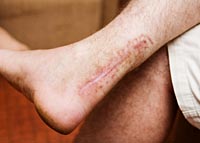 Cipro antibiotic is in a class of drugs called fluoroquinolones, a prescription drug used to treat common respiratory infections including bacterial sinusitis, bronchitis, and pneumonia in adults.
Bayer AG developed Cipro—the first fluoroquinolone to be on the market—in 1987. Since that time studies have shown that Cipro and other fluoroquinolones have been misused and overprescribed.
One study on lab rats found that the rodents' Achilles tendons underwent "degenerative alterations" shortly after Cipro therapy began and ruptures continued to occur even after the animals stopped receiving the drug. Researchers now believe that Cipro may cause a toxic effect on connective tissue structures, thereby explaining tendon ruptures. Researchers speculate that Cipro tendon rupture may be as high as 1 in 250.
As of July 8, 2008, Cipro carries a black box warning alerting patients to the risk of experiencing tendon ruptures or tendonitis (tendinitis). The black box warning was added after Public Citizen, a public interest watchdog organization, sued the FDA, asking the court to force the FDA to respond to a petition, filed by Public Citizen, requesting a black box warning on Cipro.
The FDA recommends that physicians should advise patients to stop taking Cipro at the first sign of tendon pain, swelling or inflammation, as these symptoms can precede tendon rupture.
Last updated on
FREE CIPRO NEUROPATHY LAWSUIT EVALUATION
Send your Cipro Neuropathy claim to a lawyer who will review your claim at NO COST or obligation.
GET LEGAL HELP NOW
GET LEGAL HELP NOW
Cipro Side Effects
Cipro Tendon Rupture
Cipro antibiotic is in a class of drugs called fluoroquinolones, a prescription drug used to treat common respiratory infections including bacterial sinusitis, bronchitis, and pneumonia in adults.
Bayer AG developed Cipro—the first fluoroquinolone to be on the market—in 1987. Since that time studies have shown that Cipro and other fluoroquinolones have been misused and overprescribed.
One study on lab rats found that the rodents' Achilles tendons underwent "degenerative alterations" shortly after Cipro therapy began and ruptures continued to occur even after the animals stopped receiving the drug. Researchers now believe that Cipro may cause a toxic effect on connective tissue structures, thereby explaining tendon ruptures. Researchers speculate that Cipro tendon rupture may be as high as 1 in 250.
As of July 8, 2008, Cipro carries a black box warning alerting patients to the risk of experiencing tendon ruptures or tendonitis (tendinitis). The black box warning was added after Public Citizen, a public interest watchdog organization, sued the FDA, asking the court to force the FDA to respond to a petition, filed by Public Citizen, requesting a black box warning on Cipro.
The FDA recommends that physicians should advise patients to stop taking Cipro at the first sign of tendon pain, swelling or inflammation, as these symptoms can precede tendon rupture.
Cipro Legal Help
If you or a loved one has taken Cipro and subsequently suffered from tendon rupture or tendonitis, please click the link below to send your complaint to a lawyer who will evaluate your claim at no cost or obligation.Last updated on
CIPRO NEUROPATHY LEGAL ARTICLES AND INTERVIEWS
Levaquin Peripheral Sensorimotor Neuropathy Lawsuits Expected to Grow

West Coast Woman Says She Has Cipro Damage

Study Links Popular Oral Antibiotics to Increased Risk of Nerve Damage

July 3, 2015
It’s bad enough when a prescription medication leaves you with a nasty, but temporary side effect. It’s another thing entirely when a devastating side effect proves permanent. That’s one claim amongst a host of allegations contained in a Levaquin Antibiotics lawsuit currently before the courts and arguing for consolidation by the US Judicial Panel on Multidistrict Litigation. READ MORE
West Coast Woman Says She Has Cipro Damage
August 26, 2014
Eight months ago, a woman (we’ll call her “Susan”) was a healthy young mother looking forward to going on vacation. She believed she had a bladder infection and was anxious to see it cleared up before she headed south for a warm and sunny vacation. READ MORE
Study Links Popular Oral Antibiotics to Increased Risk of Nerve Damage
August 23, 2014
A Canadian-US research team has made an important and scientifically proven link between a class of potent and commonly used antibiotics known as fluoroquinolones (FQs) and a condition known as peripheral neuropathy (PN). READ MORE
READ MORE Drugs/Medical Settlements and Legal News
READ MORE Personal Injury Settlements and Legal News
READ MORE Personal Injury Settlements and Legal News
READER COMMENTS
Jean Guy Benard
on
Deniese Berry
on
Gabriel Love
on
Rickey Morris
on
michelle
on
Anne Carmichael Sherman
on
Thanks
California
on
Utah
on
New York
on
Mississippi
on
Anonymous
on
Washington
on
Mississippi
on
Florida
on
Virginia
on
Pennsylvania
on
Florida
on
Virginia
on
California
on
Washington
on
California
on
Texas
on
California
on
California
on
I use my hands constantly and the tendonitis I have developed has prevented me from doing most of the aforementioned activities for prolonged periods of time. I have experienced loss of strength in my grip, pain in my forearms, and the inability to use hand tools effectively.
Anonymous
on
My pain is still almost unbearable and I am seeing another doctor this week.
I have to have another procedure done, and the doctor was going to prescribe CIPRO again - I explained situation - he just put down i was 'allergic' to CIPRO so they wouldn't give it to me again.
I can't do the yard work anymore - nothing with my right arm involved.
Anonymous
on
Around a month after taking Cipro, the muscle & joint pain started. It was bad. He thought he was developing rheumatoid arthritis. Not long after that, the severe depression came along with suicidal thoughts & acts. In Jan. 1999, he took a loaded .38 revolver, placed it in his mouth & pulled the trigger. He survived that attempt. The bullet went through his cheek instead of his brain. He started having tendonitis which was extremely rare for him. In 1999, he had his first rupture in the back of his left calf around 11 months after taking Cipro.
This was an avulsion because the muscle tore completely loose from where it was attached at the bottom of the calf. In 2000, the quadriceps tendon tore at his right knee. In 2001, a quadriceps muscle tore apart in the center of his right thigh. All these injuries occurred with no warning. None of the doctors knew what caused this. His legs were very damaged at this point and causing him quite a bit of pain. He kept trying to work though, telling me as long as he had two good arms left, he'd make a living for his family.
For the next few years the ruptures seemed to have stopped & there were no suicide attempts. He was still suffering from so much pain in his body & all the other things were still going on. In 2004, he took CiproXR. Shortly afterwards most of the previous conditions he was having from the first time he took Cipro got far worse such as the involuntary jerking movements of his arms & legs, rectal bleeding, his lip swelled just like before (this lasted for only a few days each time it occurred), bigger sores with dark centers in patches appeared on his body and all the others things got worse. He started having severe headaches & migraines frequently.
The numbness in his legs got worse & started in his hands. Tendonitis cases became more frequent. Around 11 months after taking CiproXR, his triceps ruptured at his right elbow in 2005. Months later his triceps & biceps were damaged in his right arm. Near the end of 2005, another tendon ruptured in his lower left forearm using the amount of pressure a person would use to squeeze a blood pressure bulb. His depression became severe again & suicidal thoughts & acts returned. He became disabled after this. I never thought a medicine could do all this. He had 6 ruptures & no one knew why. This should not have happened to him or anyone else.
California
on
I need to have them removed surgically.
Kentucky
on
Ohio
on
Alaska
on
Virginia
on