

LAWSUITS NEWS & LEGAL INFORMATION
Automotive Lawsuits
Automotive class action lawsuits can involve defective design complaints, predatory lending, financial fraud, automobile leasing, deceptive marketing, false advertising, and products that hurt your vehicle. Thousands of people are injured each year due to defectively designed automobiles. Car dealers can trick you out of your low APR. Unscrupulous dealers can sell you a car that has been in a wreck.
Automotive lawyers or attorneys can help you get a refund, upgrade or cash settlement for your defective car, truck or SUV. Several states have Lemon Laws to protect consumers of new cars, trucks, or SUVs, from defects and failures. Since there may be a Statue of Limitations on filing Lemon Law lawsuits or other auto lawsuits, you should contact a lawyer as soon as possible.
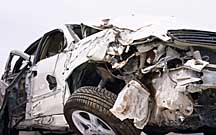 Other known design failures have included airbags, axles, door latches, foot pedals, floor mats, fuel systems, fuel tanks, lift gates, window glass, rollover tendencies, roof crushing, seatbelts, steering wheels, tire separations, and more. The courts define a defective product as one that is unreasonably dangerous as designed, or it is not safe for its intended use, as designed, or it is more dangerous than an ordinary consumer would expect.
In cases where the design is acceptable, there may be problems attributed to the manufacturing process of the vehicles. The manufacturer may have created a flaw in the product during the manufacturing process, whether by accident or by negligence.
Some unscrupulous individuals put up ads for a car on eBay or such, at a price much lower that similar vehicles. Then they want you to use an escrow service they recommend to send your money to, via Western Union or other wire service. Of course the escrow company is their own company, and once you wire the money, there is no way to get it back. Never wire money, or use the dealers recommend escrow service.
Dealers advertise that they can get you out of your current lease or loan. However, what really happens is that the dealer pays off your lease or loan, then adds that amount to your new lease or loan. They then spread out the payments so that you don't notice you are still paying for your previous car, as well as your new car, and have twice the debt you had before.
Another trick, called the "Straw Purchase" happens when the dealer tells you you have a terrible credit score and need a co-signer. However, the dealer knows your credit score is so bad you would never qualify for a loan. He gets you to find a co-signer for the loan, but in the paper shuffle, it ends up that the "co-signer" is the actual purchaser of the vehicle.
Some car dealers can "forget to pay off your trade in". You trade in a car that you still owe payments on, and the dealer is supposed to pay off the loan for you and add the amount to your new purchase. Then the bank calls - the dealer has not paid off the loan, the car is still in your name, the bank is charging late payments to your credit rating - and you have no contract to prove that the dealer said he would pay off the loan.
The list goes on...
Last updated on
Automotive lawyers or attorneys can help you get a refund, upgrade or cash settlement for your defective car, truck or SUV. Several states have Lemon Laws to protect consumers of new cars, trucks, or SUVs, from defects and failures. Since there may be a Statue of Limitations on filing Lemon Law lawsuits or other auto lawsuits, you should contact a lawyer as soon as possible.
FREE AUTOMOTIVE LAWSUIT EVALUATION
Send your Automotive claim to a lawyer who will review your claim at NO COST or obligation.
GET LEGAL HELP NOW
GET LEGAL HELP NOW
Defective Design
One prevalent design flaw concerns seatbacks, recliner mechanisms and seat tracks. Car manufacturers continue to ignore injury statistics that could be prevented by inexpensive design revisions to car seats that would protect passengers, especiallyin rear end collisions.Other known design failures have included airbags, axles, door latches, foot pedals, floor mats, fuel systems, fuel tanks, lift gates, window glass, rollover tendencies, roof crushing, seatbelts, steering wheels, tire separations, and more. The courts define a defective product as one that is unreasonably dangerous as designed, or it is not safe for its intended use, as designed, or it is more dangerous than an ordinary consumer would expect.In cases where the design is acceptable, there may be problems attributed to the manufacturing process of the vehicles. The manufacturer may have created a flaw in the product during the manufacturing process, whether by accident or by negligence.
Fraudulent Advertising
In some cases a dealer will try to sell you a car that has been in a wreck, telling you it is in great shape. The car has the federally required "As Is, No Warranty" sticker on it which means you cannot return the car because you agreed to accept any damages. Try to get at least a 30 day warranty from the dealer, and always check the car through Carfax.Some unscrupulous individuals put up ads for a car on eBay or such, at a price much lower that similar vehicles. Then they want you to use an escrow service they recommend to send your money to, via Western Union or other wire service. Of course the escrow company is their own company, and once you wire the money, there is no way to get it back. Never wire money, or use the dealers recommend escrow service.
Dealers advertise that they can get you out of your current lease or loan. However, what really happens is that the dealer pays off your lease or loan, then adds that amount to your new lease or loan. They then spread out the payments so that you don't notice you are still paying for your previous car, as well as your new car, and have twice the debt you had before.
Financial Fraud
Many car dealers use financial fraud to sell their vehicles. For example, you purchase a car and sign for a low APR. A week later the dealer phones and says you didn't qualify for that low interest - apparently the loan you thought you signed was "subject to loan approval". Then they ask you for more money and increase your payments. To avoid this scam, don't finance your car at the dealers.Another trick, called the "Straw Purchase" happens when the dealer tells you you have a terrible credit score and need a co-signer. However, the dealer knows your credit score is so bad you would never qualify for a loan. He gets you to find a co-signer for the loan, but in the paper shuffle, it ends up that the "co-signer" is the actual purchaser of the vehicle.
Some car dealers can "forget to pay off your trade in". You trade in a car that you still owe payments on, and the dealer is supposed to pay off the loan for you and add the amount to your new purchase. Then the bank calls - the dealer has not paid off the loan, the car is still in your name, the bank is charging late payments to your credit rating - and you have no contract to prove that the dealer said he would pay off the loan.
The list goes on...
Automotive Legal Help
If you or a loved one has suffered damages in this case, please click the link below to send your complaint to a lawyer to evaluate your claim at no cost or obligation.Last updated on
AUTOMOTIVE LEGAL ARTICLES AND INTERVIEWS
$55M Personal Injury Verdict Against Honda Stands
Volkswagen Made Several Versions of Defeat Devices

Chrysler False-Park Wrongful Death Suit Revived by the Ninth Circuit
April 19, 2017
Santa Clara, CA: A $55 million jury verdict brought against Honda Motor Co, in 2014 will stand, according to a ruling by the Pennsylvania Superior Court. The settlement resulted from a personal injury lawsuit against Honda that alleged the automotive manufacturer ignored a seat belt defect. The suit was brought by a man who claimed that defect resulted in his becoming paralyzed. READ MORE
Volkswagen Made Several Versions of Defeat Devices
October 20, 2015
Santa Clara, CA: Three people familiar with Volkswagen defeat devices allege that the German automaker was aware that several versions of the software were made in order to “rig” diesel emission test results, according to a report by Reuters. READ MORE
Chrysler False-Park Wrongful Death Suit Revived by the Ninth Circuit
July 18, 2015
The Ninth Circuit revived the wrongful death claims against Chrysler Group that arose from a transmission defect in Chrysler vehicles. The federal court of appeals held that “genuine issues of material fact existed as to whether the “false park” defect in the Grand Caravan” caused the deaths of plaintiffs’ mother and father.” READ MORE
READ MORE Automotive Settlements and Legal News
READER COMMENTS
Kim Cole
on
I recently tried to get an alignment and the screw broke -the tech doing the alignment stated that it is unable to be driven
😳this is not the first alignment
Now I may have to pay for some arm that the screw goes in too and on top of that have to wait for the parts
Called corporate and the service manager put a PAUSE on my service till his investigation was done 😳I need my car
I know that they have at least three recalls on Toyota rav 4 from 2006 to 2016 but my vin number doesn’t match, I mean who is to say when it’s exactly the same problem as the recalls
I will probably end up buying a new rear suspension
This is ridiculous
Patricia A Barnett
on
Missouri
on
California
on
Georgia
on
Georgia
on
Georgia
on
Missouri
on
Florida
on
Arizona
on
Minnesota
on
Georgia
on
Ohio
on
Utah
on
Pennsylvania
on
Alabama
on
Washington
on
Florida
on
As Puerto Rico, by definition is included as United States, which all definitions do state Puerto Rico is United States, I am not breaching any lease agreement by asking to have my car transported to Puerto Rico, which is within the United States.
There is a major difference on the wording, between United States or "Contiguous 48 states" or "Continental United States". American Suzuki clearly used a broad term of United States that includes Puerto Rico and actually misrepresent what they are now acting upon. They clearly made a mistake by using a wrong wording which discriminates on my behalf.
I need to stop this practice from American Suzuki to correct their wording accordingly, and reimburse me for all my expenses. I had to payoff the lease, which now I request due compensation or satisfaction for this grievance. I need to refinance the car, which they should do. They are making me lose money.
New York
on
North Carolina
on
Virginia
on
Ontario
on
California
on
1 Week later A/C failed again, car returned to dealership again.
Dealership found a leak in the condenser. Also car had smell of mold; Dealership said the drain for the A/C condensation was plugged up and not draining properly. Dealership changed drain tray.
Weather had been 104 deg.
After the 2nd A/C repair.... A/C system worked another week then began being intermitent and not work. Dealership refused to fix car as problem is intermitent.
A short time after that when I went over a speed bump my radio died. I drove immediately to the dealer (was on a weekend - Sat or Sun late) and spoke with a Rep. He saw the radio was dead but had no one to check the car. He hit the dash with his fist trying to make it work again -- nothing helped. I then turned the car off and back on... the radio worked again.
During the 4th of July, while driving home on the freeway, as I applied my brakes in traffic the electric door locks began going up and down (lock and unlock); repeatedly.
Recently discovered A/C intermitent problem occured on sudden stops or bumpy roads - same as radio. It is electrical. When it occured I brought it to the dealership but since it was not a total failure - dealer would do nothing.
Filed complaint with Corp. Office and have case number -- they will do nothing until it completely breaks down.
Electrical problems 'ONLY" occured "AFTER" the dealership worked on the A/C the first time
The electrical problems continue with the A/C. Total incidents over time about 15. Warranty expires about 10/2008 - Bought car new from dealer. I need a reliable car.
New Jersey
on
Florida
on
New Jersey
on
Anonymous
on
Not long afterward, the truck driver heard my little brother, Francis, scream in fear. This only provoked the truck driver. He continued to drive well above the speed limit into a U turn.
My little brother, and I did not have much of a chance to escape. My car was destroyed, and my little brother became just another vehicular homicide victim. In fact, I just recently finished a slow recovery from my own injuries.
My family could sue, or at least report the truck driver's license plate. That could never bring little Francis back, so it would be utterly pointless. We don't believe in retribution, but rather we believe only in forgiveness.
Anonymous
on
I knew the tires were under warranty so I called to get a location to exchange it. When we got there I was having trouble getting anyones attention. After about 45 minutes I raised my voice and demanded satisfaction.
Everyone, including customers froze in rapt attention. We got a new tire and about 5 minutes later down the road I realized I was at the wrong tire company.