Posts Tagged ‘ Zicam ’
Whatever Happened to that Zicam Securities Lawsuit?
June 16th, 2010. By AbiK
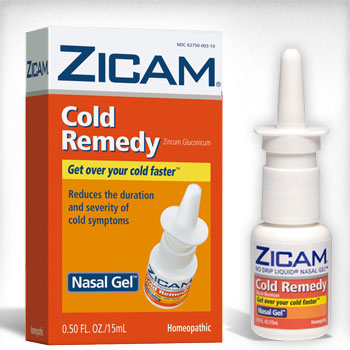 Wrong time of year to be thinking about Zicam, but hey, legal decisions happen when they happen. And so it was for Zicam earlier this week when the US Supreme Court gave the go-ahead to consider the challenge Zicam-maker Matrixx Initiatives Inc. is bringing against the lawsuit that claimed Matrixx had failed to inform investors of its little loss-of-smell issue.
The Zicam securities lawsuit, as reported in the Wall Street Journal, has been going on now since 2005—it was first thrown out and then just last year (when it became a hot news topic again) it was reinstated by an appeals court.
But this isn’t about noses that can no longer smell—well, sort of. It’s about the fact that even though Matrixx apparently knew of some “adverse event” reports (i.e., 12 reports between 1999 and 2003 of folks who claimed to have lost their sense of smell after Zicam use), the company still marketed the over-the-counter sniffle reliever in a positive light—no hint of any potential problems regarding ability to smell. And, the plaintiffs have gone as far as to claim that the marketing statements made by Matrixx were false and misleading and—here’s what’s at the crux of this—inflated the stock price of the company.
So, as you can see, for these plaintiffs, it’s not about personal injury; it’s about securities.
Needless to say, Matrixx is countering the above allegations saying that the adverse event reports were not statistically significant enough, and that no true causal relationship had been established, so what’s the beef? (beef being my word, not thatof Matrixx, of course). The petition Matrixx submitted to the Supreme Court also states Matrixx’s position that reinstating this lawsuit “would have immense consequences for the pharmaceutical industry, potentially making companies liable for securities violations if they didn’t disclose even small numbers of adverse-incident reports.”
So that’s the latest, and now that the Court has agreed to consider Matrixx’s challenge, WSJreports that oral arguments will most likely begin in the fall. Hmm, just in time for cold season…
Put the FDA in Charge of Homeopathic Products
December 3rd, 2009. By Hunter West
 The Zicam issue brings to the fore yet another issue involving the mandate of the US Food and Drug Administration (FDA), the federal health regulator that has jurisdiction over medical devices and medical drugs—and food. A wieldy mandate indeed and one that, due to funding and staffing issues, the agency has been hard-pressed to undertake effectively.
That said, naturopathic products, natural-health potions and homeopathic elixirs do not fall under the FDA’s regulatory mandate for approval.
Given the growing popularity of homeopathic products, the FDA’s mandate should be expanded.
“Many of our clients believed the FDA had evaluated Zicam before it reached the market,” said lawyer Robert Gordon, a partner with the New York law firm Weitz & Luxenberg. “In fact, Zicam products were not regulated or approved by the FDA because they were listed as homeopathic treatments that use natural ingredients. Mounting evidence from the scientific community is proving Zicam with zinc should never have been sold. Some trusting users are now paying a price with their health.”
The status quo only confuses the public. To be fair, nowhere on the labels for products such as Zicam does it say that the product carries FDA approval. And yet, when there is a problem with a product—homeopathic or otherwise—which agency undertakes the issue of the health alert?
The FDA. The latter is also involved in the negotiation and co-ordination of voluntary product recalls—as it was for Zicam—for products the FDA was not required to approve. That, together with the blurring of the lines between what is medicinal and what isn’t, leaves Joe Q. Public at a loss to explain just who is running the show.
The same holds true for dietary supplements and other weight-loss remedies that use natural ingredients. If it’s homeopathic, then a product does not have to satisfy the FDA before it goes to market.
But here’s the rub: various medicinal ingredients, either on their own or in concert with other ingredients, can elicit side effects and other dangerous risks. Hence the requisite testing required of the manufacturers, with the subsequent vetting through the FDA before the product is approved for sale.
However, just because an ingredient is listed as ‘natural’—a mineral, herb or otherwise—doesn’t automatically suggest it is safe. Natural products can hurt you too, if used in the wrong way and in misguided combination with either another product or in association with an incorrect indication.
People who have used Zicam nasal spray for colds have reported a loss of their sense of smell. Sometimes it is immediate. For others the loss occurred after prolonged use. Some had their sense of smell return after they stopped using Zicam. Others are fearing that their smell loss (and concurrent loss of the ability to taste food) may be permanent, and lawsuits have been launched.
All, because of zinc. Zinc on its own has a benefit to the human body. It’s actually integral, in proper balance with copper, to maintaining a healthy system. However, zinc up the nose is apparently a problem, as various studies and a flood of reports to the FDA now show.
Would this have happened, had this product been required to go through the rigorous FDA approval process?
The FDA is under the gun due to the perception of lax oversight. The agency’s critics cite too many close ties, funding and otherwise, with pharmaceutical companies that only serves to cloud its objectivity. Defenders of the FDA cite the fact that the agency has suffered through years of chronic under-funding and staff shortages and thus cannot hope to cope with a regulatory environment that now sees drugs and medical devices increasingly manufactured offshore.
And now this.
The FDA needs to promote to the American consumer that it does not have jurisdiction over homeopathic products—at least at the approval stage—and therefore the consumer cannot assume that a homeopathic product he is buying comes with the FDA stamp of approval.
Either that, or Congress needs to provide a massive funding and staffing boost to the FDA in order to undertake its current mandate, together with the adoption of a new mandate to regulate the homeopathic industry.
The FDHA—the US Food, Drug and Homeopathic Agency.
Has a nice ring to it.
Zicam, Hydroxycut, Ephedra: Separated at Birth, now need Babysitter
September 16th, 2009. By Kristine B
 What do Zicam, Ephedra and Hydroxycut have in common?—and no, you can’t look at side-by-side pictures for this one. If you’ve been following the news, turns out they have a lot more in common than you’d think. All three…
- were marketed as “natural” products that people turned to in a time of need
- weren’t required to test their safety before being marketed
- caused nationwide recalls when reports of serious side effects started rolling in
and…
- were assumed to be safe because they were marketed as “natural”
And while each of these has been yanked from the market, those of their ilk that are still on the market now need some babysitting (i.e., tighter regulation and increased safety testing).
The bottom line is that people think “natural” equals “safe.” Unfortunately, that’s just not always true. Something can be natural and still harmful—Poison Ivy, anyone? And the food industry is renowned for giving new meaning to “natural”. Check out the Jelly Belly site and you’ll see the superfruit mix is: Naturally Sweetened, High in Antioxidant Vitamin C, Made with Real Fruit Juices and Purees, and have Colors from Natural Sources. Great—but I won’t be getting my USRDA of vitamin C from ’em. Read the rest of this entry »
Zicam Lawsuit: What’s so big about Smell Loss?
July 22nd, 2009. By AbiK
 Funny thing about your sense of smell. Unlike vision or hearing, you don’t really think about your sense of smell until a specific circumstance: that early morning whiff of coffee brewing, an aromatic stroll through a rose garden, the powdery scent of a baby. Or the unmistakable and intrusively pungent odor of a skunk…These are the scents that some former Zicam users are alleging they can no longer smell—because of Zicam.
If you’ve ever wondered what the top 3 challenges might be for individuals who suffer from smell loss, here they are:
Pleasure
As mentioned in some of the examples above, we gain pleasure from many different scents. According to the SenseofSmell.org, humans are capable of recognizing 10,000 distinct odors. Additionally, we recall smells with a 65% accuracy after a year, while the visual recall of photos sinks to about 50% after only 3 months. It’s no wonder we’re able to recall fond memories simply by recognizing a familiar scent. Read the rest of this entry »
Zicam Recall puts new light on Possible Treatment for Smell Loss
July 15th, 2009. By AbiK
 Zicam users who’ve allegedly found themselves without a sense of smell have to deal with another “loss”: the loss—or lack—of treatment options.
One thing you immediately realize upon reading a July 10th article from HealthDay Reporter on loss of smell and a possible new treatment for it is that restoring the sense of smell is not an easy task—few treatment options exist and those that do exist are not a sure bet.
The article, however, points to a potentially new treatment option found in a drug once used to treat asthma. The drug, theophylline, showed some initial promise in a recent study done by Dr. Robert Henkin, director of the Center for Molecular Nutrition and Sensory Disorders in Washington, D.C.
The study looked at 312 patients who were diagnosed with hyposmia (loss of smell) over a seven-year period. After being treated with theophylline, over 50% of the participants in the study reported improved sense of smell; more than 20% reported their smell had returned to normal. Read the rest of this entry »

Find us on


Archive by Category
- Accidents (24)
- Airlines (9)
- Asbestos Mesothelioma (262)
- Automotive (25)
- Celebrity (14)
- Class Action (84)
- Complaints/Comments (15)
- Consumer Fraud (84)
- Contest (2)
- Court of Public Opinion (5)
- Crazy Sh*t Lawyers See (61)
- Criminal Law (4)
- Defective Products (111)
- DePuy ASR Hip Recall (2)
- Discrimination (22)
- Drugs/Medical (248)
- Elder Care Abuse (4)
- Emerging Issues (462)
- Employment (54)
- Environment (52)
- Financial (28)
- Food Illness (15)
- Human/Civil Rights (4)
- Insecurities (5)
- Insurance (16)
- Intellectual Property (16)
- Internet/E-commerce (19)
- lawsuits (161)
- Lawyers (20)
- Lawyers Giving Back (43)
- Lex Levity (10)
- Personal Injury (106)
- Pleading Ignorance (53)
- Real Estate (2)
- Recall (6)
- Scam (3)
- Securities (13)
- Settlement (81)
- Tort Reform (2)
- Totally Tortelicious (81)
- Veterans (11)
- Whistleblower (9)