Posts Tagged ‘ Stevens Johnson Syndrome ’
Stevens Johnson Syndrome Increasing?
June 8th, 2010. By janem
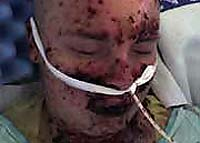 Many health practitioners still believe that Stevens Johnson Syndrome is a “rare skin disorder” but with the increase in adverse drug reactions (Health Canada reports adverse drug reactions are up 35 percent), this life-threatening disease is not as rare as we have been led to believe.
The Stevens Johnson Syndrome Foundation says it hears of 15 new cases a week and that is likely the tip of the iceberg—not everyone diagnosed with SJS has internet access or is aware of the foundation. As well, drug companies are required to tell the FDA (and other health agencies, such as Health Canada) about any reports of serious adverse reactions they receive, but not every doctor or patient takes the time to report side effects. This means that adverse reactions to certain drugs can go unnoticed for a long time.
And to this day, some doctors don’t know what SJS is, even when it’s staring them in the face. When their patient is covered in the most horrific sores and blisters, they might even prescribe the same medication to treat the disease that caused SJS in the first place!
According to Public Citizen, about 1.5 million hospitalizations a year were caused by adverse drug reactions—that’s more than 4,000 patients per day. It gets worse: 57 percent of these adverse drug reactions were not recognized by the attending physician at the time of admission. Many of these admissions should have been prevented. And many patients develop adverse drug reactions while they are in hospital.
“770,000 additional patients a year—more than 2,000 patients a day—suffer an adverse event caused by drugs once they are admitted,” said the not-for-profit agency. In 2004, the Centers for Disease Control (CDC) reported that more than 40 percent of Americans were taking at least one prescription drug. People develop SJS from commonly prescribed drugs, including antibiotics, anti-convulsants, and non-steroidal inflammatory drugs (NSAIDS), including over-the-counter drugs such as Ibuprofen and Motrin. Age is no barrier: Numerous children’s medications have caused SJS.
But countless medical facilities and doctors don’t recognize SJS in the early stages because they aren’t familiar with the symptoms. Until SJS turns into TEN and usually by that time, it’s too late. It boggles the mind: why aren’t all health practitioners given mandatory training to recognize this life-threatening disease? Don’t they read drug labels or their Blue Book before prescribing drugs? It’s like a toss of the dice. When a drug such as Bextra has been known –since 2002—to cause SJS, perhaps the doctor believes the good outweighs the risk.
Just last August Tibotec Therapeutics reported postmarketing cases of SJS with its Intelence drug and the FDA’s MedWatch said “Intelence therapy should be immediately discontinued when signs and symptoms of severe skin or hypersensitivity reactions develop.” How about adding, “get thee to a burn unit, fast.” And bring along a list of drugs that may have caused the reaction.
10 Things to Know about Stevens-Johnson Syndrome
April 20th, 2010. By AbiK
1. Stevens-Johnson Syndrome (SJS) is a potentially life-threatening form of adverse reaction to medication. The more severe form of SJS is called Toxic Epidermal Necrolysis (TEN). Some drugs that have been connected to SJS are Children’s Motrin, Ketek, Advil, Ibuprofen, Bactrim, Daypro, Cipro, Bextra and Dilantin.
2. While target lesions are typically associated with Stevens-Johnson Syndrome (SJS), they are not always seen. SJS symptoms include: rash, blisters or red blotches on skin; persistent fever; blisters in the mouth, eyes, ears, nose and genital area; swelling of eyelids or red eyes; conjunctivitis; flu-like symptoms;
3. The SJS disease process typically begins with a nonspecific upper respiratory tract infection. Studies show that more than half of SJS patients report a recent upper respiratory tract infection.
4. A diagnosis of either SJS or TEN is based on degree of body surface detachment (i.e., skin detachment). The classifications are as follows:
Stevens-Johnson Syndrome: Less than 10% body surface detachment
Overlapping SJS/TEN: 10% – 30% body surface detachment
Toxic Epidermal Necrolysis: More than 30% body surface detachment
5. There are approximately six cases of SJS per million persons per year. For TEN, it’s approximately 1-2 cases per million persons per year.
6. There is a correlation between the amount of body surface detachment and mortality. For SJS, studies have shown the mortality rate to be approximately 1% – 5%. If body surface detachment Read the rest of this entry »
SJS on Discovery Health Mystery Diagnosis
March 15th, 2010. By AbiK
 Imagine thinking your child—as an infant—has a bad case of chicken pox only to find out that it’s not chicken pox but a very bad reaction to some medication (in this instance, an anti-convulsant). Then imagine finding out that the reaction has a name: Stevens Johnson Syndrome (SJS). And it can bring on a number of life-threatening symptoms in addition to leaving scars and medical conditions that can last a lifetime.
That’s what happened when Julie McCawley, now 16, was an infant and was admitted to a hospital for what was seemingly a very bad case of chicken pox. Covered with burn-like blisters, her eyes began to swell shut and she was finally diagnosed with SJS as the result of taking an anti-convulsant.
While Julie is fortunate to be alive, she has since endured 13 surgeries to counter the lasting effects of SJS and she is now blind in her right eye and photophobic. She also carries the scars from the blisters that once covered her body.
Discovery Health’s Mystery Diagnosis will be airing a segment on Julie’s experience—it’s a program that all parents should aim to watch to become more aware of SJS, which can be difficult to diagnose—and according to Julie’s mother, Jean, that’s simply because “so few doctors are familiar with SJS”.
The Discovery Health Mystery Diagnosis program on SJS will air on March 22—check your local listings for times and channels.
SJS: to Screen or not to Screen?
July 29th, 2009. By LucyC
In March of this year, the FDA announced that it would be investigating the anti-epileptic drugs phenytoin and fosphenytoin in connection with their potential to cause Stevens Johnson Syndrome (SJS) and toxic epidermal necrolysis (TEN). (fyi, Phenytoin is marketed as Dilantin, Phenytek and generics. Fosphenytoin sodium is marketed as Cerebyx and generics.)
One of the factors that may have played into the FDA investigation is a reported higher incidence of SJS in Asian patients taking these drugs, specifically Asians who test positive for the human leukocyte antigen allele HLA-B*1502.
While the FDA reports that as much as 15 percent of the population in China, Taiwan, Thailand, Malaysia, Indonesia and the Philippines may have this allele, they don’t believe there’s enough information to warrant testing for the allele in the US for patients of Asian ancestry—yet. Read the rest of this entry »

Find us on


Archive by Category
- Accidents (24)
- Airlines (9)
- Asbestos Mesothelioma (262)
- Automotive (25)
- Celebrity (14)
- Class Action (84)
- Complaints/Comments (15)
- Consumer Fraud (84)
- Contest (2)
- Court of Public Opinion (5)
- Crazy Sh*t Lawyers See (61)
- Criminal Law (4)
- Defective Products (111)
- DePuy ASR Hip Recall (2)
- Discrimination (22)
- Drugs/Medical (248)
- Elder Care Abuse (4)
- Emerging Issues (462)
- Employment (54)
- Environment (52)
- Financial (28)
- Food Illness (15)
- Human/Civil Rights (4)
- Insecurities (5)
- Insurance (16)
- Intellectual Property (16)
- Internet/E-commerce (19)
- lawsuits (161)
- Lawyers (20)
- Lawyers Giving Back (43)
- Lex Levity (10)
- Personal Injury (106)
- Pleading Ignorance (53)
- Real Estate (2)
- Recall (6)
- Scam (3)
- Securities (13)
- Settlement (81)
- Tort Reform (2)
- Totally Tortelicious (81)
- Veterans (11)
- Whistleblower (9)