Posts Tagged ‘ Settlement ’
Top 10 Legal News Stories of 2013
January 7th, 2014. By AbiK
 Bet you can’t guess what the top legal news story on LawyersandSettlements.com was for 2013 (and no, none of them featured former NYC mayoral hopeful Anthony Weiner…).
I’ll take that bet even further—I bet most attorneys, who you’d think would be in the know on these things, couldn’t even guess.
That’s because 2013 turned out to be a pretty interesting year in terms of the top legal news stories our journalists covered. While employment lawsuits—typically involving issues such as unpaid overtime and misclassification, on-the-job discrimination, workers’ comp, and wrongful termination—are always reader faves, in 2013 something strange happened: employment issues did not show up in our top ten news stories. At all.
Go figure, eh?
To be fair, when it came to content posted other than legal news articles (i.e., emerging issues, settlements, lawsuits filed), employment settlements drew the most readers. But it was health-related issues that drove readers’ interest when it came to articles and interviews. Here’s how the year’s top ten legal news stories played out (as measured by number of clicks the articles published in 2013 received):
1. Denied Disability: Social Security Recognizes Fibromyalgia
2. Health Canada Documents Link Yasmin and Yaz to Deaths
3. Are Fen-Phen Pills Back? You Would be Half-Right…
4. New York State Cracks Down on Illegal Internet Payday Loans
5. Mirena User Suffers Miscarriage, Now Filing Mirena Lawsuit
6. Mirena Side Effects Lead to Early Hysterectomy for Young Plaintiff
7. Monster Caffeine Levels: When Too Much Energy Isn’t Good for You
8. Junior Hockey League Player Filing Ulcerative Colitis Accutane Lawsuit
9. Yasmin Birth Control Suspected in Deaths of Canadian Teens
10. Mesothelioma Victim Awarded $8 Million
And if you’re wondering what the number one legal news story was for 2012…here’s that one (and, you guessed it, it was about a wage and hour lawsuit, the ‘Lunch Break Lawsuit‘ (Brinker Restaurant Corp. v. Superior Court))
Southwest Learns Not to Screw a Lawyer out of a Drink (ever) & Gets a Hefty Bar Tab
December 28th, 2012. By AbiK
 Important tip: If you’re going to screw someone out of a drink, make sure he’s not a lawyer.
Southwest Airlines learned that the hard way last week when a judge approved the settlement for the recent class action lawsuit in which Southwest screwed its Business Select ticket purchasers out of some drinks.
Apparently, the way things were (where’s Barbra Streisand when you need her?) at Southwest, if a passenger purchased tickets through their premium Business Select program, the passenger would receive drink vouchers—valued at $5 each and with no expiration date—that they could then use in-flight.
Well, all fine and dandy until the fateful date of August 1, 2010. That’s when Southwest changed the rules of the game and decided that those drink vouchers could only be used on the day of travel that was printed on the ticket. Hmm…thinking of stockpiling vouchers for that red-eye flight? Not anymore you aren’t (and you may want to hold off on popping the Ambien…)
So someone raised an eyebrow at the switcheroo in policy and that someone was an attorney: Adam Levitt (of Wolf Haldenstein Adler Freeman & Herz in Chicago).
Levitt, clearly being an ‘e pluribus unum’ kind of guy, figured he wasn’t the only one affected by the disappearing drinks act and, therefore, from the many affected one class was formed and a Southwest Airlines drink voucher class action lawsuit was filed (November 16, 2011). Levitt, it goes without saying, was the initial plaintiff in the case.
According to Business Insider, the breach of contract lawsuit settlement affects those Southwest Airlines passengers who purchased tickets prior to August 1, 2012 through the Business Select program and received drink vouchers but did not redeem them–note, the settlement does not affect passengers who earned drink vouchers via the frequent flier program Rapid Rewards.
Further, BI reports that the drink voucher settlement entitles eligible fliers to new drink vouchers—even if they no longer have the original unused vouchers—for each voucher the passenger claims they had earned but not redeemed. The settlement drink vouchers will be good for one year.
Drink voucher lawsuit class members will reportedly be notified of the settlement and how to submit a claim over the next few weeks.
Chicago attorney Joseph Siprut, who represented the ‘took the drink right out of my hands’ victims, is quoted in BI as saying, “This settlement is a grand-slam result for the class, as consumers are recovering 100 cents on the dollar.” (not a shabby recovery, btw).
It’s estimated the Southwest drink voucher settlement could cost the airline in the area of $29 million, given that there are potentially 5.8 million fliers who are part of the class, having purchased and flown Southwest via the Business Select program between October 2007 and August 2010.
Restaurant, Phone Book Settle After Carcass Removal Screw Up
December 17th, 2012. By AbiK
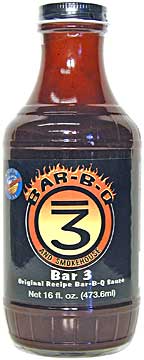 How well do you think your restaurant business would be doing if your phone book listing was tucked under the “Animal Carcass Removal” section in the local yellow pages?
Well, that’s just what this negligence lawsuit in Montana was about.
According to an AP report, a restaurant—Bar 3 Bar-B-Q—which has locations in Bozeman and Belgrade MT (and its own BBQ sauce, see left), was listed under “Animal Carcass Removal” in the yellow pages there. Now, forget about the simple fact that anyone looking under “Restaurants” would simply not see Bar 3 Bar-B-Q listed—that’s only half the issue. What about the people who actually notice the restaurant listed right along with other dead animal removal services?
That raises a whole bunch of questions not the least of which is…what exactly would a restaurant do with those dead animals? Re-purposed roadkill could, imaginably, help defray increasing food costs and give new meaning to “local beef”—though one can only think it would be a matter of time before something else that’s local—the health department—would have something to say about it.
Clearly, someone messed up and Hunter Lacey, who owns Bar 3 Bar-B-Q, was none too pleased. A late-night Jay Leno crack about it didn’t exactly help either—what was a local beef (pun intended) suddenly became a nationally known joke. It also didn’t help that the listing was not only originally printed in the 2009 phone book (when all this began) but that it was subsequently picked up in other phone directories in 2010 and 2011. Ouch.
So Lacey filed a negligence, defamation and slander lawsuit against the phone book company, Dex Media, Inc. And the two (Dex and Bar 3’s parent company, Big Sky Beverage) have finally settled.
According to AP, Dex had said that the listing was erroneous and that they removed the listed upon its discovery. Terms of the settlement have not been disclosed, but reports indicate that it would include a payment to the restaurant owner.
Anheuser-Busch Scion Settles Wrongful Death Lawsuit
October 31st, 2012. By AbiK
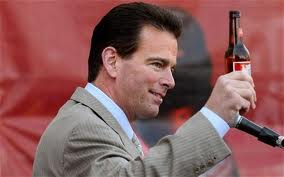
(Photo: The Telegraph/UK)
Remember Ted Kennedy and the Chappaquiddick mess? And the more recent one about polo club founder John Goodman—who after being charged with DUI was trying to adopt his girlfriend? The rich and famous just seem to have a way of getting into trouble with the law—and not just in a misdemeanor kind of way. This time, it was August Busch IV—Busch as in Anheuser-Busch, as in Budweiser, as in St. Louis, as in Clydesdales. That Busch.
August Busch IV, great-great-grandson of Adolphus Busch, founder of A-B, has settled a wrongful death lawsuit over the accidental death of his former girlfriend, Adrienne Martin. Martin died at Busch’s mansion in 2010 after an accidental drug overdose involving both cocaine and the the prescription painkiller oxycodone.
The wrongful death lawsuit had been filed by Martin’s ex-husband, Dr. Kevin Martin, on behalf of their son Blake, who is a minor. Later, Adrienne Martin’s parents, Larry Eby and Christine Trampler, were able to join the lawsuit after an appeal.
According to the St. Louis Post-Dispatch, the settlement, which was signed on Tuesday by Circuit Judge William Syler, calls for Blake Martin to receive $1.35 million. Adrienne Martin’s mother, Christine Trampler agreed to accept $200,000; her father, Larry Eby agreed to a $200,000 out-of-court settlement to be put into an annuity for his grandson.
After Martin died, an autopsy revealed cocaine use and evidence of an overdose of the prescription painkiller oxycodone. Police investigated the incident, and prosecutors said there was no evidence to indicate Martin’s death was anything other than accidental.
August Busch IV was CEO of Anheuser-Busch up until the sale of the company to Belgian company InBev in 2008. Since that time, the Post-Dispatch reports, Busch has continued as a paid consultant at Anheuser-Busch InBev, receiving $120,000 a month.
After Alcohol Wipe Screw-Ups, Triad Decides to Play with Makeup
October 18th, 2012. By AbiK
 Ok, could be makeup. Could be some anti-aging wonder. Could be your run-of-the-mill hand soap. Who knows? The initial reports regarding Triad Group’s foray into cosmetics have been a bit lacking in detail as to what exactly will be coming of the manufacturing lines at Triad’s Hartland, WI production plant.
Triad, if you recall, was at the heart of the alcohol prep pad, alcohol swab and alcohol swabstick, aka alcohol wipe recall of last year—the one connected to the death of 2-year old Harrison Kothari in Texas who contracted acute bacterial meningitis caused by Bacillus cereus bacteria. The Kotharis have settled with Triad—as have a dozen others who filed contamination lawsuits (details of the settlements have not been disclosed).
Fast-forward a year. The Milwaukee Journal Sentinel reported that Triad, which filed for bankruptcy protection on the heels of its $5 million insurance policy being drained on the lawsuits just mentioned, has indicated it would like to re-establish itself as a cosmetics company.
Every cat has nine lives, right?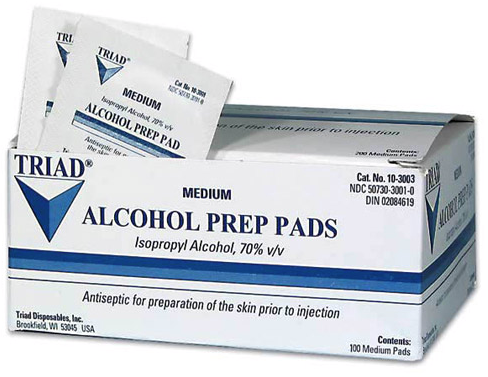
The Journal Sentinel quoted Triad’s COO, Eric Haertle, as saying at the company’s first meeting with creditors in bankruptcy court, “We are in the infancy stage of these opportunities. We have talked to industry vendors. I am encouraged and optimistic about the support we are receiving if we can put a plan together and resume operations.”
What’s interesting here is not so much that Triad even wants to emerge like a phoenix from the ashes—hey, it’s a business wanting to cut its losses and get on with things—no, the interesting thing is their costume change; they’ll now wear the i.d. of “cosmetics company” rather than that of “medical device” company—and that has benefit for a company whose odds of reincarnation under their former classification are next to nothing.
See, in order for Triad to go back to being a medical device company and manufacturing as it had before, it faces some intense scrutiny by the FDA. According to the Journal Sentinel, both the FDA and Triad would need to agree to the FDA’s consent decree which would impose a $15,000 per day fine—per violation—should Triad fail to comply with FDA policies. Additionally, the decree would subject Triad to FDA inspections without prior notice–and those inspections could cover everything from equipment to raw materials to finished products to packaging. The decree also calls for the company to post a $4 million bond.
No small undertaking to set up shop again.
But, there’s an escape hatch: re-establishing itself as a cosmetics company means less rigorous regulation and oversight by the FDA. And given that the consent decree to operate as a medical device company again could cost Triad millions—with no guarantee they’ll even pass with flying colors—well, the land of lipstick bullets, lotions and potions suddenly has tremendous appeal.
On second thought, maybe there is a clue as to what cosmetics will be coming off Triad’s production line—those Triad alcohol swabsticks look a lot like those cotton swabs used to smudge eyeliner (for that smoky eye look) or to clean up little makeup mistakes…hmm…just wondering…

Find us on


Archive by Category
- Accidents (24)
- Airlines (9)
- Asbestos Mesothelioma (262)
- Automotive (25)
- Celebrity (14)
- Class Action (84)
- Complaints/Comments (15)
- Consumer Fraud (84)
- Contest (2)
- Court of Public Opinion (5)
- Crazy Sh*t Lawyers See (61)
- Criminal Law (4)
- Defective Products (111)
- DePuy ASR Hip Recall (2)
- Discrimination (22)
- Drugs/Medical (248)
- Elder Care Abuse (4)
- Emerging Issues (462)
- Employment (54)
- Environment (52)
- Financial (28)
- Food Illness (15)
- Human/Civil Rights (4)
- Insecurities (5)
- Insurance (16)
- Intellectual Property (16)
- Internet/E-commerce (19)
- lawsuits (161)
- Lawyers (20)
- Lawyers Giving Back (43)
- Lex Levity (10)
- Personal Injury (106)
- Pleading Ignorance (53)
- Real Estate (2)
- Recall (6)
- Scam (3)
- Securities (13)
- Settlement (81)
- Tort Reform (2)
- Totally Tortelicious (81)
- Veterans (11)
- Whistleblower (9)