Posts Tagged ‘ Prozac ’
What’s Making You Fat? 2 Popular Drugs could be Packing on Pounds (or Worse)
July 29th, 2012. By AbiK
 You’re wondering what’s going on, right? It’s not like you’re doing a solo flight with a pint of Häagen-Daz every night before bed or blowing through the Taco Bell drive-thru each day rattling off an order for a couple dozen 99¢ Beefy Nacho Burritos (in a large shopping bag, thanks). But something’s making you gain weight or keep it on…
Indeed, obesity has become what some would call an epidemic. Heck, all you need to do is turn to the media to find words like “diabesity” being used to realize how much obesity—or discussion about it—has infiltrated our lives. But could there must be something else going on?—something other than a big food orgy that most of us didn’t even know we were attending?
Perhaps. That something could be a vicious cycle you’re in—where, by treating a condition that’s potentially related to weight gain, the treatment you’re on can actually lead to more pounds. Unfortunately for some, the treatment can also lead to harmful drug side effects—which in turn can lead to a drug-related personal injury lawsuit. A vicious cycle, indeed. The following two conditions and treatments are examples of vicious cycles that could be causing weight gain and putting you at risk for some unwanted side effects:
1. Antidepressants are Making You Gain Weight
Somehow it’s easy to link depression to weight gain—it’s that “emotional eating” theory. But treating depression with antidepressants can also lead to weight gain. That’s right—the very drug you might be taking to help you avoid emotional eating might also be causing your weight gain. Paxil, Prozac and Zoloft each have possible weight gain as a side effect (in addition to other serious potential side effects like SSRI birth defects or suicidal thoughts). And it’s estimated that about 25% of those taking an antidepressant will experience some weight gain.
Additionally, atypical antipsychotic medications Zyprexa, Abilify, Risperdal and Seroquel have been linked to rapid (and dangerous) weight gain in children.
2. Diabetes Medication is Making You Gain Weight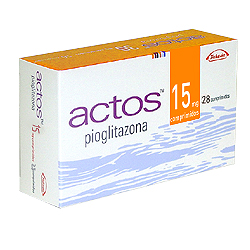
Remember that 70’s Billy Preston song, “Will It Go Round In Circles”? Well, diabetes and treating diabetes have that ‘going around in circles’ thing going on. Unfortunately, being overweight or obese can be a precursor to type 2 diabetes. Once diagnosed, some diabetes patients are put on a thiazolidinedione drug such as Actos. One of the more common side effects of Actos can be weight gain—the very thing that may have contributed to onset of type 2 diabetes in the first place (see it coming full circle?) The Actos labelling info also includes “rapid weight gain” as a possible serious side effect which requires immediate medical attention.
Weight gain may be the least of the worries for Actos side effects, though. Actos has also been associated with bladder cancer, heart failure and liver problems.
As always, before stopping any medication, or when noticing any concerning side effects, talk to your doctor.
Top 10 Drugs with Heart Side Effects on LawyersandSettlements.com
January 31st, 2012. By AbiK
 In recognition of American Heart Month, which kicks off tomorrow (Feb. 1st), and National Wear Red Day (Feb. 3rd), LawyersandSettlements.com takes a look at our most-viewed drug lawsuit topics for 2011 in which heart attack or heart side effects were the alleged primary injuries.
Unfortunately, while a lot of focus this month will be on the positive measures we all can take to improve heart health—and that’s certainly important—it can be easy to overlook the negative heart side effects some drugs can have—and attention should be given to those as well.
As the chart at left depicts, Actos, Paxil and Zoloft accounted for the majority of 2011 traffic related to heart side effects, with Actos receiving the most at 25 percent. The Type 2 diabetes drug was released as an alternative to Avandia, which as you’ll recall came off pharmacy shelves as a result of the new FDA REMS program that became effective in November, 2011. Still, Avandia came in as the fourth most popular heart lawsuit topic.
Paxil, the popular antidepressant, has been linked to heart birth defects in infants and the drug drove in 18 percent of traffic last year. Ditto Zoloft, which accounted for 10 percent of the pageviews among readers concerned over the potential for heart birth defects.
The ten prescription drugs on the list fall into four distinct classes: Actos and Avandia are prescribed for the treatment of Type 2 Diabetes; Vytorin helps to control cholesterol, which has a direct impact on heart health; Trasylol is used during surgery to mitigate blood loss; the remaining drugs address depression and anxiety.
Reader interest in Prozac, Lexapro, Effexor, Celexa, Zoloft and Paxil shows continued concern surrounding pregnant women using selective serotonin reuptake inhibitors (SSRI) drugs and potential heart birth defects.
Here’s the full list:
Top 10 Drug Lawsuit Topics for Heart Side Effects in 2011
- Actos (Pioglitazone HCl)
- Paxil (Paroxetine)*
- Zoloft (Sertraline)*
- Avandia (Rosiglitazone)
- Celexa (Citalopram)*
- Effexor (Venlafaxine)*
- Lexapro (Escitalopram)*
- Prozac (Fluoxetine)
- Trasylol (Aprotinin)
- Vytorin (Ezetimibe/Simvastatin)
*SNRI (serotonin-norephinephrine reuptake inhibitor) or SSRI (selective serotonin reuptake inhibitors) drugs associated with heart birth defects when taken during pregnancy
Prescription Hell: When Curing Your Ill Causes More Ills
August 4th, 2011. By AbiK
True Story: I saw a comment from a reader here at LawyersandSettlements.com who had gone to the doctor to get some help for his acne. While there, the doctor noticed that this guy’s hair was starting to thin. Long story short, the guy walked out of the doctor’s office with a prescription for Propecia. He now claims he suffers sexual side effects (like erectile dysfunction and impotence). Oh, and btw, he still had his acne.
It got me thinking…
I’m not a glass-half-empty type, but it’s easy to see how, with prescription drugs, one can envision a worst-case-scenario downward spiral of things—especially given the potential side effects with some drugs that are on the market.
So then I started thinking, what if…
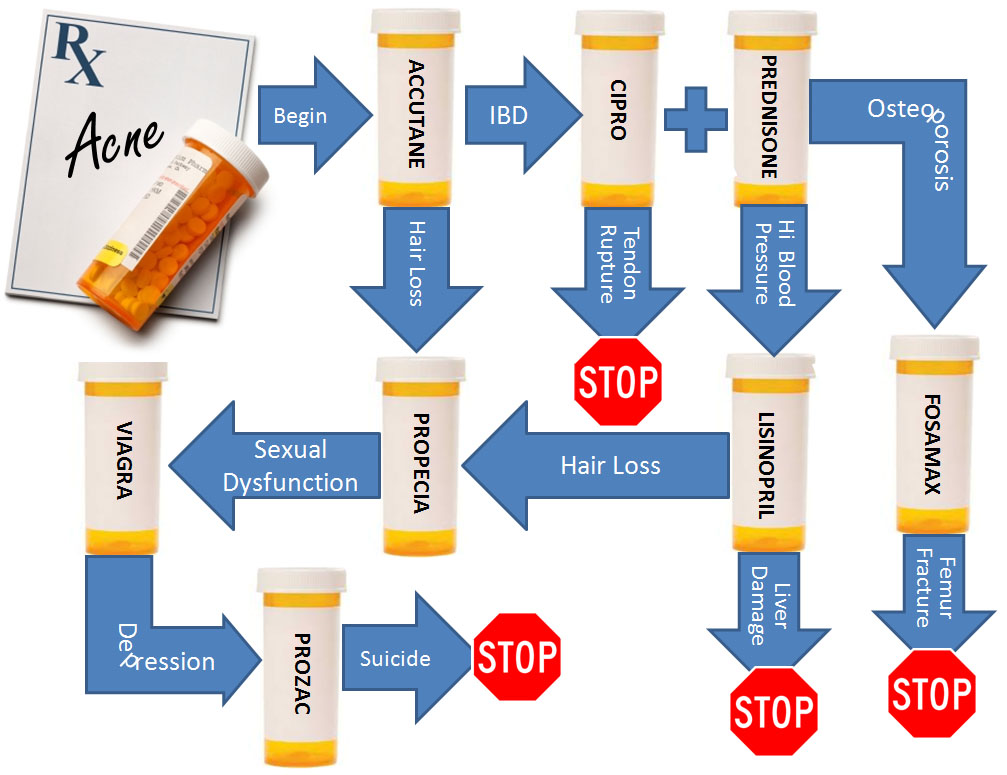
What if a guy goes to the doctor for acne. What could happen based on which drugs he’s been prescribed and what the side effects of those drugs could be? The graphic above depicts “The Snake Pit” (classic movie if you haven’t seen it) version of taking prescription upon prescription. A modern day Dante’s “Inferno”. Only in this little vignette, no one emerges from hell in their attempt to mitigate (via new prescriptions) the snowball effect of increasingly negative side effects.
Here’s how this plays out.
(Note, yes, it’s hypothetical, assumes various doctors/specialists involved, and yes, assumes worst case and/or rare scenarios…but still, it could happen. And before you get on me for Accutane being off the market, the drug isotretinoin is still alive and kicking…)
A guy goes to the doctor for acne. He’s given Accutane (isotretinoin). A possible side effect of Accutane is Inflammatory Bowel Disease (IBD). To treat the IBD, he’s given Cipro (antibiotic) and Prednisone (corticosteroid). Cipro has been linked to tendon rupture. Reported, though rare, side effects of Prednisone can include high blood pressure and osteoporosis. Assuming his luck is nil, he experiences these side effects and is given Lisinopril (ACE inhibitor) to combat the high blood pressure, and Fosamax to help combat the osteoporosis.
As we know, Lisinopril has been linked to liver damage (or worse, liver failure). And Fosamax has been under fire for femur fractures. Which, outside of pain meds—which have their own set of side effects—requires another form of medical intervention (surgery). So we come to a “STOP” on that path.
But between the Accutane and the Lisinopril, he begins to experience some hair loss as well—a rare side effect of both drugs, and he’s Mr. Unlucky. So next up, Propecia. Propecia side effects include sexual dyfunction. And he finds himself having some “issues” on the love-making front. Well, there’s a drug for that—Viagra! But let’s face it, between hair loss, sexual dysfunction, a broken thigh bone, a ruptured tendon, high blood pressure and some bowel problems, is it any wonder this guy’s now depressed? So, it’s time for some SSRI’s—like Prozac. And Prozac’s been linked to suicidal behavior.
And, with that, I guess it’s another “STOP”.
Giddy with Glee: FDA Got One Right with SSRI Drug
October 18th, 2010. By AbiK
 Or so it appears.
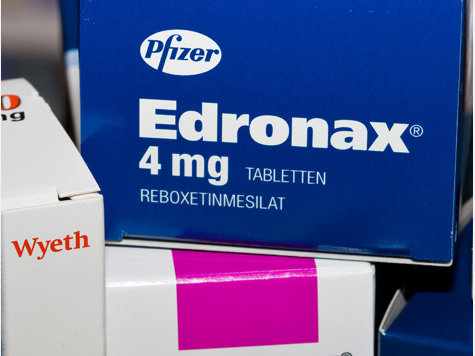
A little bomb just dropped in the form of a report out in the British Medical Journal (BMJ) regarding the antidepressant drug reboxetine. Reboxetine—brand name Edronax—is one of the drugs classified as a Selective Serotonin Reuptake Inhibitor, or SSRI, and it’s manufactured by Pfizer. According to the report, data from industry-sponsored (biased?) trials that have been published in peer-reviewed journals are misleading when it comes to reboxetine’s safety and efficacy.
How did this happen? Well, according to an article over at medscape.com, the BMJ reports that “74% of the data on patients who took part in the trials of reboxetine were not published because the findings were negative and that the data that were published about reboxetine overestimated its benefits and underestimated its harm.”
Huh?
I feel like I’m sitting in a management meeting—not at LawyersAndSettlements.com mind you—where we’ve just received the results of an employee feedback survey—that happen to suck—and we’re all trying to figure out how to save face and mitigate any fallout. What to do? LIE! Or, simply be selective in what information gets revealed…
So re: reboxetine, little bothersome details like the trial revealed that there was no significant difference in remission between reboxetine and a placebo, and that reboxetine was found to be inferior to other SSRIs such as fluoxetine (Prozac), paroxetine (Paxil) and citalopram (Celexa), just never hit the light of day. Until now.
But here is what makes me giddy with glee: reboxetine had been approved for marketing in the UK, Germany and “other European countries” according to the medscape.com article….”but did not win approval in the United States.”
Looks like the FDA got one right! Can it be so…?
Mom Alert: Would you want a 68% Higher Risk of Miscarriage?
June 2nd, 2010. By LucyC
 A new study out yesterday—June 1, 2010—has revealed a higher rate of miscarriages in women who were taking antidepressants during pregnancy. How much higher? Sixty-eight percent—yes —that’s 68%—higher. Frankly, that is nothing short of shocking.
Published in the Canadian Medical Association Journal, the study was done in Canada through the University of Montreal. FYI—This was no small study either—the investigators used data from 5,124 women who are part of a large, population-based study of pregnant women who had clinically verified miscarriages, and a large sample of women from the same registry who did not have a miscarriage. Among the women who miscarried, 284 or 5.5 percent, had taken antidepressants during their pregnancy.
In fact the findings are so robust that the physicians who did the study are suggesting that this is a class effect—in other words the effect could be attributed to all selective serotonin reuptake inhibitors—or SSRIs. Here’s what’s being reported in the press:
“These results, which suggest an overall class effect of selective serotonin reuptake inhibitors, are highly robust given the large number of users studied,” the study’s senior author, Dr. Anick Berard, said in a statement. (UPI.com)
The antidepressants that showed a particular association with miscarriage in the study were paroxetine (trade names: Seroxat and Paxil) and venlafaxine (trade names: Effexor, Efexor, Alventa, Argofan, Trevilor). The investigators also found that the risk of miscarriage doubled with a combination of different antidepressants.
Just for the record, the antidepressants “investigated” in the University of Montreal study are serotonin reuptake inhibitors (citalopram, fluoxetine, fluvoxa-mine, paroxetine and sertraline); tricyclic antidepressants (ami-triptyline, clomipramine, desipramine, doxepin, imipramine, nortriptyline, trimipramine), Read the rest of this entry »

Find us on


Archive by Category
- Accidents (24)
- Airlines (9)
- Asbestos Mesothelioma (262)
- Automotive (25)
- Celebrity (14)
- Class Action (84)
- Complaints/Comments (15)
- Consumer Fraud (84)
- Contest (2)
- Court of Public Opinion (5)
- Crazy Sh*t Lawyers See (61)
- Criminal Law (4)
- Defective Products (111)
- DePuy ASR Hip Recall (2)
- Discrimination (22)
- Drugs/Medical (248)
- Elder Care Abuse (4)
- Emerging Issues (462)
- Employment (54)
- Environment (52)
- Financial (28)
- Food Illness (15)
- Human/Civil Rights (4)
- Insecurities (5)
- Insurance (16)
- Intellectual Property (16)
- Internet/E-commerce (19)
- lawsuits (161)
- Lawyers (20)
- Lawyers Giving Back (43)
- Lex Levity (10)
- Personal Injury (106)
- Pleading Ignorance (53)
- Real Estate (2)
- Recall (6)
- Scam (3)
- Securities (13)
- Settlement (81)
- Tort Reform (2)
- Totally Tortelicious (81)
- Veterans (11)
- Whistleblower (9)