Posts Tagged ‘ Overtime Pay ’
2 Ways Working Over 8 Hours DOESN’T Mean California Overtime Pay
March 22nd, 2013. By AbiK
 Ever wonder what non-exempt work situations do NOT qualify for overtime pay? While there are fairly stringent laws and guidelines in place for what requires California employers to pay overtime wages, there are a couple of situations where, as a worker who puts in over eight hours on a given workday, you are actually not eligible for California overtime pay. Let’s take a look at both examples, which are explained in more detail (and a bit more jargon) at the California Department of Industrial Relations DLSE section on their website.
1. Make-up Time.
If a non-exempt employee requests time off that will be unpaid, he/she can “make up” that time and it will not be considered eligible time for California overtime pay so long as these requirements are met:
- The employee may not work more than 11 hours on another work day, and he/she may not work more than 40 hours in the workweek to make up for the time off. The make up time, in effect, is an equal “swap” for the time the employee would’ve normally worked within the same workweek.
- The time the employee missed must be made up within the same workweek.
- The employee needs to provide a signed written request to the employer for each occasion that they want to makeup time.
- Employers cannot encourage or otherwise solicit an employee to request makeup time.
2. Alternate Work Week Arrangements.
It’s common practice in some industries for a non-exempt California employee to work an alternate workweek schedule. One of the most common arrangements involves working a 4-day-a-week, 10-hours-per-day schedule (typically called a “4/10” schedule). Alternate work week arrangements require a formal agreement and adherence to certain California Labor regulations (see DLSE overtime exceptions).
As long as the employer has complied with all regulatory matters, an alternate work week employee is not owed California overtime pay for working more than 8 hours in a workday (due to the alternate work schedule), so long as he/she does not work more than 40 hours during the workweek.
For more information see our California Labor and California Overtime pages.
Top 10 Lawyer Interviews for the First Half of 2012
August 27th, 2012. By AbiK
 The journalists at LawyersandSettlements.com conduct hundreds of lawyer interviews each year on the latest legal issues—lawsuits, mass torts, class actions, settlements—that our readers are most interested in. The attorneys our journalists interview provide a birds-eye view into the cases we report on. Here are the top 10 attorney interviews that readers clicked during the first half of this year (in reverse order):
10. Attorney Stacy Hauer, co-lead counsel in the Minnesota State Court American Medical Systems litigation, discusses the transvaginal mesh lawsuits being consolidated into an MDL (multi-district litigation).
9. Attorney Tim McCarthy shares insight on the Starbucks class action lawsuit regarding the company’s switch from Tassimo to Keurig single-serve coffee. The lawsuit alleges consumer fraud.
8. Attorney Dr. Shezad Malik discusses the outcome of the FDA advisory panel meeting held at the end of 2011 regarding the safety and efficacy of oral contraceptives, including drospirenone-based birth control drugs Yasmin and Yaz.
7. Attorney Brenda Fulmer, who specializes in medical device litigation, talks about allegations surrounding CardioGen 82 over-radiation.
6. Attorney Eric B. Brown shares some information on making a Social Security Disability Insurance (SSDI) claim and what needs to be included to prove a 100 percent inability to work.
5. Attorney Shaun Setareh—a California labor law attorney—answers five commonly asked questions on filing a wage and hour lawsuit.
4. Attorney Dr. Shezad Malik, who is both an attorney and a cardiologist, discusses Yasmin and Yaz settlements and how Bayer had indicated it would handle settling Yaz claims.
3. Attorney Barry Kramer informs readers about excessive emergency room charges and how it is typically uninsured patients who are victims of hospital overcharging—and compounding the issue, emergency room costs are increasing.
2. Attorney Dr. Shezad Malik on the Yaz litigation concerning oral contraceptives that contain drospirenone and their alleged side effects which range from gallbladder problems to DVTS to stroke—and even death.
1. Attorney Stacy Hauer discusses the legal claim “loss of consortium” and how it plays into the allegations regarding the transvaginal mesh litigation. She explains that, “The woman and their partners who have been injured have significant loss of intimacy in their relationships due to their injuries.”
Got this Kind of Job? You May be Getting Screwed on Overtime Pay
July 24th, 2012. By AbiK
 Overtime pay calculations are tricky. And, I’m guessing, most employers can appreciate that especially when those calculations translate to less money being shelled out each pay period. Unfortunately, many employees aren’t fully aware of some considerations that need to go into how overtime pay is based. The following types of work can throw a ringer into overtime pay calculations—and if you’re doing any of these kids of jobs, it may time to double-check how much overtime pay you’ve been taking home.
1. Shift Work. If you’re working various shifts, you may be doing a graveyard shift that pays a higher rate—or, depending on your industry, one shift may pay more than another due to work volumes or time of day. These are referred to as ‘shift premiums’. The basis for your overtime rate should take that into consideration—if it’s not, it could be an overtime pay violation.
2. Non-Discretionary Bonuses. These are bonuses that you might receive based on a quota or some other metric. For example, if you receive safety bonuses based on accident- or injury-free performance, production bonuses based on output or some other measure, attendance bonuses for zero unexcused absences, guaranteed/promised bonuses, profit-sharing bonuses, or bonuses paid as a percentage of earnings—and your overtime pay calculation does not take such into consideration, it may be an overtime pay violation.
3. Paid Commissions or SPIFFs. (SPIFFs are bonuses paid when a salesperson sells a specific product—kind of like when you’re asked if you’d “like some fries with your order”—the more fries an employee sells, the greater bonus he may be entitled to). Commissions can tend vary each month or pay period—but they should be a consideration in how overtime pay is calculated.
4. Piece-Rate Work. If you’re given a monetary incentive to produce over a certain number of units, and that incentive pay is not figured in as part of the basis for your overtime pay calculation, it may be an overtime pay violation.
If you think your overtime pay has been calculated incorrectly and has not taken into consideration any non-discretionary bonus pay, incentive pay or shift premiums, an employment attorney may be able to help.
Top 10 Lawyer Interviews of the Month (May 2012)
June 29th, 2012. By AbiK
 LawyersandSettlements.com publishes hundreds of lawyer interviews each year on the latest legal issues—lawsuits, mass torts, class actions, settlements—that our readers are most interested in. The attorneys—and expert witnesses—our journalists’ interviews provide a birds-eye view into the cases we report on.
Here are the top 10 attorney interviews that readers clicked during the month of May, 2012 (in reverse order):
10. Attorney Tim McCarthy, from McCarthy Law Group, on the consumer fraud class action lawsuit over Starbuck’s quitting its Tassimo coffee maker deal with Kraft Foods for one with Keurig.
9. Attorney Barry Kramer, on patients who have either paid, or have been billed, excessive emergency room charges.
8. Attorney Andy Hollis of Hollis, Wright, and Couch, P.C., on the case against ADHD drug Adderall.
7. Attorney Mark Thierman, on filing a class action lawsuit on behalf of Las Vegas limousine drivers against Bell Trans, Nevada’s largest limousine company, alleging failure to pay minimum wage and overtime.
6. Attorney Dr. Shezad Malik, on Bayer being in the process of settling certain Yasmin, Yaz and Ocella blood clot lawsuits.
5. Medical consultant and analyst Lana Keeton, on the dangers of synthetic transvaginal mesh and transvaginal sling for Pelvic Organ Prolapse (POP) and/or Stress Urinary Incontinence (SUI).
4. Attorney Dr. Shezad Malik, on the Yaz and Yasmin bellwether trials. (See more info on bellwether trials)
3. Attorney Leonard Emma of The Law Office of Randall Crane, on California labor—what “independent contractor” means and employee misclassifications.
2. California Labor Attorney Randall Crane answers the question: “Can I be Fired if I’m Disabled?“
1. California Employee Attorney Donna M. Ballman, P.A., on bullying and harassment on the job.
Publix Unpaid Overtime Class Action: What is Chinese Overtime?
May 1st, 2012. By AbiK
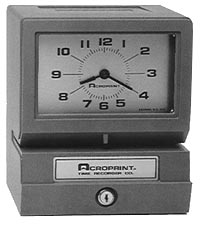 Chinese what? Ok, you’ve probably heard of Chinese water torture. And Chinese New Year. And Chinese take-out (personal fave). But Chinese Overtime?
Yes, Chinese Overtime. If you’re in a job in which the work hours tend to fluctuate each week and you get overtime pay, then you may have heard it referred to as either variable workweek overtime pay or half-time overtime pay.
The department managers and assistment managers who make up the class in the Publix managers unpaid overtime class action lawsuit probably don’t care what the heck it’s called—they just believe they’re getting screwed out of pay. And, if you understand how Chinese overtime works, they’re kind of right.
So here goes: a Chinese overtime primer for those who haven’t had the pleasure of being paid this way…
In some jobs, the hours tend to fluctuate each week. Busier weeks call for longer hours; quiet weeks call for shorter hours. Many times when a job’s hours fluctuate, an employer will pay salaries based on a fixed salary for those fluctuating weeks. So the base salary—the straight-time pay—is the same each week even though the hours may in fact fluctuate.
The upside is that when there isn’t much work, the worker gets paid the set straight-time amount. Sort of a mini-coup for the worker, right?—work less, get paid the same.
The downside, however…well, let’s just say the Publix managers have been living more of the downside (allegedly) than the upside and that’s why they’ve filed the Publix class action lawsuit.
Here’s an example of how it would work–it’s tricky so try to hang with me. Say you’re paid $200 a week as your fixed salary. So regardless of whether you work 22 hours or you work 46 hours that week, you’re getting paid $200 for the week. However, if you worked the 46 hours, you’ve worked overtime and should get overtime pay. And this is where it gets tricky..
See, because you were ALREADY PAID straight time pay for those six hours according to how your pay is calculated (i.e., you get a fixed salary no matter how many hours you work), you won’t get time-and-a-half pay for your overtime hours. Those six hours are paid at only HALF your regular rate–which in management’s eyes is time-and-a-half because they’ve already paid you your fixed salary for those six overtime hours.
Nice deal, eh? Hell yeah for the employers–not so for the employees.

Find us on


Archive by Category
- Accidents (24)
- Airlines (9)
- Asbestos Mesothelioma (262)
- Automotive (25)
- Celebrity (14)
- Class Action (84)
- Complaints/Comments (15)
- Consumer Fraud (84)
- Contest (2)
- Court of Public Opinion (5)
- Crazy Sh*t Lawyers See (61)
- Criminal Law (4)
- Defective Products (111)
- DePuy ASR Hip Recall (2)
- Discrimination (22)
- Drugs/Medical (248)
- Elder Care Abuse (4)
- Emerging Issues (462)
- Employment (54)
- Environment (52)
- Financial (28)
- Food Illness (15)
- Human/Civil Rights (4)
- Insecurities (5)
- Insurance (16)
- Intellectual Property (16)
- Internet/E-commerce (19)
- lawsuits (161)
- Lawyers (20)
- Lawyers Giving Back (43)
- Lex Levity (10)
- Personal Injury (106)
- Pleading Ignorance (53)
- Real Estate (2)
- Recall (6)
- Scam (3)
- Securities (13)
- Settlement (81)
- Tort Reform (2)
- Totally Tortelicious (81)
- Veterans (11)
- Whistleblower (9)