Posts Tagged ‘ Overdraft fees ’
Overdraft Fee Irony: Bank Causes Overdraft, Then Charges for it
July 29th, 2010. By Hunter West
 File this one under “WTF”.
Devon Donovan was just a kid with some cash and a savings account. Cash from hours worked as a lifeguard, when she could have been swimming. Hours working as a babysitter, when she could have been hanging out with her friends. When she was given money for her birthday and at Christmas, she put it away to save towards school trips.
In other words, Devon was a kid who got it right. She didn’t spend wildly. She saved her money. And when she went off to college, she kept what she assumed was a couple of hundred bucks or so in that account to save for a rainy day.
That’s what savings accounts are for.
Instead, a bank unjustly robbed her of her savings and the message was clear: we don’t care about your laudable savings habits, we couldn’t give a flying fig that you’re a kid with the right idea and we couldn’t be bothered to acknowledge such good behavior.
Legally, Citizens Bank was in the clear. But morally, is it right? Is it fair for any bank to do what Citizens Bank did to a citizen who deserved better?
Citizens Bank decided, starting in 2007, that it would begin charging a monthly fee of $5 for balances under $500. The notification, as it turned out, was a small line at the bottom of a statement from November 21st, 2006 referring to the new policy taking effect on January 8th of the New Year.
There were also new limits on monthly transactions and fees for what were described as ‘excessive transactions.’
Obviously, Devon did not see the innocuous notification on her bank statement. Besides, she Read the rest of this entry »
Debit Card Overdraft Fees – An Update
November 30th, 2009. By LucyC
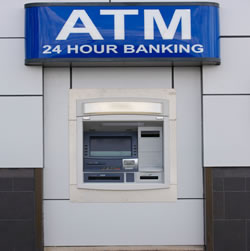 First the good news—maybe—on November 12, the Federal Reserve announced that new rules governing the seemingly rampant application of overdraft fees linked to debit card use would be initiated. Now the bad news—maybe—the rules don’t come into effect until next summer—July 1st, 2010 apparently.
The development of these rules is a direct result of loud consumer reaction to the banks’ deceptive and abusive consumer lending practices.
Of course the argument that the rules will provide any real benefit at all has just begun. More on that in a minute.
So what protection will the new rules offer you? Here’s the scoop—straight from the Federal Reserve website:
The final rules would “…prohibit financial institutions from charging consumers fees for paying overdrafts on automated teller machine (ATM) and one-time debit card transactions, unless a consumer consents, or opts in, to the overdraft service for those types of transactions.
Before opting in, the consumer must be provided a notice that explains the financial institution’s Read the rest of this entry »
4 Fees To Spoil Your Christmas
November 11th, 2009. By Kristine B
aka, How the Financial Grinches Stole Christmas…
 Christmas is just around the corner. How do I know? Because one of my oh-so-thoughtful Facebook friends has already started the Christmas countdown. And, like so many people out there, my concern is with affording Christmas, especially given all the traps and fees associated with bank accounts, credit cards, prepaid debit cards and payday loans. So, to help sort things out, Pleading Ignorance is looking at the top four fees that are likely to have an impact on you this holiday season.
Why are we so concerned about fees? Well, people have complained to us over and over again that they had no idea these various fees could be charged (they’re called “hidden fees” because you’re not necessarily aware of them—like it’s some sort of game). So, while you’re out buying that super-duper, fancy-schmancy toy-thing that your child has always wanted and just can’t live without, you may find that in addition to the $50 price on the toy, you may be paying some very steep fees. That’s how the financial grinches can steal your Christmas. Here’s what they’ve got in their bag of tricks this season, and what you need to look out for… 
1. Bank Overdraft Fees
I’ve already discussed this, but it bears repeating. Yes, some of the banks have agreed to change their overdraft fee policies. Yes, lawmakers are looking to rein banks in (although when we look at all the good it’s doing with credit cards, we have to wonder if it’s worth the effort).
The banks are being accused of automatically enrolling customers in overdraft protection, not telling them about that protection and then charging a fee for that protection (cue ominous laugh here). Even more terrible, they’re accused of reordering transactions to get the highest number of overdraft fees; processing debits before credits so that customers are forced into Read the rest of this entry »
What the heck are Overdraft Fees & “NSF” on my bank statement?
October 21st, 2009. By Kristine B
There’s no shortage of financial news in the headlines lately, but the thing that might impact you the most is news about bank overdraft fees. So, that’s what we’re covering today in Pleading Ignorance.
So, What Is an Overdraft Fee?
Let’s back up first and answer what Overdraft Protection is. Banks either include or offer Overdraft Protection on their checking accounts to let you buy something with a check—or on your debit card—even if you don’t have enough money in your account to cover the transaction.
Ain’t that sweet? 
So let’s say you’re at the cash register trying to buy a coffee and a muffin for $4.00 with your debit card. But, you only have $3.50 in your account. Without overdraft protection, the bank would decline the transaction and you would probably suffer some momentary embarrassment. With overdraft protection, the transaction goes through and you can carry on with your life without any embarrassment about “Insufficient Funds.” (Oh, that “NSF”–that’s what it stands for: Insufficient Funds.)
Sounds good, right? Except that the $0.50 cents the bank has covered you for isn’t free. And the bank might not have told you that you were given Overdraft Protection and would be charged for it.
And guess what—the fee the bank charges you for covering that $0.50 cents is…drum roll please…an Overdraft Fee.
The thing about Overdraft Protection is that banks charge fees for overdraft transactions—the transactions that require more cash than you’ve got on hand—and those fees are high. Up to $35 per overdraft transaction (gulp). So, that $4.00 coffee and muffin suddenly becomes Read the rest of this entry »
Bank Overdraft Fees…Legal Robbery?
October 5th, 2009. By LucyC
 Ever been hit by your bank with surprise overdraft fees, sometimes totalling more than the actual debit itself? You know—you make a $3 purchase on debit, and the bank takes an additional $30 as an overdraft fee for processing the debit instead of returning it NSF—which would also have cost you money. (So where’s the protection?)
That practice, of being “enrolled” in overdraft protection programs without the bank actually contacting you, may be coming to an end, thanks in part to lawsuits. One woman in Baltimore recently filed an overdraft fees lawsuit, which is seeking class action status, against M&T Bank in Maryland, alleging the bank’s overdraft programs are in violation of the state’s consumer protection laws.
What’s her beef? $370 in overdraft fees. She was reportedly overdrawn twice in a 12-month period: a $12.08 charge for lunch triggered a $37 overdraft fee. And something similar happened again the following year. Maxine Given, the plaintiff, is a senior director of finance and administration for the Fund for Johns Hopkins Medicine. In order to dispute the fees with her bank she had to take time off work.
Umm, just so we’re clear—the bank didn’t need Given’s permission to take money out of her account—but did require her to come down to the bank in person with questions about the withdrawals? Read the rest of this entry »

Find us on


Archive by Category
- Accidents (24)
- Airlines (9)
- Asbestos Mesothelioma (262)
- Automotive (25)
- Celebrity (14)
- Class Action (84)
- Complaints/Comments (15)
- Consumer Fraud (84)
- Contest (2)
- Court of Public Opinion (5)
- Crazy Sh*t Lawyers See (61)
- Criminal Law (4)
- Defective Products (111)
- DePuy ASR Hip Recall (2)
- Discrimination (22)
- Drugs/Medical (248)
- Elder Care Abuse (4)
- Emerging Issues (462)
- Employment (54)
- Environment (52)
- Financial (28)
- Food Illness (15)
- Human/Civil Rights (4)
- Insecurities (5)
- Insurance (16)
- Intellectual Property (16)
- Internet/E-commerce (19)
- lawsuits (161)
- Lawyers (20)
- Lawyers Giving Back (43)
- Lex Levity (10)
- Personal Injury (106)
- Pleading Ignorance (53)
- Real Estate (2)
- Recall (6)
- Scam (3)
- Securities (13)
- Settlement (81)
- Tort Reform (2)
- Totally Tortelicious (81)
- Veterans (11)
- Whistleblower (9)