Posts Tagged ‘ GSK ’
Toothpaste Lawsuit over Blob Settles…so Who’s Got the Nurdle?
November 8th, 2011. By AbiK
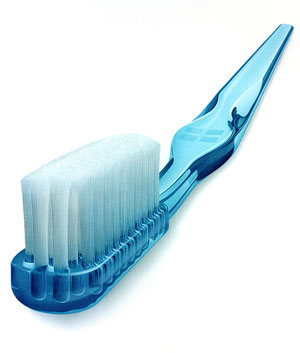 The dramatic courtroom battle over toothpaste nurdle rights has reached its incredible denouement. Ok, maybe it wasn’t quite a made-for-tv courtroom drama, but yes, a confidential settlement has been reached between Colgate-Palmolive and GlaxoSmithKline in the trademark infringement case that centered on use of the nurdle—that curvy squeezed-out blob of toothpaste—in packaging and advertising.
You can read about—and see nurdle pics—the toothpaste nurdle lawsuit here (GlaxoSmithKline LLC v. Colgate-Palmolive Co, U.S. District Court, Southern District of New York, No. 10-05739).
So with Glaxo wanting to establish exclusive rights to use the nurdle along with the phrase “Triple Protection” (recall the 3 intertwined streams of red, white and blue toothpaste in their Aquafresh line), and Colgate wanting to ensure the use of its newer “Triple Action” swirl of toothpaste, both sides have agreed to settle—though, of course, it’s hush-hush.
Not to worry—just keep your eyes peeled on those Sunday paper coupon inserts and store shelves. Give it a few months—and see who using that nurdle and how.
Hot Potato Diet Drug Alli Up for Grabs, but Who’s Buying?
April 29th, 2011. By AbiK

On the heels of consumer watchdog group, Public Citizen, calling for a ban of diet drug Alli, we see that GlaxoSmithKline (GSK)—makers of well-known type 2 and last-resort diabetes drug, Avandia—has chosen to offload the once golden weight loss wonder.
Alli Sales Drop
Apparently, Alli is not so golden anymore. GSK just reported on their first quarter earnings for 2011, and Alli sales were not exactly stellar. Case in point, Alli sales in Europe were down £14 million in first quarter 2011 vs prior year. And in the US? That’s a bit more ambiguous, though GSK does report “The USA grew 1% to £241 million, with strong performances from Sensodyne, Tums, Poligrip, Biotene, and Breathe offsetting lower sales of alli and Aquafresh.” Translation: Alli pooped in the US (no pun intended, see below).
Ok, financials are one thing—but there’s more to the Alli story than declining sales. And it begs the question, why would Sanofi-Aventis—if rumors are true—be considering buying Alli from GSK?
Alli Safety Record
Let’s recall that Alli was only approved for sale in 2007. That’s not all that long ago. Then by April, 2009 Alli was the subject of conversation with the CDER Drug Safety Oversight Board—over concerns of an Alli link to possible severe liver injury.
In August, 2009 the FDA sent out its Early Communication to alert consumers that Alli was indeed under review for severe liver injury risk.
By May, 2010 the FDA announced a revised label for Alli (and Xenical) that would include a warning about “rare reports of sever liver injury”.
Fast forward to Public Citizen’s call for a ban on Alli this month—which draws attention to some digging consumer watchdog group did over at the FDA’s AERS database that found Alli to “have been associated with 47 cases of acute pancreatitis and 73 cases of kidney stones”.
And Those Other Alli Side Effects…
In addition to being linked to serious liver injury, Alli is not exactly a dieter’s dream. We covered Alli’s rather gross side effects in an earlier story—and since then it’s not hard to find Alli users online who apparently have no shame in sharing stories of “oily orange stuff” dripping down their legs. GSK themselves recommended wearing dark clothes or carry additional clothes in case of an accident.
Seriously—possible Alli side effects reportedly include fatty or oily stools, oily spotting, intestinal gas with discharge, an increased number of bowel movements, or poor bowel control.
So given Alli’s recent sales decline, the potential for more serious adverse events to occur while taking Alli, the outcry for a ban on Alli—and the fact that it’s really not a pleasant way to lose weight—why would anyone want to buy the Alli brand?
Well, regardless of whether it’s Sanofi-Aventis or someone else, I hope their business plans include cross-promotion with Depends and Subtle Butt…
Understand the Pharmaceutical Representative Overtime Lawsuits? Here’s Help
March 25th, 2011. By Kristine B
If not, you’re not alone. In fact, even the courts have reached contradictory rulings in the pharmaceutical representative overtime lawsuits they’ve seen. While the pharma reps won the Novartis lawsuit, they lost the Johnson & Johnson and GlaxoSmithKline lawsuits. Those losses, however, don’t mean that pharmaceutical sales reps should just give up. In each case, the judges relied on different legal issues and exemptions, which is how such different results were achieved. Pleading Ignorance takes a look at what’s been going on…
First, the Backstory: the Fair Labor Standards Act
Under the Fair Labor Standards Act, certain employees are considered exempt from overtime pay. Those exemptions include outside sales employees and people who are considered “administrative”. Outside sales employees are considered exempt because they are paid on commission and therefore have an unlimited earning potential. Furthermore, many outside sales people work independently of an office and therefore have a say in what hours they work and how they go about their job. To be considered exempt from overtime pay, however, outside sales people must spend at least 50 percent of the time in their job involved in sales.
Administrative people are those who exercise independent authority, judgement or discretion in their job. They have a great deal of discretion in their job activities and how they fulfill their employment requirements.
Lawsuits have been filed against various pharmaceutical companies alleging that pharmaceutical sales reps do not fit either the outside sales exemption or the administrative exemption.
Novartis Sales Rep Overtime Lawsuit
In the Novartis lawsuit, the court found that the pharmaceutical reps were misclassified as exempt from overtime pay—meaning they should receive pay for overtime hours worked. In reaching the decision, the court found that Novartis sales representatives were not directly involved in the sales transaction. Instead, the reps informed physicians of a product’s benefits and encouraged physicians to prescribe Novartis products. At no point during the visit did the sales rep actually engage in a sales transaction.
Furthermore, the court found that the Novartis reps didn’t fall under the administrative exemption because Novartis controlled the sales pitches and reps were not allowed to deviate from that pitch. Additionally, the reps did not have the authority to in any way direct or interpret Novartis policies or procedures. Because the courts found the Novartis reps were not exempt under the outside sales or administrative rules, the reps are therefore, according to the courts, eligible for overtime pay.
Johnson & Johnson Sales Rep Overtime Lawsuit
A lawsuit against Johnson & Johnson, however, resulted in a different decision. In that case, the pharmaceutical sales representative was found to be exempt from overtime pay under the administrative employee guidelines. In that case, the court found that the plaintiff was able to develop her own itinerary, could visit some doctors more frequently than others and was expected to develop a plan to obtain more sales. The court found that the plaintiff worked without direct oversight most of the time and therefore had discretion and independent judgment required for the administrative exemption.
GlaxoSmithKline Sales Rep Overtime Lawsuit
In GlaxoSmithKline’s lawsuit over pharmaceutical representative overtime pay, the courts backed GlaxoSmithKline’s decision not to pay the reps overtime. In this case, unlike Johnson & Johnson, the court determined that GSK sales reps fall under the guidelines of outside sales representatives because they are motivated by commissions and they have freedom to work outside the office.
So it currently appears that whether or not a pharmaceutical rep is eligible for overtime pay is somewhat determined by which court hears the lawsuit and by which company you work for and how much authority you have in your job.
The court’s decision in GSK actually contradicted a brief filed by the US Department of Labor that supported pharmaceutical reps being paid overtime. So, even though the Department of Labor supports overtime for pharmaceutical reps, there’s no guarantee that the courts will agree with it. More lawsuits are still to come and the Supreme Court might wind up determining the whole thing in the end. As of now, though, there’s no reason for pharmaceutical representatives to give up the fight.
2010: Annus Horribilis for GlaxoSmithKline?
December 20th, 2010. By Kristine B
 Let’s face it, lots of drug companies face a variety of lawsuits and fines from the government. But 2010 might be a year that GlaxoSmithKline would wipe from its memory if it could—a sort of annus horribilis, if you will. Between the reported Paxil settlements, massive fines for illegal activity at its Puerto Rico plant and huge restrictions on its diabetes drug, Avandia, GSK appeared to be facing a TKO as we moved into 4Q’2010. So officials at GlaxoSmithKline could be forgiven if they toast the New Year and hope it’s better than the last 12 months…
Paxil Settlements
Earlier this year, various media outlets reported that GlaxoSmithKline agreed to settle certain lawsuits alleging Paxil caused birth defects. According to Bloomberg, the drug maker agreed to pay more than $1 billion to settle approximately 800 lawsuits.
Meanwhile, a separate lawsuit also alleging Paxil birth defects, saw the family of an infant who died less than two months after birth, settle with GlaxoSmithKline for an undisclosed amount. In yet a different lawsuit, the family of a boy born with heart defects was awarded $2.5 million by a jury, which found that GlaxoSmithKline officials “negligently failed to inform” the mother’s physician about the risk of birth defects.
Fines for the Glaxo Puerto Rico Plant
In October of this year, GlaxoSmithKline agreed to pay $750 million to settle allegations of wrongdoing at the company’s Puerto Rico plant, which is now closed. An investigation into the plant found that improper manufacturing procedures resulted in medications that could split apart or had improper amounts of the active ingredient. Officials alleged that GlaxoSmithKline knowingly manufactured, distributed and sold medications that did not meet FDA standards.
As part of the settlement, a whistleblower in the case received a whopping $96 million. So for her, 2010 might just have been a fantastic year.
Avandia
Also this year, GlaxoSmithKline learned that its diabetes drug, Avandia, would carry severe restrictions on who can take the medication. The decision came after an FDA advisory panel recommended that use of Avandia be restricted in light of serious side effects. Patients who are not currently on Avandia will have to try other diabetes medications before using Avandia and will have to show they have been made aware of Avandia side effects. Although some people consider it a victory that Avandia was not pulled entirely from the market, these restrictions will likely have an impact on Avandia profits.
Based on those three issues alone, 2010 might be a year that GlaxoSmithKline tries—ever so hard—to forget.
Whistleblower Lawsuit Pays Off Big For Former GSK Employee
November 22nd, 2010. By Kristine B
Talk about your big payouts. A woman who acted as a whistleblower against GlaxoSmithKline will receive a whopping $96 million for her role in bringing the company to justice. Who knows, maybe eventually an Erin Brockovich-style movie will be made about her, too. This week, Pleading Ignorance looks into the story behind the whistleblower who helped officials in their case against GlaxoSmithKline—and what qui tam is all about.
The woman who acted as whistleblower in this case was Cheryl Eckard, who worked at GlaxoSmithKline from 1992 through 2003. When she was asked to visit the now-closed plant at Cidra, Puerto Rico, following citations for violations at the plant, Eckard was a manager of global quality assurance for GlaxoSmithKline.
According to The Wall Street Journal (10/28/10), Eckard found massive problems at the Cidra plant, leading her to make recommendations to her superiors about how to fix things up. Those recommendations included to stop shipping all products from the plant and to notify the FDA about product problems, such as problems where drugs of different types were mixed up in the same bottle.
But, according to the lawsuit, Eckard’s superiors ignored her, leading to her eventually telling them she would not be part of a cover-up. In 2003, Eckard was reportedly fired. Despite the firing, she says she continued to try to convince GlaxoSmithKline to make changes to the Cidra plant. It’s a screenplay waiting to happen: Woman sent to investigate plant, woman makes recommendations, woman is fired after following up on recommendations, woman is repeatedly ignored, woman files lawsuit against large corporation…
Eventually, Eckard called the FDA, which led to the FDA investigation. Meanwhile, Eckard filed a lawsuit against GlaxoSmithKline under the US False Claims Act. Then, in 2010, GlaxoSmithKline agreed to pay $750 million to settle charges of allowing adulterated drugs onto the market. Of that, Eckard will receive $96 million, reportedly the largest award given to a single whistleblower in US history.
A provision of the False Claims Act, also known as the Qui Tam Statute, allows private citizens to sue a person or company that knowingly submits false bills to the federal government. Although the qui tam lawsuit is filed by a private citizen, it is done on behalf of the federal government. Furthermore, it protects plaintiffs who are demoted, suspended or discriminated against because they have filed a claim under the False Claims Act. If a qui tam suit is successful, as was the case here, the whistleblower is entitled to between 15 and 30 percent of the money the government recovers. The whistleblower is also eligible for between $5,000 and $10,000 per false claim.
A lawsuit filed under the False Claims Act is first served on the government and is not served on the defendant until the court orders it be served. The whistleblower is not allowed to discuss the lawsuit while the government investigates the allegations detailed in the complaint.
The sad thing is that if GlaxoSmithKline had done the right thing from the start and listened to Eckard’s concerns, the lawsuit could have been avoided. Unfortunately, many companies see little or no benefit in doing the right thing, until doing the wrong thing costs them a lot of money.
Pleading Ignorance cheers Ms. Eckard, who continued to fight to ensure the right thing was done, even when it meant she lost her job. Sometimes, good things happen to people who fight for them.

Find us on


Archive by Category
- Accidents (24)
- Airlines (9)
- Asbestos Mesothelioma (262)
- Automotive (25)
- Celebrity (14)
- Class Action (84)
- Complaints/Comments (15)
- Consumer Fraud (84)
- Contest (2)
- Court of Public Opinion (5)
- Crazy Sh*t Lawyers See (61)
- Criminal Law (4)
- Defective Products (111)
- DePuy ASR Hip Recall (2)
- Discrimination (22)
- Drugs/Medical (248)
- Elder Care Abuse (4)
- Emerging Issues (462)
- Employment (54)
- Environment (52)
- Financial (28)
- Food Illness (15)
- Human/Civil Rights (4)
- Insecurities (5)
- Insurance (16)
- Intellectual Property (16)
- Internet/E-commerce (19)
- lawsuits (161)
- Lawyers (20)
- Lawyers Giving Back (43)
- Lex Levity (10)
- Personal Injury (106)
- Pleading Ignorance (53)
- Real Estate (2)
- Recall (6)
- Scam (3)
- Securities (13)
- Settlement (81)
- Tort Reform (2)
- Totally Tortelicious (81)
- Veterans (11)
- Whistleblower (9)