Posts Tagged ‘ FDA ’
Top 10 2012 FDA Consumer Health Update Topics
February 12th, 2013. By AbiK
 Ever wonder what gets the most traffic over at the FDA website? According to an update at the Brandon Patch, more than 7.3 million people visited the Food and Drug Administration online last year to check out the consumer updates section of the website (fda.gov). What were they looking for? The following were the ten most popular topics readers sought out at the FDA. Many, as you’ll see, were topics covered at LawyersandSettlements.com as well.
Top 10 2012 FDA Consumer Health Update Topics
1. When to dispose of unused medicines–how long should medicines be kept and how to safely dispose of them.
2. Questions regarding potentially harmful presence of mercury in skin products sold illegally in U.S.
3. HCG diet products and their potential link to blood clots, depression and other harmful side effects.
4. Dietary supplement Hydroxycut, and its alleged connection to liver-related illness.
5. Questions over arsenic contained in rice.
6. Concerns over tattoo inks being linked to serious infection.
7. Safety concerns over the additive triclosan, which is commonly found in antibacterial lotions or hand sanitizers.
8. Thickening agents, like SimplyThick, which were connected to reports of infant deaths.
9. Statins and the risk of rhabdomyolysis and cardiomyopathy.
10. Finally, one for man’s best friend: information on the symptoms and treatment of Cushing’s disease in dogs.
After Alcohol Wipe Screw-Ups, Triad Decides to Play with Makeup
October 18th, 2012. By AbiK
 Ok, could be makeup. Could be some anti-aging wonder. Could be your run-of-the-mill hand soap. Who knows? The initial reports regarding Triad Group’s foray into cosmetics have been a bit lacking in detail as to what exactly will be coming of the manufacturing lines at Triad’s Hartland, WI production plant.
Triad, if you recall, was at the heart of the alcohol prep pad, alcohol swab and alcohol swabstick, aka alcohol wipe recall of last year—the one connected to the death of 2-year old Harrison Kothari in Texas who contracted acute bacterial meningitis caused by Bacillus cereus bacteria. The Kotharis have settled with Triad—as have a dozen others who filed contamination lawsuits (details of the settlements have not been disclosed).
Fast-forward a year. The Milwaukee Journal Sentinel reported that Triad, which filed for bankruptcy protection on the heels of its $5 million insurance policy being drained on the lawsuits just mentioned, has indicated it would like to re-establish itself as a cosmetics company.
Every cat has nine lives, right?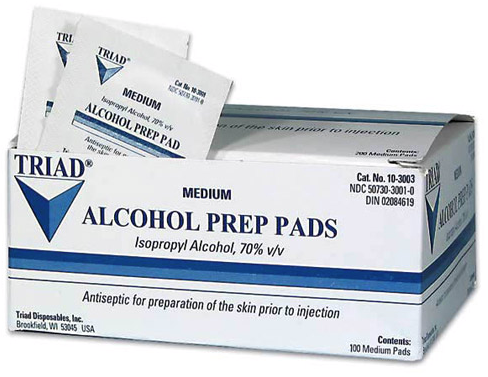
The Journal Sentinel quoted Triad’s COO, Eric Haertle, as saying at the company’s first meeting with creditors in bankruptcy court, “We are in the infancy stage of these opportunities. We have talked to industry vendors. I am encouraged and optimistic about the support we are receiving if we can put a plan together and resume operations.”
What’s interesting here is not so much that Triad even wants to emerge like a phoenix from the ashes—hey, it’s a business wanting to cut its losses and get on with things—no, the interesting thing is their costume change; they’ll now wear the i.d. of “cosmetics company” rather than that of “medical device” company—and that has benefit for a company whose odds of reincarnation under their former classification are next to nothing.
See, in order for Triad to go back to being a medical device company and manufacturing as it had before, it faces some intense scrutiny by the FDA. According to the Journal Sentinel, both the FDA and Triad would need to agree to the FDA’s consent decree which would impose a $15,000 per day fine—per violation—should Triad fail to comply with FDA policies. Additionally, the decree would subject Triad to FDA inspections without prior notice–and those inspections could cover everything from equipment to raw materials to finished products to packaging. The decree also calls for the company to post a $4 million bond.
No small undertaking to set up shop again.
But, there’s an escape hatch: re-establishing itself as a cosmetics company means less rigorous regulation and oversight by the FDA. And given that the consent decree to operate as a medical device company again could cost Triad millions—with no guarantee they’ll even pass with flying colors—well, the land of lipstick bullets, lotions and potions suddenly has tremendous appeal.
On second thought, maybe there is a clue as to what cosmetics will be coming off Triad’s production line—those Triad alcohol swabsticks look a lot like those cotton swabs used to smudge eyeliner (for that smoky eye look) or to clean up little makeup mistakes…hmm…just wondering…
Why are there NuvaRing Lawsuits? Here’s NuvaRing by the Numbers…
May 25th, 2012. By AbiK
 As NuvaRing lawsuits continue to wind their way through litigation, it’s interesting to look at some of the numbers on the contraceptive—as numbers tend to tell a story.
NuvaRing was also in the news recently for another reason: in a newly published study, apparently longer-term reversible contraception was found to be more effective in preventing pregnancy than shorter-term methods. Longer-term contraception would include IUDs and implants; shorter-term would be birth control pills, patches and rings. The study, published in the New England Journal of Medicine (5/24/12), found longer-term contraception to be 20 times more effective in preventing pregnancy (of course, one of the reasons cited for this was human error–such as forgetting to take the pill).
So here we go…
NuvaRing by the Numbers
2001: Year in which NuvaRing received FDA approval
950+: Number of NuvaRing lawsuits pending, as reported in Merck’s 10-K earnings report, fiscal year 2011
56%: Percent by which FDA study found NuvaRing raised risk of blood clots vs. older birth control pills.
6: Types of serious NuvaRing adverse events alleged in lawsuits (blood clots, pulmonary embolism, deep vein thrombosis, heart attack, stroke, sudden death)
6.5x: Times higher risk for NuvaRing blood clots compared to non-users of hormonal contraception, according to British Medical Journal study (5/10/12)
5,493: Total number of adverse events reported at the FDA AERS database for NuvaRing, 1Q’04-2Q’11*
30: Average age of women who have had a NuvaRing adverse event reported to the FDA*
1,953: Number of NuvaRing adverse events categorized under “Pulmonary Vascular”, 1Q’04-2Q’11*
1,921: Number of NuvaRing adverse events categorized under “Embolism & Thrombosis”, 1Q’04-2Q’11*
1,648: Number of NuvaRing pulmonary embolism adverse events reported, 1Q’04-2Q’11*
1,274: Number of NuvaRing deep vein thrombosis adverse events reported, 1Q’04-2Q’11
*Source: FDA NuvaRing AERS reports via drugcite.com
Yaz Scandal? Doc’s Accusations v. Bayer Unsealed, Revealed
December 7th, 2011. By AbiK
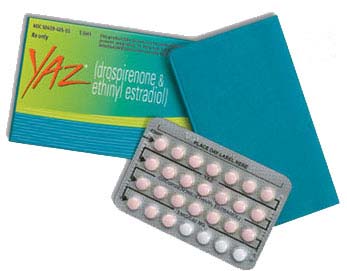 Admittedly, it lacks the titillating quality of Warren Commission Report—but it could, in its own right, be linked to what some plaintiffs would likely describe as murder, and also conspiracy theory.
Earlier this week, expert opinion regarding Yaz birth control was unsealed in a federal court in Illinois. The expert opinion was in the form of a 196-page document written by Dr. David Kessler.
What’s interesting—or take your pick of adjectives here: damning, alarming, scandalous—is that Dr. Kessler’s report point-blank accuses Bayer of hiding critical data regarding Yaz’ blood clot link (the basis for numerous Yaz lawsuits right now).
According to Kessler’s conclusion, “By failing to disclose all thromoembolic event risk information and marketing Yaz and Yasmin off-label, Bayer needlessly exposed large numbers of women to risks of serious or fatal thromboembolic events.”
Kessler’s accusation of failure to disclose comes as a result of his claim that, in 2004, Bayer wrote a white paper draft—the white paper being what would ultimately be submitted to the FDA for review—that initially stated that Yasmin had a “several-fold” increase in DVT (deep vein thrombosis), pulmonary embolism and VTE (venous thromboembolism) when compared with three other commonly used birth control pills.
That was the draft version.
The version that Kessler states was submitted, according to Medpage Today, said, “The spontaneous reporting data do NOT signal a difference in VTE rates for Yasmin and other [oral contraceptive] uses. We see NO signal of a difference.”
Key to those edits, according to Kessler’s accusations, is that there was no additional data presented by Bayer to support the 180-degree turnaround in their conclusion.
According to MedPage, Kessler went on to state “…that Bayer presented a selective view of the data, and that presentation obscured the potential risks associated with Yasmin.”
Compounding this is Kessler’s assertion that Bayer extensively marketed Yaz off-label for PMS—for which Bayer did get a wrist-slap fine—but the aggressive marketing, it’s alleged, exposed a greater number of women to the potential risks of the drug.
The unsealing of the Kessler report comes mere days before the FDA Reproductive Health Drugs Advisory Committee is to meet. Their agenda: the risks and benefits of oral contraceptives that contain drospirenone (including Yaz, Yasmin, Ocella, Safyral). LawyersndSettlements.com has reported extensively on drospirenone-based birth control and its link to DVT and VTE.
Is a new warning label in the offing? Stay tuned.
Big Pharma’s Big Credo: Money is King
September 8th, 2011. By Hunter West
 A long time ago, in a different life, the instructor in a business course I was taking asked the class the Number One Reason why people go into businesses. The answers varied from creating jobs, to bringing new products to market, to the prestige that can come with being a business owner, to ultimately helping mankind and make the world a better place.
As I sat there, listening to all of this, it suddenly struck me what the basic foundation for any business enterprise was, is and always will be.
“Making money,” I blurted out.
And apparently, I was right.
The successful former businessman in his own right, the founder of his share of multi-million dollar corporations, maintained that different businesses would have different credos, goals and objectives.
But all of that takes a back seat to profits. You don’t have any of the other stuff—prestige, job creation, R&D, charitable good works—without the money.
It’s all about the money, stupid. Show Me The Money.
Think about that the next time you take that pill for the umpteenth time, or undergo that hip replacement, or accept that pacemaker.
The drugs, the devices available to prolong our lives in the modern age are, in many ways, nothing short of remarkable. They really are. And I like to think that the doctor, who prescribes all this stuff to me, truly has my best health and welfare uppermost in his mind.
But you have to wonder at a regulator like the US Food and Drug Administration (FDA) that is partially funded by the industry over which it is charged to police on our behalf.
You have to wonder about the various loopholes and shortcuts that allow manufacturers to bring ‘promising’ new product to market faster—with minimal testing—only to have a lot of these drugs and medical devices turn out to be hugely problematic, if not outright dangerous.
You have to wonder at an FDA that acknowledges side effects as a necessary evil to the ingestion of chemicals whose benefits outweigh the risks for the largest segment of the population (there is no such thing, therefore, as a completely safe drug…).
You also have to wonder, the next time your grandmother breaks out her pill organizer and proceeds to ingest an insane number of different-colored pills…
How many of those pills are actually prescribed to treat an actual condition, v. the number that are needed to counteract the side effects from other pills?
And I wonder just how important that is to the drug companies, and their respective bottom lines? (And, I’m not the only one who’s wondered–I’m recalling the documentary “Big Bucks Big Pharma” from a few years ago.)
Their profits…
Pharmaceutical companies, and medical device manufacturers appear to be licenses to print money—especially with the large Baby Boomer sector approaching retirement. There’s so much money, in fact, that the cost of defending lawsuits is simply a cost of doing business.
There’s that word again. Business. Profits, and revenue, and dividends for shareholders. How important is it for drug companies to know their products are helping us to live longer, v. the money they are making off of us to their ultimate benefit and that of their investors?
I know what my business instructor, all those years ago, would say…
There’s nothing wrong with running a business—with making profits. That’s what business does.
What bothers me about the pharmaceutical and medical device industries, is that the consumer doesn’t have a choice…
Need a car? You can buy GM, or Toyota, or Honda, or Chrysler Fiat, or Mitsubishi…
If you need a TV, there’s Samsung, or LG, or Sony, or…
Or maybe you don’t want to buy one at all…
The difference with prescription drugs and medical devices is that more often than not, we don’t have a choice. We are mandated to take it, conscripted to do it. We rarely have the capacity to choose. And, if we’re lucky, the one choice we might get is to go for the generic version.
I’m at the age now where I’m on a low-dose aspirin a day, to keep my blood from getting as thick as my own head. I’ll probably be doing that for the rest of my life. But I’m also on a statin for high cholesterol, and I hate it. The sooner I can get my bad cholesterol in check by my own hand—diet and exercise—the happier I will be, and I can kiss the statin goodbye.
Ultimately, I don’t want to take something that I don’t need. But beyond that, I loathe being made to take something against my free will—something with which Big Pharma is laughing all the way to the bank.
I’ve always maintained that health—products, devices, drugs, health care of any kind—should be not-for-profit, free from greed and the blind pursuit of revenue.
But then, it wouldn’t be America, would it?

Find us on


Archive by Category
- Accidents (24)
- Airlines (9)
- Asbestos Mesothelioma (262)
- Automotive (25)
- Celebrity (14)
- Class Action (84)
- Complaints/Comments (15)
- Consumer Fraud (84)
- Contest (2)
- Court of Public Opinion (5)
- Crazy Sh*t Lawyers See (61)
- Criminal Law (4)
- Defective Products (111)
- DePuy ASR Hip Recall (2)
- Discrimination (22)
- Drugs/Medical (248)
- Elder Care Abuse (4)
- Emerging Issues (462)
- Employment (54)
- Environment (52)
- Financial (28)
- Food Illness (15)
- Human/Civil Rights (4)
- Insecurities (5)
- Insurance (16)
- Intellectual Property (16)
- Internet/E-commerce (19)
- lawsuits (161)
- Lawyers (20)
- Lawyers Giving Back (43)
- Lex Levity (10)
- Personal Injury (106)
- Pleading Ignorance (53)
- Real Estate (2)
- Recall (6)
- Scam (3)
- Securities (13)
- Settlement (81)
- Tort Reform (2)
- Totally Tortelicious (81)
- Veterans (11)
- Whistleblower (9)