Posts Tagged ‘ EPA ’
Asbestos News Roundup: 4.18.13 – Asbestos in Schools, Libby Delays
April 18th, 2013. By LucyC
A roundup of recent asbestos-related news and information that you should be aware of. An ongoing list of reported asbestos hot spots in the US from the Asbestos News Roundup archive appears on our asbestos map.
School Kids at Risk for Asbestos Exposure?
Building materials and insulation such as drywall, floor/ceiling tile, applied fireproofing spray, and piping/boiler insulation used in the construction of schools prior to 1980, frequently contained asbestos.
While undisturbed asbestos materials generally do not pose a health risk to students and teachers, over time they can become hazardous due to deterioration or damage.
If asbestos containing materials are disturbed, (e.g. during the installation, maintenance, or removal process), asbestos fibers may become airborne and pose a health threat to students, teachers and other employees within the schools. Once asbestos fibers are inhaled or swallowed, the risk of getting an asbestos related disease, such as asbestosis or mesothelioma, also increases. Student exposure to asbestos in schools is particularly concerning because once the fibers accumulate in the lungs, the latency period between asbestos exposure and the onset of symptoms can take as long as 20 to 50 years.
The federal government has been regulating the use of asbestos in schools since the 1980′s. Schools now have regulatory requirements and management plans to reduce the risk of potential asbestos exposure for students and teachers. However, until the presence of asbestos in schools is eliminated entirely, many believe it will continue to pose a health risk.
Asbestos Lawsuits
Charleston, WV: William Eugene Miller, from Wheelersburg, Ohio, is suing 60 companies he alleges caused his lung cancer.
Miller was diagnosed with the asbestos-related illness on April 21, 2011. According to his asbestos lawsuit, the defendants exposed Miller to asbestos and/or asbestos-containing products during his employment as a laborer from 1947 until 1995, according to a suit. The defendants are being sued based on theories of negligence, contaminated buildings, breach of expressed/implied warranty, strict liability, intentional tort, conspiracy, misrepresentation and post-sale duty to warn, according to the lawsuit.
Chicago, IL: A developer renovating a nursing home in uptown Chicago is facing an asbestos lawsuit brought by Attorney General Lisa Madigan. The eight-count lawsuit cites environmental violations related to the faulty removal of asbestos from the nursing home by Somerset Place Realty, the new owner of the property at 5009 N. Sheridan Rd.
Developer Zidan Management Group and general contractor Dubai, Inc., were also named in the lawsuit, which seeks $400,000 in damages ABC7Chicago reported.
“Unfortunately, careless mishandling of this dangerous substance posed a health threat,” Madigan said in a release Wednesday. “This legal action will ensure the workers take appropriate precautions and the contractors effectively clean up the location.”
Both city health inspectors and inspectors with the Illinois Environmental Protection Agency) allegedly saw workers “wearing only paper respirators,” and indicated they “were not dressed properly for asbestos removal,” according to Madigan’s office.
The workers were also “removing pipe insulation, tile and mastic containing asbestos without enclosures and without following the proper wetting procedures,” Madigan’s office said.
Madigan’s complaint against Zidan, Somerset and Dubai alleged “substantial danger to the environment, air pollution, violation of asbestos inspection, emission control and disposal procedures, and violations regarding state and local notification of asbestos removal.” (ABC7chicago.com)
EPA Comes Under Fire for Libby, Montana Cleanup
Billings, MT: The Environmental Protection Agency (EPA) is coming under fire by internal investigators for “years of delays” in completing health studies that are necessary to inform the ongoing cleanup at the infamous asbestos mining town of Libby.
Hundreds of people living in and around Libby have died from asbestos exposure resulting directly from the mining activities of WR Grace, which mined vermiculite asbestos and made insulation from it, for years.
In 2009, the area where Libby is, some 50 miles from the US-Canada border, was declared a public health emergency, but that was 10 years after federal regulators initially responded to concerns over asbestos dust that came from a WR Grace vermiculite mine. The insulation was used in millions of US homes.
To date, the cleanup has cost at least $447 million, and it will continue, with between 80 and 100 properties remaining to be remediated this year and several hundred still waiting for remediation dates.
Meanwhile, Libby remains under a public health emergency declaration issued by then-EPA administrator Lisa Jackson in 2009. Deaths resulting from the WR Grace asbestos exposure will likely continue for decades due to the long latency of asbestos-related diseases. As for the mine itself, cleanup work has only just begun. WR Grace closed the mine in 1990 and filed bankruptcy, but the mine remains its responsibility. (Associated Press)
What is Fracking? Catchy Video Explains the Fracking Fuss
May 17th, 2011. By AbiK
If you haven’t seen the My Water’s on Fire Tonight (The Fracking Song) video, here’s a chance to check it out. It’s quick, but it delivers its message—and there’s something about the bobbing oil towers and retro “What the Frack is Going on…” sound that’s making me have some sort of Soul Train flashback moment.
Credit must be given to ProPublica and the students at NYU Studio 20 who set out to create a video to explain what hydraulic fracking is all about—or at least what the primary concern of anti-fracking groups is. You can also read more about hydraulic fracturing (nickname: fracking) on the following pages here at LawyersandSettlements.com…
Topic Page: Hydraulic Fracturing Water Contamination
Fracking and Flammable Tap Water? NY Says Hell No…for now
BP Spill, San Bruno Fire, Fracking…Time to Stop Blind Faith in Gas
On Shaky Ground? Fracking Lawsuits, Earthquakes and Bad Water (oh my)
With Focus on BP, Don’t Lose Sight of Fracking Issues
BP Experience Should Have us Catching a Fracking Clue
Today is D-day for Lead Paint Rule
April 22nd, 2010. By AbiK
 Most of us don’t really think much about lead paint. Or lead anything for that matter. It only becomes an issue when there’s some report of lead appearing in a toy or someone’s about to buy (or renovate) an old house.
But lead was in the spotlight today, April 22nd, 2010. That’s because today was D-day for contractors who might find themselves working in homes, buildings, offices or schools that were built prior to 1978. Why 1978? Because that’s when the ban on lead paint went into effect—so anything built prior to ’78 may have used lead paint in its construction.
The EPA’s lead paint rule now requires contractors to take extra precautions—quite a few of them—when working in older homes and buildings to avoid unnecessary exposure to lead paint dust and particles. If you’re thinking, ok, so they’ll have to wear a dust mask, then you’re in for a bit of a surprise when you hear what this rule actually requires.
Contractors, as of today, have to be certified as “lead-safe” by the EPA—and at least one person on each job site must complete an eight-hour training course. They will have to wear special gear
that includes air filters, goggles and hoods. The areas where they’re working will need to be protected with heavy plastic and sealed. And work sites have to be cleaned thoroughly with special vacuums. Warning signs need to be posted as well to alert others that they are in the midst of a lead-paint hazard area.
This new federal rule has, needless to say, sent some shockwaves through the construction industry— Read the rest of this entry »
The EnergyStar-Approved Gas-Powered Alarm Clock
April 1st, 2010. By Hunter West
Remember that fridge you bought with the EnergyStar label? Oh, y’know it may have even cost a bit more than other models that lacked the label. But it’s worth it, right? You’re using less en ergy…saving on hydro, and being the good environmental steward that you are.
Don’t bet on it. As revealed last week in The New York Times and in the contents of a government report issued March 26th, the EnergyStar program can’t be trusted. Okay, well maybe now that the proverbial dung has hit the fan things will improve. But for anyone who has bought anything bearing the blue EnergyStar seal in recent years—well, you really don’t know what you’ve got.
Because EnergyStar may not know what you have, either.
(Credit: GAO Report)
EnergyStar is run by the Environmental Protection Agency (EPA) in tandem with the federal Energy Department. A great idea, with lofty goals. As a consumer, you can be assured that by purchasing an appliance with the blue seal you are buying the very best, most efficient item in that class, on the market.
Or are you?
Audits are wonderful things. And when the Government Accountability Office (GAO) did a nine-month investigation, the auditors uncovered some interesting factoids:
- A manufacturer can download the coveted EnergyStar logo from the government website as soon as they are registered as an EnergyStar partner. Many simply pasted the logo on items that had never been submitted for approval.
- Many approvals are handled by an automated system. EnergyStar officials claim that final approvals are always vetted by a human being, and that the automated system is only used for screening. But this is allegedly not the case in all matters.
- Many EnergyStar appliances actually use more power than others not carrying the EnergyStar logo.
In what would make excellent fodder for a movie, the GAO set up four fictitious companies as part of its audit and submitted to EnergyStar various products seeking the EnergyStar seal of approval. Most products just existed on paper. However energy consumption data was issued as if the products were, indeed real. Figures submitted in some cases were 20 percent less than the best-performing appliances out there. That’s quite a feat.
No red flag. They were approved.
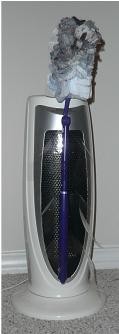
An air purifier was submitted for approval. Basically it was an electric space heater with a feather duster on top (see photo).
Approved.
And here’s the best one…a gasoline-powered alarm clock. An item I suppose for those who are into backwoods Read the rest of this entry »
Fluoride in Water Debate Continues
February 17th, 2010. By AbiK
As the debate on fluoride in water continues to rage in towns across America, it’s interesting to go back and watch this clip from the US Senate Hearing on Safe Drinking Water Act (June 29, 2000); yes, it’s ten years old now, but it’s still relevant; case in point, the current debate going on in Watsonville, CA where on the one hand, health officials note a dental decay epidemic and opponents to fluoridation refer to studies linking it to bone cancer, thyroid problems, kidney malfunction, fetal damage, and of course, fluorosis.
If you’re wondering whether your own water supply has fluoride in it, check with your local water company. Ask what the level of fluoride—it’ll be in parts-per-million (ppm)—in the water is. According to the ADA, the optimal level of fluoride in drinking water that has been proven to help reduce tooth decay is 0.7 – 1.2 ppm. While the ADA supports community water fluoridation, the ADA website also notes:
Naturally occurring fluoride may be below or above these levels [0.7-1.2 ppm] in some areas. Under the Safe Drinking Water Act, the U.S. Environmental Protection Agency requires notification by the water supplier if the fluoride level exceeds 2 parts per million. People living in areas where naturally occurring fluoridelevels in drinking water exceed 2 parts per million should consider an alternative water source or home water treatments to reduce the risk of fluorosis for young children.

Find us on


Archive by Category
- Accidents (24)
- Airlines (9)
- Asbestos Mesothelioma (262)
- Automotive (25)
- Celebrity (14)
- Class Action (84)
- Complaints/Comments (15)
- Consumer Fraud (84)
- Contest (2)
- Court of Public Opinion (5)
- Crazy Sh*t Lawyers See (61)
- Criminal Law (4)
- Defective Products (111)
- DePuy ASR Hip Recall (2)
- Discrimination (22)
- Drugs/Medical (248)
- Elder Care Abuse (4)
- Emerging Issues (462)
- Employment (54)
- Environment (52)
- Financial (28)
- Food Illness (15)
- Human/Civil Rights (4)
- Insecurities (5)
- Insurance (16)
- Intellectual Property (16)
- Internet/E-commerce (19)
- lawsuits (161)
- Lawyers (20)
- Lawyers Giving Back (43)
- Lex Levity (10)
- Personal Injury (106)
- Pleading Ignorance (53)
- Real Estate (2)
- Recall (6)
- Scam (3)
- Securities (13)
- Settlement (81)
- Tort Reform (2)
- Totally Tortelicious (81)
- Veterans (11)
- Whistleblower (9)