Mind the Gap? Elevator Lock Recall Worth Minding
August 16th, 2016. By LucyC
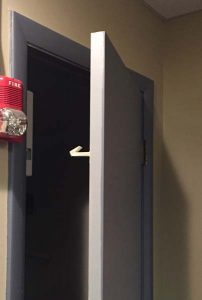
Photo: CPSC.gov
Going Down?
No…wanted to go up actually. But who pays attention to those details, up, down, whatever—I usually get in for the ride before I realize the direction I’m going in—not a great metaphor for life but I digress.
To get to the point (good luck with that), there’s been an elevator recall. Don’t panic if you’re reading this on your way up to your office on the 35th floor. The recall involves residential elevators fitted with electro mechanical door locks. I believe the lingo is EMDLs. Guess what—they don’t work. The locks, not the elevators.
Apparently, the plastic locks can “allow” the landing door to open before the elevator car arrives, “posing a serious fall hazard to consumers attempting to board the elevator.” Allow? So locks can think now? What are the criteria upon which the locks make the decision to open—they don’t like the way you’re dressed? You or your progeny punched all the buttons on your last ride? Enquiring minds want to know.
Back to the recall, I believe the CPSC is attempting to warn people like myself who just move forward when the doors open, not paying attention to direction—as previously stated, or whether or not the elevator is even there. Details, right?
So to put this in context, you’ve pressed the button and now you’re back to your Pokemon Go thing when the outer door to the elevator opens. You are, quite reasonably, assuming that you’re going up to the 2nd floor, when in fact you are going to be taking a quick and potentially catastrophic slip and fall kind of move—without the elevator. All thanks to the EMDLs. (Wanted to use that).
The CPSC is advising, as a remedy, that “Consumers should immediately stop using elevators equipped with the electro mechanical door locks and contact their elevator service company to have the plastic locks replaced with metal parts.” Good advice. For those of us who read these things. I can’t help but wonder how they found out the locks weren’t working properly in the first place?
So far, Porta, the EMDLs manufacturer, has received two reports of lock failure. No injuries have been reported—remarkably. Or perhaps the bodies haven’t been discovered yet? Granny’s missing…but who would think to check the elevator shaft? On reflection, this does sort of have the makings of a Stephen King horror film. Remember “The Shining”?
And for your information, this is no minor recall—there’s 60,000 defective (or empowered, depending on how you want to interpret it) EMDLs out there.
Here’s the CPSC information: “This recall involves all residential elevators with plastic electro mechanical door locks. The EMDLs are installed as part of a complete residential elevator system. Locks included in this recall have a plastic generation 1, 2, 3 or 4 latch and keeper attached to the upper corner on the elevator side of each landing door. A UL or ETL label affixed to the bottom of the EMDL box has “Porta Inc.” printed on it.”
In case you have one of these EMDLs installed, the CPSC advises that “Consumers should contact their elevator service company. Consumers can also contact Porta Inc, toll-free at 844-719-9037 from 8 a.m. to 1 p.m. CT Monday through Thursday or online at www.emiporta.com and click on “Important Product Safety Notice” for more information. Consumers also can email the firm at .
They were sold through elevator manufacturers nationwide from January 2005 through December 2011 for between $20,000 and $40,000. Wow. Wonder what the fix is going to cost…
Better start paying attention—a good metaphor for life.
BMW Lawsuit: The Engine that Couldn’t, or Just Won’t?
August 2nd, 2016. By LucyC
 When you hear the three magic letters “BMW “—what comes to mind? A well-engineered, high performance motor car, with a German pedigree and price tag to match—or something like that? Possibly, you think fast, sexy, expensive, fun—and best not to elaborate too wildly on that. I’m willing to bet, however, that the word “clunker” doesn’t come to mind. Nor should it, as BMW enjoys a very good reputation.
However, it seems they may be having some issues getting to grips with green technology. A chink in the power cell appeared when a defective automotive class action lawsuit was filed against BMW recently, alleging its electric (your first clue) BMW i3 has a bit of a motivational issue. Specifically, it’s not keen on hills or heavy loads—such as a car full of passengers. (Maybe it’s having an identity crisis—after all, cars full of passengers—heavy loads—isn’t that what Ford minivans are for?)
The BMW lawsuit centers around the BMW i3 “Range Extender” feature. This option, called REx for short, or because it sounds cute, outfits the vehicle with a two-cylinder gasoline engine producing 34 horsepower that switches on when the battery charge depletes to five percent, giving the vehicle another 70 miles of range. BMW claims that the Range Extender “doubles your electric driving range” from the vehicle’s standard 81-mile range.
According to the folks that filed the lawsuit, the reality is a little different. Never would have guessed. In practice, when the gasoline engine kicks in, it doesn’t produce enough power to prevent a dramatic decrease in the vehicle’s performance. As alleged, if the car is under any kind of significant load (such as going up a hill, or loaded with passengers), the speed of the car will dramatically decrease as the battery charge diminishes. Like it’s stamping its feet saying “Nope, can’t make me…” The little engine that won’t.
According to the complaint, this alleged defect can result in the car slowing to speeds of 45 miles per hour on the freeway, without warning. This sudden and unexpected loss of power in a motor vehicle can result in a catastrophic situation for all those on the road, the plaintiffs assert.
Oh yes, that is dangerous indeed, not to mention very bad for the ego. There you are, burning up the highway as if you’re on the AutoBahn when suddenly you find yourself almost in reverse. People are driving by pointing you out to their kids, and not in a good way, before they leave you in their dust. Nope, not pretty—and that’s your best case scenario.
And what about this range of 81 miles, which would, presumably, get you to an exit safely on most freeways. If you’re only tearing up the neighborhood side streets or your local shopping mall—then possibly not such a massive loss of face. That said, let’s call a spade a spade—81 miles is not great. I’m assuming, that means the vehicle requires charging every 80 miles or so. But then again, these vehicles don’t spew out carbon dioxide—so that is the trade off—at least when they are in electric mode.
Admittedly, images of Fred Flintstone and the Modern Stone age Family (cue the music!) hoofing it down the highway do come to mind in this unfortunate scenario. But wait—maybe that’s an option? Fit a treadmill to the footwells and get a workout while you drive? Load the car with passengers and suddenly you’re doing 60 mph! Ok—don’t laugh—it may just have legs (bad pun, I know), but likely not worth holding your breath for.
The plaintiffs who filed the defective automotive suit against BMW are looking to have the vehicles redesigned and repaired at BMW’s expense, and to halt the sale of all i3 vehicles until repairs can be made. The claim also seeks compensation for all the owners of the vehicles, who were not told of the serious safety defect. Who was told of the defect? I can’t imagine a car dealership ponying up on that one.
Alas, it looks like it’s back to the minivan…but one can dream… including BMW.
Well-Being? Well, Not. Nu Skin Diffuser Recall for Mold
July 27th, 2016. By LucyC
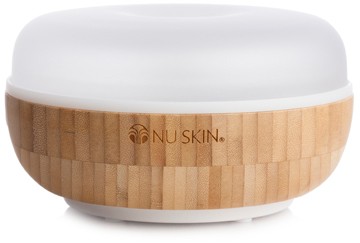 There’s a recall this week—about a mist diffuser from Nu Skin that apparently spreads mold—in addition to whatever it was designed to diffuse in the first place (presumably something to improve your appearance and general well-being).
Sounds kind of serious, and not a little ironic. And, come to think of it, not terribly unique. Products that harm instead of help are among the most common, if not the most common subject of lawsuits and recalls, particularly when they involve products that cause damage to a person’s health and well-being. Some of these are obvious, and others not so much. Medical products, drugs, hair products, those kinds of things come to mind.
I have to admit, I would never have suspected the possibility of mold from a mister—but then again—why not? Perhaps I should have, as increasingly it seems, consumers must educate themselves about the products they are buying, rather than relying on the manufacturer to provide accurate and in some cases truthful information. Parmesan cheese advertised as 100% parmesan cheese when it contains as much as 7% wood pulp, would be one example. Hey—who doesn’t like a little wood pulp with the Spag Boll?
But—there’s a line between deliberately misleading the consumer and genuinely getting it wrong. I find it hard to imagine that diffusers were designed to spread mold. But then, I’m not a conspiracy theorist, even though I can’t really be sure what the intended purpose is/was of these things, except the obvious: to make money for their manufacturers. Guess that has gone all rather horribly pear shaped.
The misters sold for around $170 per unit. Not cheap. According to the recall, as per the Consumer Product Safety Commission (CPSC) “Mold can develop on the product, posing a health risk to individuals with compromised immune systems, damaged lungs or an allergy to mold.” So, for just under $200 you can develop respiratory problems that may require medical care. Without leaving the comfort of your own home.
You can imagine—coughing incessantly—and not for a moment suspecting the mister.
Nu Skin Enterprises Inc., of Provo, Utah sold about 44,000 of these pretty little things in the US, with a further 4,800 sold in Canada and 400 in Mexico.
FYI—the recall involves Nu Skin Epoch mist diffusers. The diffuser is a plastic bowl with a glass lid and bamboo trim ring, used to diffuse essential oils. “Nu Skin” is engraved in the bamboo on the side of the product. The white and tan diffusers are 6.5 inches in diameter and 3.5 inches in height. The recalled lot numbers are PZ11351, PZ17051, PZ21551, PZ03151 and PZ03451. The lot number is printed on the white plastic on the bottom of the product. The misters were sold exclusively online by www.nuskin.com from January 2015 through March 2016.
No injuries have been reported, according to the CPSC, but that’s hardly surprising, because a) who would suspect; and b) how would you prove it?
Consumers are being advised to immediately stop using the recalled mist diffusers and contact Nu Skin for instructions to inspect the product for mold and for a free replacement mist diffuser if mold is identified.
Nu Skin is reportedly contacting purchasers of the product directly. Hope the letters don’t get lost in the mail…
Hoverboard Fire Hazard Recall by 10 Companies
July 13th, 2016. By LucyC
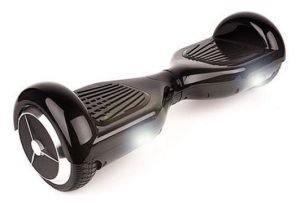
(source: CPSC)
Hoverboards—the tech fad of 2015—are crashing big time this week with a massive recall by 10 manufacturers. It seems that the “self-balancing scooters” as they’re also known, ain’t so safe. While intuitively, you might think—duh!—the problem is not what you might expect.
Apparently, there have been at least 99 incidents of the lithium-ion battery packs in self-balancing scooters/hoverboards overheating, sparking, smoking, catching fire and/or exploding including reports of burn injuries and property damage, according to the Consumer Product Safety Commission (CPSC). Now that does sound exciting. Certainly would liven up your walk around the park. Who said exercise is boring?
You can imagine it—there you are boogying down the street on one of these things—and suddenly you’re scooter is putting on a pyrotechnics display—complete with smoke and sparks. There’s fire at your feet! Onlookers might even think you’re making some uber hip video and start applauding. If you’re on one of these things in traffic, you could really be in trouble. Not to mention the onlooker distracted driving you’d cause—or worse.
The recall, by the way, is massive—something like 501,000 of these things are involved. And they’re not cheap to buy. The recalled scooter boards involved in the recall were sold at mass merchandisers nationwide and online retailers from June 2015 through May 2016 for between $350 and $900. But there are models that go for north of $1000. That’s a lot of cabs, or gym memberships…
Doing a bit of investigating into this toy, it seems that hoverboards are banned from roads and sidewalks in cities around the world. And—airlines and airports. OMG. Don’t even want to imagine that scenario. New York State has made it illegal to ride one on public roads or walkways, as have Australia and the United Kingdom, and many schools (including UCLA), malls and other public places are also jumping on the banning bandwagon.
According to a story on CNET, “retailers such as Amazon and Overstock are stopping sales of some models or even telling consumers to trash ones they’ve already received.”
So, does this mean it’s back to the gym afterall? There’s likely no meaningful exercise—physical exercise—to be had with one of these things. And in fact they don’t hover—so forget any “Back to the Future” fantasies. These boards have two wheels—one on each end—like a horizontal skate board. You’re not required to move the thing along yourself. Just control and steer it with your legs and body. That’s all (ha!) So hop on and, well, catch fire. Wonder if you can get life insurance for riding one of these things…
Apparently they do take some getting used to—a rider needs to learn to balance on them using the two pressure-sensitive footpads that control speed and steering. So no drinking and driving with this baby and definitely NOT something you want to take to a party… or have your teenager take to a party. FYI—these things can do up to 10 MPH—3x average walking speed, so it’s best to kill the Pokemon Go while hoverboarding as well.
CNET also reports that Hoverboards have minimum and maximum weight limits, which are meant to protect the rider and scooter. “Most boards also won’t operate going up or down steep hills, usually over 30 degrees. There are no height limits associated with the boards, though keep in mind that most lift you about four inches above the ground. If you’re particularly tall, you’ll run a greater risk of hitting your head while riding.” Sounds great.
So enter the safety gear—yes—you knew there had to be a merchandising opportunity lurking here somewhere…helmets, knee pads, elbow pads and wrist guards—but nothing that would presumably protect you in a meaningful way from an explosion or fire. Maybe a hazmat suit? Maaaybe not. It does, however, paint a pretty laughable picture—suited up like Michelin man, wobbling uncontrollably as you lurch down the street with sparks and smoke emanating from your feet. It’s a Snapchat moment waiting to happen. The next YouTube sensation, if only for a half day. Yup—a great recreational device—for the onlooker not the rider. (I’m reminded of the Darwin Awards).
All in all, the whole thing sounds way too stressful. One would need anti-anxiety drugs just to get on the thing. Never mind taking it out—actually riding it in public. Anywhere, day or night—preferably never.
You can check out the full hoverboard recall here.
Time for a walk. On the ground—in runners. Oh yeah baby. There’s a lot to be said for doin’ it old school.
CVS Aloe Vera: Shouldn’t You be Able to Trust a Label?
July 8th, 2016. By LucyC
Consumer Fraud and the Slippery Slope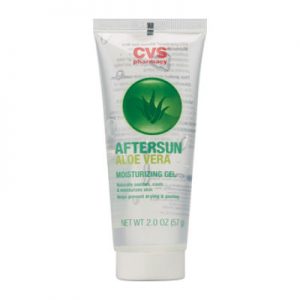
During the past few months there has been what one could call a “rash” of consumer fraud lawsuits filed concerning products that do not contain ingredients as advertised, and / or 100% of the ingredients advertised etc. Case in point, last week CVS Health found itself on the end of a proposed consumer fraud class action lawsuit over allegations it falsely advertised the Aloe Vera content on its moisturizing gel.
The issue, it seems, is that the CVS Aftersun Aloe Vera moisturizing gel does not contain 100 percent aloe vera, but does contain anti-freeze. Seriously. An allegedly non-toxic antifreeze, but antifreeze nevertheless.
The lawsuit was filed by Patricia Bordenet, a customer in Illinois, who went out and had the product tested. So my question is, who does that? I have to admit it’s not the first thought that comes to mind when I’m in the drugstore—or any store for that matter—looking for a specific product to purchase. I trust the label. And, I’m guessing, therein lies the rub.
Hats off to Bordenet for getting the product tested, because likely most of us would not have suspected the product to contain antifreeze. Admittedly, we might have our doubts about just how much Aloe Vera the product contains—everything has a shelf-life, after all—but even if enquiring minds wanted more information—would you have gone to the trouble of having the product tested?
So much for taking things on face value. And face value is, presumably, what many companies depend on when they make the claims they do on their products, and god knows there have been some pretty outrageous ones.
Take, for example, the Kardashian endorsed Waste Gang corsets. The packaging on that, according to the lawsuit, claimed that it would burn fat and help women achieve a smaller waist. Well, I can see you might sweat off the weight, under duress of wearing the product, but that’s not something you would want to advertise.
The Waist Gang Society LLC (Society?) has to pony up a $5 million settlement for not telling it like it is—which is that the corsets redistribute the fat—not “burn fat and control the user’s weight,” Oh, if it was only that easy! Sign me up!
Back to the antifreeze. The other, more serious consideration with failure to disclose all the contents of a product—particularly a product that is either applied to the body or ingested, is that people using it may suffer an allergic reaction—or worse—as a result of exposure to that product. There you are in the ER with no idea how or why you got there. That’s helpful. And likely not something that was thought through when the labeling or advertising was developed. Giving the benefit of the doubt here.
And now we find ourselves at the precipice of the Slippery Slope. Because giving the benefit of the doubt is not always such a good idea, as is evidenced by a slew of drug injury settlements—most recently one for $70 million involving a young man who grew breasts as a result of using Risperdal. The jury found that the maker of the drug, Janssen, knowingly concealed information about the side effects of gynecomastia.
But I digress. Well, no, I just went down the Slippery Slope. So enough. Enough of the exaggerated claims, enough of the lies, why not just make a safe product that is what it claims to be? While that may be an altruistic notion, does that necessarily make it difficult? If it is too difficult—then off to court you go.

Find us on


Archive by Category
- Accidents (24)
- Airlines (9)
- Asbestos Mesothelioma (262)
- Automotive (25)
- Celebrity (14)
- Class Action (84)
- Complaints/Comments (15)
- Consumer Fraud (84)
- Contest (2)
- Court of Public Opinion (5)
- Crazy Sh*t Lawyers See (61)
- Criminal Law (4)
- Defective Products (111)
- DePuy ASR Hip Recall (2)
- Discrimination (22)
- Drugs/Medical (248)
- Elder Care Abuse (4)
- Emerging Issues (462)
- Employment (54)
- Environment (52)
- Financial (28)
- Food Illness (15)
- Human/Civil Rights (4)
- Insecurities (5)
- Insurance (16)
- Intellectual Property (16)
- Internet/E-commerce (19)
- lawsuits (161)
- Lawyers (20)
- Lawyers Giving Back (43)
- Lex Levity (10)
- Personal Injury (106)
- Pleading Ignorance (53)
- Real Estate (2)
- Recall (6)
- Scam (3)
- Securities (13)
- Settlement (81)
- Tort Reform (2)
- Totally Tortelicious (81)
- Veterans (11)
- Whistleblower (9)