Insurance Archive
Attorney Ed Susolik Takes on 80-year-old’s Insurance Fight, Pro Bono
April 22nd, 2012. By BrendaC
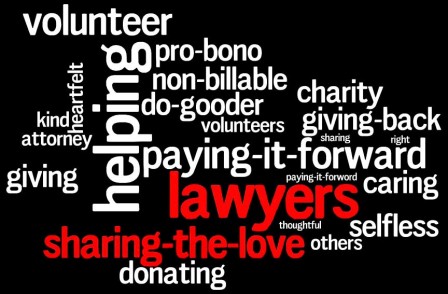 If you want a fight, attorney Ed Susolik is the kind of guy who will give you one. Not long ago, Susolik was so outraged when he read a newspaper story about an 80-year-old man who was getting the runaround from a big insurance company, that he offered his assistance, pro bono. “I just wanted to help. I just thought it was such a gross miscarriage of justice,” Susolik says.
One of Southern California’s top insurance lawyers and a partner at the big name firm of Callahan & Blaine, Susolik has handled more than 1,000 bad-faith lawsuits. Although he’s known for insurance claims, Susolik’s real specialty is winning cases. 
Ken Carrier had been battling with a security company for well over three months and he’d been getting absolutely no where. One phone call and a letter from a lawyer like Susolik and it was all over. The security company agreed to pick the expenses.
Last December, Carrier was out on an errand in Lake Forest, Orange County. He pulled his SUV into a parking lot near an AT&T store that had just been robbed seconds before. Suddenly, a pistol waving security guard, who claimed to be a police officer, was at the passenger door and ordering Carrier and his daughter out the vehicle. The security guard took off in Carrier’s vehicle, in hot pursuit of the AT&T robbery suspect. Shortly after, the security guard crashed the SUV into a pickup truck.
Through absolutely no fault of his own, Ken Carrier, retired and living on a fixed income, was suddenly out thousands of dollars. His insurance would pay the first $9,000—but not the rest which totaled another $15,000 for storing his vehicle; car rental until he could fix his SUV; doctor bills for headaches and dizzy spells; and the sheer stress of having a gun put to his face—and so on. The security company that commandeered his vehicle was refusing to take any responsibility.
“That, essentially, is what they told Mr. Carrier. They said we have a lawyer and we are big company and you are an 80-year-old man and we aren’t paying,” says Susolik.
“They took Mr. Carrier’s SUV and they crashed it,” he adds. “Why don’t you make the man whole? What is the problem?”
“Once you get into a certain age category, companies and people can take advantage of you,” says Susolik. “And I really felt that Mr. Carrier was being taken advantage of.”
“I said, “Look,” recalls Susolik “all the resources of our firm are going to come down on your head because this is financial elder abuse.”
This is not the first pro bono case Susolik has handled. “There are various reasons that people need pro bono assistance. Sometimes it is financial. Sometimes you lose your job or otherwise. Sometimes people just don’t have the background to handle legal issues,” he adds. “We are seeing more and more people who are elderly who are victims of financial abuse. Obviously on the real negative side you see the scams and everything. But with something like this—this should have been a very simple issue.”
Susolik just got a letter from Ken Carrier thanking him for his efforts. “It says, ‘I just got my first night’s sleep in months. Thanks’,” says Susolik. “And it has three exclamation marks!,” he adds, with a a smile in his voice.
Attorney Ed Susolik is a partner with Callahan & Blaine and is in charge of the firm’s insurance department. Attorney Susolik is an adjunct professor at USC Law School where he teaches Insurance Law. He is also a contributing editor to the leading insurance book in California, the “Rutter Guide treatise on Insurance Litigation”. Attorney Susolik was chair of the Orange County Bar Association Insurance Law Section for over 10 years. He was born in Czechoslovakia and earned his law degree at the University of Southern California. Susolik has recovered more than $1 billion for clients over the last two decades.
Extended Warranty: Do you Need it? What if a Repair Claim is Denied?
February 7th, 2012. By AbiK
It’s become the all-familiar conversation as you pay for that washing machine, HDTV, smart phone or even a set of luggage— “Would you like to purchase the extended warranty on this? It covers blah blah blah blah just in case blah blah blah…” Chances are, as if by rote, you shake your head to indicate that, no, you don’t want whatever protection plan they’re offering up.
It makes sense, after all, as we’ve been trained for years now by consumer advocacy groups to “just say no” to most extended warranties. It’s become a Pavlovian response. But then why are these protection plans still around if no one is buying them? Clearly some folks must be buying—and the question is, are they the smart ones or are we really doing the smarter thing by passing up what might seem like some extended warranty scam?
The answer is, it depends.
So here are some extended warranty guidelines—things to consider before opting to pay for a protection plan that goes beyond the manufacturer’s initial coverage plan period (and what to do if after you’ve purchased a protection plan you run into a bad faith insurance situation.)
1. Do your homework—research what you’re buying before you buy it.
Reliability Ratings. Find out how reliable the appliance or tech gadget is—does it have a bad track record for repairs? How costly are repairs? Look at how the product is rated at Consumer Reports, for example. Check out reliability reviews on laptops, smart phones, tablets, HDTVs, cameras—all tech gadgets and gizmos–at PC World, CNet or PCMag. Reliability ratings will give you a sense of what kind of repairs, if any, you can typically expect the product needing over the time in which you’ll own it
New May Not Mean Reliable. Keep in mind as well that new generation products–that is, products with new technology or design features–may not have all their bugs and kinks worked out when they launch. In such an instance—if you’re the type who has to have the latest and greatest thing on the market regardless of how much reliability data may be available on it—then an extended warranty may be worth looking into. Or, hold your horses and wait for the next production run in which improvements have been made. And a final note on new tech—if you think you’ll upgrade or switch to a new model within a couple of years anyway, the extended warranty probably isn’t worth it.
2. Look in your wallet—your credit card may protect your purchase, too.
Paying with Plastic can Provide Extended Coverage. Cards such as American Express offer some extended warranty protection with even the basic Green Card. This is how the AMEX extended warranty coverage works:
When you charge the entire cost of a covered product with your American Express® Card, the Extended Warranty will extend the terms of the original manufacturer’s warranty for a period of time equal to the duration of the original manufacturer’s warranty, up to one additional year on warranties of five years or less that are eligible in the U.S.
If you’re not sure how or what might be covered with your credit card, call the customer service number on the back of your AMEX, VISA, MasterCard, Discover, etc. card and ask. You may find that you’ve got extended warranty protection already.
3. Find out what the extended warranty covers.
Read the Extended Warranty to Understand the Terms. Know what you’re paying for and what to expect should your 3-year-old drop your smart phone into the toilet. Some warranties don’t cover all “accidents”. Some only cover a specific set of parts. After reading about the product’s reliability and which parts are most likely to fail, compare that information with what’s covered by the extended warranty.
Understand the coverage period as well—typically, you’ll pay more for a longer coverage period, which at first makes sense. But if you’re not planning on keeping or using the product for a full five years, you probably don’t need a 5-year extended warranty, and you’re better off saving your cash.
4. Follow the 20% rule.
5. If something goes wrong…
Woman’s FBI Fib Raises Red Flags in Insurance Scam
August 24th, 2011. By AbiK
File under “What the hell was she thinking?”
Ok–here’s a flashback. 1984. Divine Sounds. “What People do for Money”. That’s it above. I’m thinking it must not of been on Bridgette Buckner’s Walkman way back when—otherwise she might’ve had a clue as to what would be in store for her should she ever foresee a future in fraud.
Which she did.
Yes, Bridgette Buckner, 50, of Bartlett IL, was a Totally Tortelicious, insurance fraud laughingstock waiting to happen. And here’s what happened…
Buckner clearly needed some cash—and what better way to get it than to get it from a dead person? So she claimed her husband died. Oh not just once like most husbands are eventually wont to do, but TWICE! Complete with forged death certificates and Lord knows what other supporting documentation.
She also claimed to have lost three children who apparently only lived in her mind—but that’s another, albeit related, story.
So back to the hubby with two lives. According to the Courier-News, Buckner worked for Hallmark Services in Aurora, IL. And it was there that she filed her life insurance claims. But—and this is the part I absolutely love—she claimed her husband—the second but same one who died previously, was an FBI agent who died in the line of fire! Boy, when Buckner claims a death she lets it rip (no pun) with the heroics, no?
And…the security consultants who wound up reviewing her claim were actually former FBI agents—what, pray tell, are the odds of that? Needless to say, Buckner could not possibly have raised any more red flags to alert her employer to her insurance scam.
As the story unwinds, Buckner’s husband is alive and kicking–he’s estranged (any guesses as to why? ok…ok…my bad) and not an FBI agent. When presented with these tidbits, Buckner was reportedly incredulous stating, “You mean he’s not dead?” How the investigators refrained from responding with “Well, he did rise up from the dead once before, right?” is beyond me.
Poor Bridgette. She’s now set to be sentenced next month. And p.s., she’s since added being charged with identity theft.
Think your Company-Sponsored Life Insurance has your back? Think again
April 26th, 2011. By Kristine B
In the realm of people being ripped off, there are a few stories that are often the most heart breaking. Seniors losing their life savings to Ponzi schemes, seniors suffering financial elder abuse at the hands of their own families and people being denied necessary medical treatment because of bad faith insurance practices.
But there’s another story that’s been emerging that is also heart wrenching—stories of how insurance companies have denied and/or delayed legitimate accidental death claims by alleging the death was not an accident at all. These situations leave the surviving family members to deal with mountains of paperwork and facing the death of their loved ones over and over again while ERISA laws reportedly help insurance companies get away it.
The situation was first reported by David Evans at Bloomberg (02/28/11). A man died in a car accident after a long battle with cancer. A medical examiner and a sheriff determined that the car crash was an accident—meaning the victim’s death was accidental. But the insurance company refused to pay, saying that the victim committed suicide.
In other words, the insurance company knew more than the medical examiner and the sheriff. Now, consider that for a moment. By claiming the man committed suicide, the insurance company allegedly aimed to get out of paying out the accidental death policy. But there’s more to it than that. Because the insurance company claimed to know the mind of the victim better than his own family and better than the investigators who looked into the accident.
The good news is that the victim’s wife sued and received the full life insurance policy. The bad news is that the insurer still denied wrongdoing—apparently, it’s not wrong to allege someone committed suicide—and didn’t pay any interest or penalties for holding the money.
Why? Because ERISA (Employee Retirement Income Security Act) protects insurers. It says they can keep the survivors’ money while a claim is in court and invest that money, too, keeping the profits. Furthermore, under ERISA, insurance companies don’t have to pay compensatory or punitive damages. In other words, they can hold the money for an extra year or two, make a profit off investing that money and still only have to give the survivor the amount of the policy at the end. They profit while the survivor loses.
So, once again, insurers are only too happy to receive premiums and benefit if they delay paying out claims.
And why is ERISA involved in this at all? Because many companies provide life insurance, and company sponsored benefits—such as life insurance—are covered under ERISA. Making matters even worse, because ERISA is a federal law, state insurance departments don’t have the authority to step in on survivors’ behalf. It’s up to survivors to hire lawyers to help them fight any wrongfully denied accidental death claims.
The end result is that if you have a company-sponsored life insurance policy claim that you feel has been wrongfully denied, don’t rely on the insurance company to tell you what “normal procedure” is. Your best bet is probably to contact an attorney and find out if you can fight the denial. After all, insurance companies apparently have little to lose by denying legitimate claims.
Topamax and Cleft Palate: Now the Insurance Battle
March 21st, 2011. By AbiK
 Hooding Eyelids? Cosmetic elective surgery. Frown lines and laugh lines? Cosmetic elective surgery. Cleft Palate? Cosmetic elective surgery.
Wait—what was that last one?
That’s the incredulous moment a number of parents experience after submitting insurance claims for their child’s cleft palate surgery. They find themselves hearing that their insurance company deems the surgery as either “cosmetic” or “dental”. Translation: You’re on your own. And it doesn’t help to see those ads all over of children with cleft palates in foreign lands for whom there are constant requests for charitable relief. Not that those children don’t deserve assistance—they do—but it leaves folks closer to home questioning whatever happened to that phrase, “charity begins at home”?
Well, insurance companies aren’t in the charity business.
For parents of a child who’s been born with a cleft palate or cleft lip due to Topamax side effects—ie, a birth defect directly related to the mother having taken Topamax during the first trimester, navigating the world of insurance claims and denials is an unexpected battle. But there are some things you can do. Here, some tips from Cleftline.org, the website of the Cleft Palate Foundation:
1. If your insurance company denies your child’s cleft palate surgery claim, make sure you review your insurance plan—some policies have a clause for genetic birth defects that requires coverage for any medical treatment that is necessary because of a birth defect.
2. Try to talk with a case manager—not the customer service person who’s just following the insurance company script. The case manager typically has a medical background and may be better informed and versed in understanding your situation.
3. If your insurance provider deems cleft palate surgery as cosmetic, you can submit an appeal but you should have your doctor write a letter on your behalf to state the medical reasons why the surgery is necessary. A reviewer with the insurance company may not understand that their are benefits to having cleft palate surgery beyond boosting self-esteem. The Cleft Palate Foundation also suggests submitting pictures as well.
4. If your insurance provider says the cleft palate surgery is dental, not medical, try to have a plastic surgeon review your claim. Additionally, have your surgeon and primary physician write letters of support to be submitted to the insurance company. In the letters, ensure that the medical reason for the cleft palate surgery is stated, and that it is necessary, not some elective procedure.
5. If your child also has speech difficulties associated with the cleft palate, ensure that you document with the insurance company—and your doctor can state this in his letter also—knows that the condition is a direct result of the initial birth defect—not the result of an interim surgery or other condition. Otherwise the insurer may consider the speech problem as a secondary condition.
6. If your insurance company considers the cleft palate as a pre-existing condition, understand that many times—and particularly in this economy when many are still going without health insurance to get by—that insurance companies often receive claims from individuals who only sign up for benefits right before they know they will need to file a claim. The Cleft Palate Foundation suggests that you do not let your benefits lapse because you then may become at risk for this type of claim denial.
For more information and for further cleft palate resources, visit the Cleft Palate Foundation at cleftline.org, or call at 800-24-CLEFT. For more information regarding Topamax birth defect legal help and news see our Topamax news page.

Find us on


Archive by Category
- Accidents (24)
- Airlines (9)
- Asbestos Mesothelioma (262)
- Automotive (25)
- Celebrity (14)
- Class Action (84)
- Complaints/Comments (15)
- Consumer Fraud (84)
- Contest (2)
- Court of Public Opinion (5)
- Crazy Sh*t Lawyers See (61)
- Criminal Law (4)
- Defective Products (111)
- DePuy ASR Hip Recall (2)
- Discrimination (22)
- Drugs/Medical (248)
- Elder Care Abuse (4)
- Emerging Issues (462)
- Employment (54)
- Environment (52)
- Financial (28)
- Food Illness (15)
- Human/Civil Rights (4)
- Insecurities (5)
- Insurance (16)
- Intellectual Property (16)
- Internet/E-commerce (19)
- lawsuits (161)
- Lawyers (20)
- Lawyers Giving Back (43)
- Lex Levity (10)
- Personal Injury (106)
- Pleading Ignorance (53)
- Real Estate (2)
- Recall (6)
- Scam (3)
- Securities (13)
- Settlement (81)
- Tort Reform (2)
- Totally Tortelicious (81)
- Veterans (11)
- Whistleblower (9)