Employment Archive
8 Things an Exempt Job Status Deprives you of…
October 15th, 2013. By AbiK
 A lot of questions we receive here at LawyersandSettlements.com have to do with employment…things like what counts as on-the-job harassment, whether or not someone is owed overtime pay, and questions about wrongful termination. One of the trickiest areas of employment though has to do with misclassification—i.e., whether someone’s position is considered exempt or non-exempt. We discuss misclassification in greater detail on our Unpaid Overtime-Employment info hub on our website. But beyond what most people consider to be the difference between exempt and non-exempt—that exempt jobs don’t qualify for overtime pay while non-exempt ones do—there are other things you should be aware of if you’ve recently been switched over or promoted into an exempt position.
Exempt positions tend to be ones that pay a salary rather than an hourly rate. For many, the chance for what could be a higher rate of pay and no longer “working on the clock” makes pursuing exempt positions worth the trip. Here though are eight protections that an exempt job status deprives employees of—provided by the State of California Department of Industrial Relations (you can find this info at your own state’s department of labor).
8 Things an Exempt Job Status Deprives you of Protection for…
- overtime premium;
- minimum wage;
- reporting time pay;
- requirement of records under the IWC Orders (but not records required by the Labor Code);
- requirement that employer furnish uniforms and equipment (except, of course, that any expenditure by an employee is recoverable under CA Labor Code Section 2802).
- requirement that meals and lodging amounts be limited;
- meal period requirement;
- rest period requirement;
Judge To Hearst Interns: Sorry, Sue for Yourself; No Class Action Lawsuit Here
May 14th, 2013. By AbiK
 Was this any surprise? The one-time Hearst intern, Xuedan Wang, aka Diana Wang—who sued Hearst (Xuedan Wang v. The Hearst Corporation, U.S. District Court for the Southern District of New York, No. 12cv793) claiming that she and other interns at the various Hearst magazines were unfairly misclassified—has not been granted the class action lawsuit status she was after.
Wang’s initial lawsuit claimed that her unpaid internship at Harper’s Bazaar violated the federal Fair Labor Standards Act (FLSA) and New York state labor laws. (For the record, the U.S. Labor Department states that unpaid internships must be educational and “for the benefit of the intern.”)
Now, forget about the fact that many of us have done internships and we completely “got” what we willingly signed up for: on-the-job training for zero (or very low) pay and a nice addition to a resume. What Wang’s complaint stated was that, “Unpaid interns are becoming the modern-day equivalent of entry-level employees, except that employers are not paying them for the many hours they work.” Earth to Wang et al, internships at top magazines in NYC—as well as at many other places—have always been about entry-level tasks being performed by unpaid wannabes. It’s a tit-for-tat arrangement—the company gets some help, the intern scores experience and a credential. No one promised glamour and prestige—or any pay.
So somewhere along the path from Baby Boomer, to Gen X, to Gen Y/Millennials, it would appear the definition of “intern” has changed. Here are some (non-legal) definitions from Merriam-Webster and TheFreeDictionary.com, respectively, as the word relates to labor:
- an advanced student or graduate usually in a professional field (as medicine or teaching) gaining supervised practical experience (as in a hospital or classroom)
- someone, as a student or recent graduate, working as an apprentice or trainee to gain practical experience in an occupation
Seems an intern gets “practical experience”. No mention of a paycheck. And, might I add, if a paycheck were what Wang et al were after, here’s a tip: apply for a job. (fyi, here’s Merriam’s definition of “job”: “a piece of work; especially : a small miscellaneous piece of work undertaken on order at a stated rate” —note the words “stated rate”).
But, of course, why pay your dues in a highly competitive industry when you can try to file a class action lawsuit because, unlike the millions of interns who preceded you, YOU are special? Btw, if that sounds jaded or sarcastic—note that according to a Facebook page dedicated to Wang’s intern class action lawsuit attempt, she “worked seven unpaid internships before she got fed up.” SEVEN folks. At that rate, it’s kind of hard to point the finger at anyone else but Wang—and it starts to look like maybe she needed some career coaching.
If you don’t think living a fashion intern’s “Groundhog Day” x7 reveals enough about Wang’s (insert “misguided”?) approach to breaking into the glam world of haute couture and ready-to-wear, check out these Wang quotes from a NY Magazine article, “The Norma Rae of Fashion Interns”, that ran when the class action was initially filed (apologies to the real Norma Rae, Crystal Lee Sutton)—the quotes hint at a sad naivete about not only working in fashion, but also about work in general:
“I’d been dreaming of standing in their offices for fifteen years,” she says. “I was so ready to give everything I had. I couldn’t imagine that the dream of mine was becoming real.”
“This was going to be my only ticket to the industry,” she says. “I didn’t have unlimited resources. I was going to make the time worthwhile. I was going to be remembered by people.”
“I was so uncomfortable and stressed out,” she says. “It was hard to get people to understand how an intern could be stressed out, but the editors constantly stressed that this was a real job and if this went wrong or if that happened, it would be my fault.
Kind of makes you think of that sad sack who’s putting all his hopes and dreams on that one Powerball lottery ticket…sure you gotta be in it to win it, but you also have to have a realistic view of your chances.
Regardless of all that, this is indeed, about a class action lawsuit and as such, it needed to go through the rigorous review for certification. And that means that from a legal perspective, in order for there to be a “class” established for the lawsuit, certain requirements need to be met: numerosity, commonality, typicality and adequacy of representation.
According to Reuters, the judge who presided over the employment misclassification filing, U.S. District Judge Harold Baer, found that the “former interns failed to meet the bar set out in the Supreme Court’s landmark 2011 case Dukes v. Wal-Mart to constitute a class action. Specifically, Baer found that the interns did not meet the standards of commonality and predominance needed to be considered a class.”
How so?
Baer explained in his decision, “Here, while a close question, the commonality requirement is not satisfied because plaintiffs cannot show anything more than a uniform policy of unpaid internship.” That included the fact that the interns in the proposed class worked for different magazines and performed different tasks. Reuters reports that Baer also denied the plaintiffs’ motion for summary judgment on whether they met the definition of an employee.
So what now?
Well, Wang et al can now try to sue Hearst individually—not as a class. Though it’s unlikely that many will choose to do so as the interns were seeking minimum wage—and the cost to litigate such a case for a net return of minimum wage minus attorney fees is probably just not worth going to the mat for…
2 Ways Working Over 8 Hours DOESN’T Mean California Overtime Pay
March 22nd, 2013. By AbiK
 Ever wonder what non-exempt work situations do NOT qualify for overtime pay? While there are fairly stringent laws and guidelines in place for what requires California employers to pay overtime wages, there are a couple of situations where, as a worker who puts in over eight hours on a given workday, you are actually not eligible for California overtime pay. Let’s take a look at both examples, which are explained in more detail (and a bit more jargon) at the California Department of Industrial Relations DLSE section on their website.
1. Make-up Time.
If a non-exempt employee requests time off that will be unpaid, he/she can “make up” that time and it will not be considered eligible time for California overtime pay so long as these requirements are met:
- The employee may not work more than 11 hours on another work day, and he/she may not work more than 40 hours in the workweek to make up for the time off. The make up time, in effect, is an equal “swap” for the time the employee would’ve normally worked within the same workweek.
- The time the employee missed must be made up within the same workweek.
- The employee needs to provide a signed written request to the employer for each occasion that they want to makeup time.
- Employers cannot encourage or otherwise solicit an employee to request makeup time.
2. Alternate Work Week Arrangements.
It’s common practice in some industries for a non-exempt California employee to work an alternate workweek schedule. One of the most common arrangements involves working a 4-day-a-week, 10-hours-per-day schedule (typically called a “4/10” schedule). Alternate work week arrangements require a formal agreement and adherence to certain California Labor regulations (see DLSE overtime exceptions).
As long as the employer has complied with all regulatory matters, an alternate work week employee is not owed California overtime pay for working more than 8 hours in a workday (due to the alternate work schedule), so long as he/she does not work more than 40 hours during the workweek.
For more information see our California Labor and California Overtime pages.
Sex Romp on Business Trip Leads to Worker’s Comp Benefits (Seriously)
January 7th, 2013. By AbiK
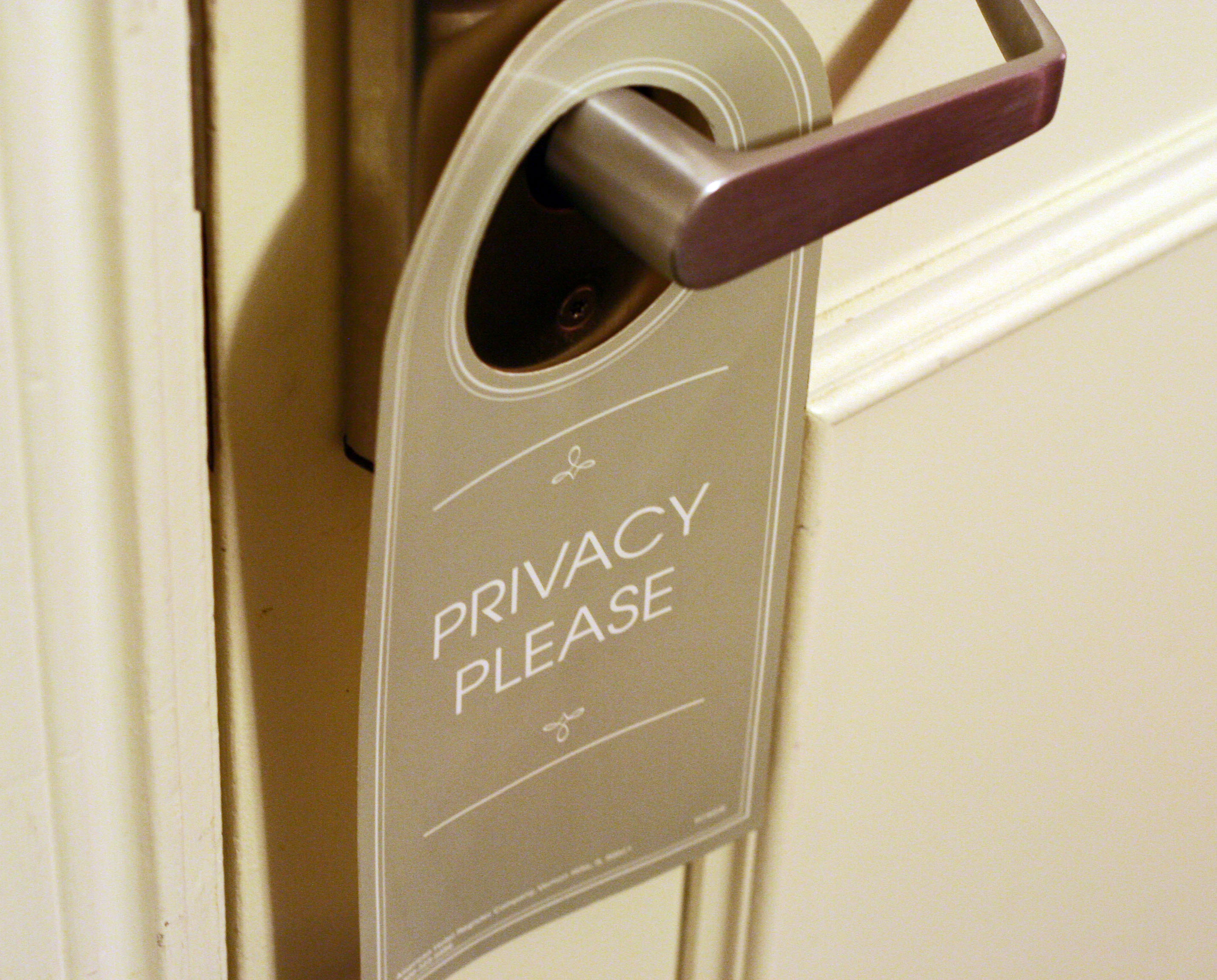 How many people would have sex on a business trip, get injured while having sex, and then have the b#lls to file a worker’s compensation claim?
Not many, most likely.
There is one person, however—in Australia. We don’t know her name—that’s under lock and key—”for legal reasons”, but we do know that she was in her thirties, worked for the government, and she was hospitalized (hospitalized? what the heck were they doing?) for injuries sustained while having sex with a “male friend” in a hotel room during a business trip back in 2007.
Ok, we actually do know what they were doing… It seems that while they were going at it, a light fixture above the bed got torn from its mounting fixture—hey, it happens. And, when it came crashing down, it landed smack on the woman’s face. Party over.
Well, that led to her nose and mouth getting injured, along with one of her teeth. And that then led to her later suffering from depression, which then led to her inability to keep working at her government job.
Talk about a double whammy: lousy sex & no money. Sounds more like some sort of 20-something angst-ridden movie trailer than the plight of a 30-something would-be gainfully employed government worker. The 30-year old had an ace up her sleeve though: she filed a worker’s compensation claim—and initially, it had been approved.
Surprise, surprise, the approval was then reversed after further investigation into the worker comp claim.
According to the Mercury News, an administrative tribunal reviewing the details of the woman’s worker’s comp claim determined that her injuries had not been incurred “in the course of her employment”. And here’s the part that we all would’ve loved to have been a fly on the wall to witness being resolved–the tribunal’s conclusion that the sex was ‘”not an ordinary incident of an overnight stay” such as such as showering, sleeping and eating’.
Now, you’d think that would’ve been the end of it. And that’s where a serious set of b#lls comes into the picture; most folks would’ve quietly walked away, not wanting to risk further embarrassment. But no.
See, the law—regardless of what country you’re in—can work in mysterious ways and as such, after going through an appeal, the woman’s claim is now eligible for worker’s compensation benefits.
Yes, a federal judge—Judge John Nicholas—disagreed with the tribunal’s earlier stance that the sex needed to be condoned by the government in order for the claimant to qualify for compensation. Yes! She was able to claim that getting hurt while having consensual sex on a business trip—while working for the government mind you, not the ‘adult entertainment’ industry—entitles her to worker’s comp benefits.
Perplexed? Here’s the gist of Judge Nicholas’ decision: “If the applicant had been injured while playing a game of cards in her motel room, she would be entitled to compensation even though it could not be said that her employer induced her to engage in such activity.’
And, three other judges supported his decision.
No word yet on how much compensation the woman will be entitled to, or whether an appeal is to follow…
Top 10 OSHA List of Most Cited Workplace Violations for 2012
December 19th, 2012. By AbiK
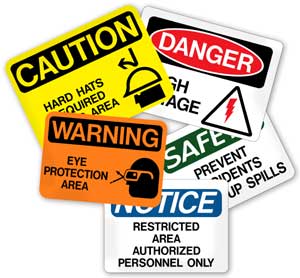 The U.S. Department of Labor’s Occupational Safety and Health Administration (OSHA) recently announced a preliminary list of the top 10 most frequently cited workplace safety violations for 2012 (needless to say, as 2012 isn’t quite over yet, the list isn’t completely final, but it’s surely close).
OSHA’s top 10 most frequently cited workplace safety violations for 2012 are as follows:
1. Fall Protection – 7,250 total violations – this includes failure to protect open sides and edges, failure to prevent falls from a roof, failure to cover holes or excavation areas such as a well, pit, shaft, or similar excavation of 6 feet or more in depth. Proper guardrail systems, fences, barricades, or covers should be in place.
2. Hazard Communication – 4,696 total violations – this relates to the failure to provide adequate education and training programs, signage, labels on containers of hazardous materials, and safety data information.
3. Scaffolding – 3,814 total violations – Scaffolding topped OSHA’s list in 2011, but still remains high up on the list in 2012. Violations involving scaffolding pertain to scaffold construction, and use of protective guardrails, safety nets or other safety precautions, and violations pertaining to proper access to scaffolding.
4. Respiratory Protection – 2,371 total violations – respiratory protection violations include unsuitable respirators–either due to sizing/fit or inadequate function, and lack of procedures or training for how to use respirators.
5. Ladders – 2,310 total violations – this includes improper use of ladders (e.g., standing on the top step), use of an improper ladder for a particular job and allowing excessive loads on ladders.
6. Machine Guarding – 2,097 total violations – this includes improper placement or inadequate anchoring for fixed machinery, or improper and unsafe exposures at the point-of-operation (e.g., unsafe exposure to machine blades)
7. Powered Industrial Trucks – 1,993 total violations – violations here include lack of proper repair and upkeep of vehicles to ensure safety; lack of proper training for operators–or refresher training as needed/required.
8. Electrical Wiring – 1,744 total violations – this includes everything from improper use of extension cords to use of temporary wiring instead of permanent wiring.
9. Lockout/Tagout – 1,572 total violations – this one was number five on OSHA’s list for 2011; it includes violations that occur due to lack of training and inspections for the servicing and maintenance of machines and equipment in which the unexpected start up of the machines or equipment, or release of stored energy, could harm employees.
10. Electrical (General) – 1,332 total violations – general electrical violations include instances of electrical shock or electrocution.

Find us on


Archive by Category
- Accidents (24)
- Airlines (9)
- Asbestos Mesothelioma (262)
- Automotive (25)
- Celebrity (14)
- Class Action (84)
- Complaints/Comments (15)
- Consumer Fraud (84)
- Contest (2)
- Court of Public Opinion (5)
- Crazy Sh*t Lawyers See (61)
- Criminal Law (4)
- Defective Products (111)
- DePuy ASR Hip Recall (2)
- Discrimination (22)
- Drugs/Medical (248)
- Elder Care Abuse (4)
- Emerging Issues (462)
- Employment (54)
- Environment (52)
- Financial (28)
- Food Illness (15)
- Human/Civil Rights (4)
- Insecurities (5)
- Insurance (16)
- Intellectual Property (16)
- Internet/E-commerce (19)
- lawsuits (161)
- Lawyers (20)
- Lawyers Giving Back (43)
- Lex Levity (10)
- Personal Injury (106)
- Pleading Ignorance (53)
- Real Estate (2)
- Recall (6)
- Scam (3)
- Securities (13)
- Settlement (81)
- Tort Reform (2)
- Totally Tortelicious (81)
- Veterans (11)
- Whistleblower (9)