Defective Products Archive
Ryobi Recall: Fan Blade Pieces Can Break Off
March 15th, 2017. By LucyC
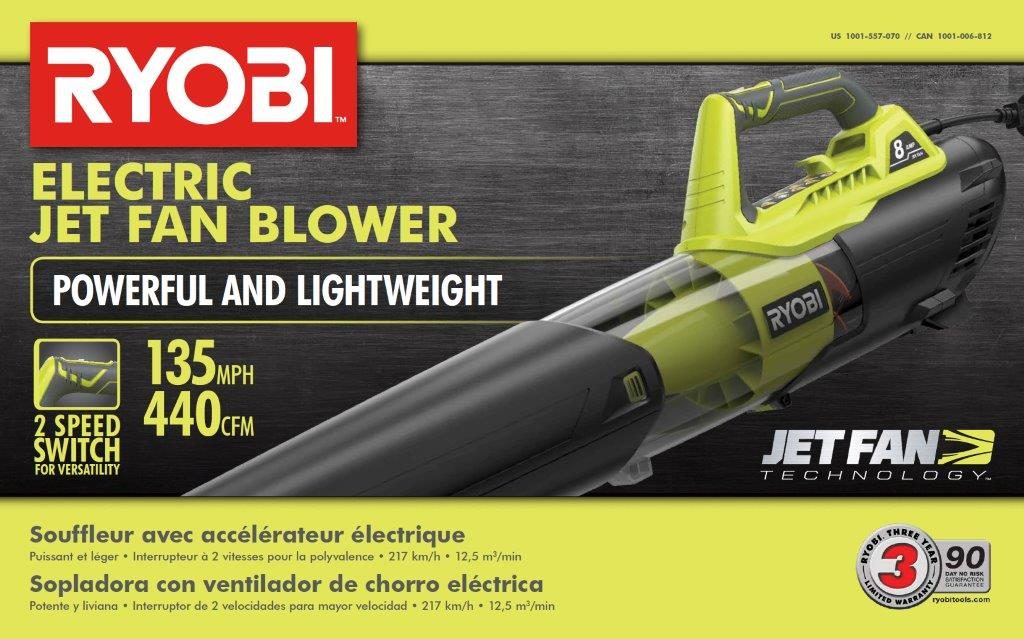 A jet fan blower that bites? You betcha! Ryobi is recalling its defective electric jet fan blowers—not really sure what these are—but I’m guessing it might have something to do with gardening.
The recall has been prompted by a rather high number of reported injuries. Apparently, the blower is prone to breaking in a rather bad tempered sort of way, having already caused 10,681 “incidents”, including 25 reports of minor injuries, such as lacerations to the face, hands and legs. These injuries are caused by fan blade pieces being discharged from either end of the blower. Got that?—EITHER end.
The deal is, according to the Consumer Products Safety Commission (CPSC), the plastic fan inside the blower can break “causing the fan blades to be discharged from either end of the blower tube, posing a laceration hazard.” Read the rest of this entry »
Matrix ClimbMill Malfunction Prompts Recall
November 30th, 2016. By LucyC
A recall of an indoor hill climbing machine called Matrix ClimbMill has been issued, prompted by reports of injuries suffered by people using the device. Ok, so the first thing that comes to mind is why not just go outside? You can suffer the same injuries for a fraction of the cost and inconvenience in the great outdoors—or even the nearest shopping mall. And hey—fall in the shopping mall—you might even be able to sue. No, really.
These Matrix ClimbMill machines are a good deal more expensive that a gym membership or new pair of hiking boots, or possibly filing a lawsuit. Sold by Johnson Health Tech North America and its commercial fitness equipment dealers nationwide, the Matrix ClimbMill retailed for—are you sitting down—between $8,000 and $13,000. I may be wrong, but I think you could actually get primo accommodations in Tahiti for that kind of dough, Joe. The obvious question then becomes, why wouldn’t you? Take that trip to Tahiti, I mean.
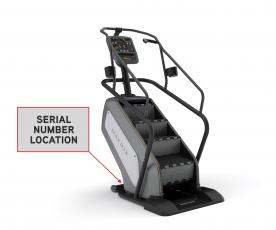
Image: CPSC.gov, Johnson Health Tech ClimbMills serial number location
Oh, but you wanted to get in shape. Without leaving home. So ClimbMill was a seemingly good, though pricey, option…until…
Apparently, the defect lies in the stop/pause controls on the right hand grip. They can malfunction, posing a fall hazard to the user. Yes, stopping is always a problem—not just for hill climbers. In fact not being able to stop could be the reason a person starts using these machines. Can’t stop eating, drinking, sitting on the sofa watching TV… you know. May as well start exercising.
There’s certainly a fair number of folks out there who bought a Matrix ClimbMill stair-step exercise machine—some 10,500 of them were sold from December 2011 through September 2015. Not sure what happened after September 2015. Might be worth finding out.
In any event, the company has received 19 reports of incidents involving the stop/pause hand grip malfunctioning, including eight reports of injuries such as scrapes, bumps and a shoulder dislocation. Ouch! That’s enough to send you back to the fridge.
According to the recall, only ClimbMills that have a right hand grip with the words “STOP” and “Pause” printed on them are included in this recall. The frame serial numbers are located on the bottom front of the base near the power switch. The ClimbMills are black and gray with Matrix printed on the side of the machine. These four-step exercise machines are used in commercial fitness facilities such as health clubs, hotels, apartment complexes, rehabilitation centers, schools, and municipal facilities.
Just in case you own a Matrix ClimbMill stair-step exercise machine, the following frame serial numbers are included in the recall:
Serial Numbers
CS17111100102 – CS17120901766
CS21130800080 – CS21130500062
CS22130602881 – CS22130602863
CS23130800001 – CS23140703749
CS23B131100001 – CS23B140701050
CS24140700001 – CS24150702803
CS24C140800001 – CS24C150200900
CS24H150100001 – CS24H150500049
Now, for the sake of clarity, the Consumer Product Safety Commission is warning all consumer who own a recalled ClimbMill to stop using them immediately and contact Johnson Health Tech North America to schedule a free repair. Johnson is contacting purchasers of the recalled ClimbMills directly.
I still say going on a trip would be better. Heck—just hauling your luggage round the airport could be enough of workout.
The WATCH list: Top 10 Worst Toys for Child Danger
November 25th, 2016. By LucyC
 Well folks, it’s that time of year again. I’m referring to toy shopping. After all, some of the hottest deals for holiday shopping start approximately 2.8 seconds after the turkey’s been devoured. And if it’s you who’s tasked with finding that perfect, most desirable toy this year, there are a few things you might want to be aware of before heading out the door (or to your keyboard).
The consumer watchdog group, appropriately called “The World Against Toys Causing Harm Inc., (WATCH) – has compiled a list of the world’s most dangerous toys that, obviously, parents would be wise not to buy.
As their name indicates, the WATCHdogs aren’t fooling around. They note that more than 800,000 toys have recalled since January 2015, with more than 500,000 of those toys having being pulled from the market just this year. There’s been a 40 percent increase in toy-related injuries from 1990-2011. AND, are you sitting down—WATCH also notes that one child is treated in the US emergency rooms every three minutes for a toy-related injury. More than 60 children were killed in toy related incidents between 2010 and 2014.
Ok—so now I have your attention, and just in time for Black Friday, WATCH has issued a list of their nominees for top 10 toys to be avoided (the names are a bit of a giveaway). Choking hazards seem to feature prominently, as do other serious injuries.
Specifically, Peppa Pig’s Muddy Puddles Family, and the Baby Magic Feed and Play Baby can both, allegedly, provide risk for choking, but neither carries the appropriate warnings. So, if these toys had a warning for choking, would that make it ok to sell them? Just asking.
Then there’s the Kids Time Baby Children’s Elephant Pillow, which also apparently does not have a warning for the risk of suffocation. Again, if it carries a warning, does that make it ok?
The Slimeball Slinger, which, according to WATCH, is a slingshot type of thing that can be fired from over 30 feet. Great. Not surprisingly, it poses a risk of eye injury, never mind family pets, windows and china cabinets.
The Banzai Bump n’ Bounce Body Bumpers allegedly have the potential to cause impact injuries and do not come with protective helmet, knee guards or other protective equipment. Maybe those items are sold separately?
The Nerf Rival Apollo XV-700 Blaster, allegedly has the potential to cause eye injuries.
The Good Dinosaur Galloping Butch was included because it failed to warn that the pointy, rigid tail of the dinosaur can puncture children’s skin.
Peppy Pups, which could cause strangulation in young children due to a pull string measuring 31 inches. Yikes.
The Flying Heroes Superman Launcher also poses a hazard from eye injury from the items launched from the toy.
And finally, The Warcraft Doomhammer made the list allegedly due to its heavy, rigid hammer than can inflict bodily harm if children use the toy as a weapon, (what else is this meant to be used for, given the name?). Apparently the Doomhammer is similar to seen in the video game or in the movie. Is World of Warcraft PG rated? Seriously?
If you’re interested in learning more about these and other potentially dangerous toys, you can view the list at http://toysafety.org/
That about covers if for now. Happy shopping.
67,000 Panic Devices Recalled for Failure to Work
October 12th, 2016. By LucyC
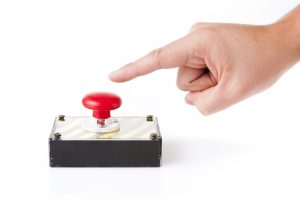 Interesting recall recently—a wireless personal panic device that fails to panic when you need it to. In fact, according to the Consumer Products Safety Commission report, the device can fail to operate altogether in times of crisis, so it “fails” to send a signal to the security system to which it is presumably linked, in case of an emergency. That certainly sounds helpful.
The description is very polite and clearly not meant to cause panic “The wireless personal panic devices can fail to operate, which could result in the device not communicating with the security system if activated in the event of an emergency.” You practically have to read this sentence twice to get the drift. Not alarming at all. (pardon the pun).
So what’s the deal? Does it freeze with fear? Major crises are not in its contract? Who knows. Suffice to say it’s all quite worrying, really. In fact, it could be enough to send you clean over the edge if you’re having or about to have a crisis. It’s also enough to send anyone who purchased one of these for an elderly relative into a state of serious concern. Not good. There you are—or your loved one—in the dark, alone, no way to get to a phone, or contact a passerby or neighbor and the device you purchased in good faith to support you this time of crisis goes: “ah, NO, sorry—not my job.” You can imagine, knowing how completely absorbing all this wearable technology is, that should this thing fail when you need it, you could become more obsessed by trying to get it to work than by the actual event that should have triggered its response.
Never mind the burglar, the chest pain, the mudslide, the 10 car pile-up on your front lawn, the creek that’s turned to class five rapids in your back yard—whatever it may be—the wrist-mounted Interlink device is giving the silent treatment or some kind of error message. And you’re wondering, “did I charge it properly—did I charge it at all? What if I turn it off then on again, or shake it? Oh, but now it won’t turn off, why is it so slow…no wait—there it goes. OMG—why is it so slow?”
Then your thought process is interrupted by the other reality. The emergency. Oh yeah, forgot about that. But maybe distraction is helpful? In any event, there you are in the dark, cold, silence. Just you, and your worthless, wireless personal panic device and the crisis, which presumably is now in full unfold mode. And you didn’t notice.
What are you going to do? Summon the Force? Wait and see if anyone comes? Hope someone else called 911?
Don’t panic—at least there’s the recall, and the fix. If you own one of these Interlogix® wireless personal panic devices, and apparently 67,000 of these devices have been sold across the U.S., the recommendation is that “Consumers should immediately contact their professional security system installer or monitoring company for a free inspection of their personal panic device and a free replacement device for those that fail inspection.” Probably best not to do this immediately—you might want to finish the crisis at hand before embarking on a new one with customer service.
Consumers should contact: Interlogix® at 800-394-4988 Monday through Friday, from 8 a.m. to 8 p.m. PT, email at , or online at www.interlogix.com and click on Customer Service for more information. These devices were sold, through professional security installers and distributors nationwide from May 2014 through January 2016 for about $35 to $50.
Touch Disease: What Happens when your iPhone Goes on Strike
October 4th, 2016. By LucyC
 So where do you start? Perhaps where the disease was first reported, to the best of our knowledge, that is. That might be a good place. Initially, that was among American users, now Canadians are jumping on the defective products bandwagon. If I’m not mistaken, it has also been reported in Europe. I am, of course, referring to the iPhone 6 and 6+ Touch disease. It’s changing the way Apple fans feel about their appendages. And not for the better. Seriously folks.
Touch disease. An interesting term. But how else would you describe a complete non-response from an object that basically functions by touch? It’s a slave to the stroke, swipe and tap. Granted, calling it a disease might be taking things a little too far. But let’s roll with it.
The symptoms? Basically, no matter how often or how fondly you fondle your iPhone, it doesn’t respond. So, you can’t answer your calls, send texts, emails or anything else for that matter. The iPhone has had enough, wants a divorce, and half of the asset base. No, wait, I’m getting confused.
Maybe 6 and 6+ just want some time off, feel used, or perhaps, they want to be made properly. According to the lawsuits, the underlying problem—the cause of Touch disease—is the touchscreen controller chips in the phone’s motherboard. Allegedly, they aren’t properly secured and can malfunction with regular use.
As one tech journalist explains it, in his article entitled “The hell of owing an iPhone 6 with Touch disease” (ok, we are not talking the plague here, just to be clear) … “touch disease” is an iPhone 6 Plus flaw related to “bendgate” in which the two tiny “Touch IC” connectors, which translate touchscreen presses into a machine input, become unseated from the phone’s logic board. It can be recognized by flickering gray bars along the top of the phone, and is associated with intermittent or total touchscreen failure,” (Jason Koebler, Motherboard.com)
This catastrophe could result in thousands of people scouring the streets in search of pay phones (best of luck there), and reading newspapers on the subway to work. It’s also possible that spontaneous conversations between strangers may be reported as becoming more common. Parents may remember to put their children in the car before they leave to drive them to school. Book sales could increase, and Jeopardy could find itself inundated with contestant applications.
Or, Samsung Galaxy could corner the market. But then they have their own problems. Let’s not go there just yet.
Whatever happens, Apple could find itself in hot water over this one. Touch disease apparently presents with symptoms almost as soon as the warranty has expired. Not surprisingly, class action lawsuits have been filed in the US and also in Canada.
The allegations including freezing or not responding to touch commands. I wonder if yelling at it works…
The lawsuits claim that Apple was aware of the problem but, yes you guessed it, did nothing to remedy the problem. What’s that saying—if it’s broke don’t fix it, just keep calm and carry on? Something like that. Looks like that is the strategy here, hence the lawsuits.
So keep calm and carry on folks—join a lawsuit, buy a different phone, get a newspaper subscription—maybe by iPhone 15 Apple will have worked out all the kinks. Holding your breath is not advised.

Find us on


Archive by Category
- Accidents (24)
- Airlines (9)
- Asbestos Mesothelioma (262)
- Automotive (25)
- Celebrity (14)
- Class Action (84)
- Complaints/Comments (15)
- Consumer Fraud (84)
- Contest (2)
- Court of Public Opinion (5)
- Crazy Sh*t Lawyers See (61)
- Criminal Law (4)
- Defective Products (111)
- DePuy ASR Hip Recall (2)
- Discrimination (22)
- Drugs/Medical (248)
- Elder Care Abuse (4)
- Emerging Issues (462)
- Employment (54)
- Environment (52)
- Financial (28)
- Food Illness (15)
- Human/Civil Rights (4)
- Insecurities (5)
- Insurance (16)
- Intellectual Property (16)
- Internet/E-commerce (19)
- lawsuits (161)
- Lawyers (20)
- Lawyers Giving Back (43)
- Lex Levity (10)
- Personal Injury (106)
- Pleading Ignorance (53)
- Real Estate (2)
- Recall (6)
- Scam (3)
- Securities (13)
- Settlement (81)
- Tort Reform (2)
- Totally Tortelicious (81)
- Veterans (11)
- Whistleblower (9)