Author Archive
My Baby Died from Hospital Infection
April 22nd, 2011. By janem
Often I am asked if I have children and I almost always answer ‘No’. But that’s not true: I had a son and his name was Jarret.
Easter isn’t my favorite time of year. Instead, it is the saddest time for me because seventeen years ago this week, my son passed away from a hospital infection. Jarret was only three weeks old when he died so I didn’t even get to know him.
This is the first time I’ve been able to write about him—it has taken this many years to heal. Of course I will never get over his death, but each year does get easier. And his death was the main reason my husband and I fell apart. My husband wanted to sue the hospital for medical malpractice whereas I just wanted the pain to go away.
I don’t remember exactly what happened surrounding his death because it was like I was down a deep, dark hole and couldn’t get out, or maybe I didn’t want to get out. I remember my family doctor coming over to our house and crying with me; he even suggested that we file a malpractice suit against the hospital. In retrospect, maybe this was the right thing to do; maybe it would have decreased the risk of further hospital infections. I can’t help but think if we did file a lawsuit, would stricter hygiene practices have been put into place sooner? Could we have helped prevent another baby from contracting an infection?
Jarret was a pre-term baby so he was more susceptible to developing an infection. But the doctors assured me that he was doing well and I would be able to take him home soon. He never left the hospital. At three weeks, he developed a staphylococcus infection, which is an antibiotic-resistant bacteria that is very difficult to treat.
Knowing that most hospital infections are preventable, my husband was furious. And now, all these years later, I am finally able to think rationally and I’m angry too. What if Jarret’s infection was caused by a doctor or nurse who didn’t wash their hands?
The number of healthcare-associated infections and deaths in the US is staggering: a study published in the March-April 2007 journal, Public Health Reports, said the CDC estimates that there are 4.5 hospital infections for every 100 patient admissions and nearly 100,000 deaths from hospital infection. One study in the UK found high levels of the MRSA bacteria on ward doors, in corridors and on patient’s toilets and telephones. A hospital administrator said, “About 30 percent of the population are carriers of MRSA. Controlling infection is a huge priority for us.”
I have finally been able to talk about my son without falling apart. Now I’m going to write a letter to the hospital where my son died. I hope every hospital considers infections like MRSA their top priority.
Levaquin Side Effects Risky—not Rare—for the Elderly
April 5th, 2011. By janem
 According to the Levaquin manufacturer and even some government agencies, Levaquin side effects are rare. But tell that to possibly thousands of people who have suffered tendon rips and ruptures after taking Levaquin, sometimes for a slight sinus infection. (By September 2010, more than 1,000 reports of tendon problems had been documented.)
Elderly people are at risk for a few reasons. It’s easy to chalk up a torn Achilles tendon to simply old age and overuse; they could be on a number of meds so the finger can’t be pointed directly at Levaquin; they could have other, ongoing problems.
I also found out that Levaquin is over-prescribed and should only be used as a last resort, when other antibiotics fail. So why have I interviewed a number of people (like Marcia, a ballet teacher ) who took it for a minor sinus infection? And by all accounts, their doctors are not aware of Levaquin side effects because they aren’t being told by the drug maker! Sure, we could argue that our health providers should know, but how many hours are there in a doctor’s day to research all the meds they prescribe? I can understand their logic: If it ain’t in the big blue book, it’s OK by me.
I interviewed 73-year-old Carol (not her real name) yesterday—yet another Levaquin victim. (BTW, I –personally–must have interviewed dozens of Levaquin victims in the past few years, so how can the side effects be rare?) Anyway, her story is a typical example of Levaquin’s serious side effects, and how the drug company is getting away with so many injuries…
Carol took the 5-day course of Levaquin in January 2009 and her infection cleared up right away. Then she took it again in May for a bout of bronchitis. “In November I had some trouble with my ankle,” says Carol. “I just figured I had overused it (I live in New York and walk everywhere) and could just walk it off; apparently it’s common to have foot problems when you get older. Close to Christmas I ended up at the podiatrist: he took an x-ray, said it appeared to be inflamed and put me in a walking boot to keep my ankle stable, and sent me to physical therapy…
In September I was at the beach with my friends and I was limping due to a back problem. My friend asked if anything was wrong with my ankle. Then she said, ‘ Have you ever taken Levaquin because I took it and my ankle starting aching right away so my doctor told me to stop taking it—ASAP.’ I’d never heard of such a thing!”
What really amazes me is why so many people still don’t know about Levaquin and its link to tendon ruptures and rips—an injury that is not only very painful, but hard to recover from when you get older…
“Now I find out, through a friend who worked at J&J for years, that Levaquin has a black box warning,” says Carol. “Besides a recall, that’s the worst thing that can happen to a drug.” And potentially the worst thing that can happen to the consumer. (Incidentally, a lawsuit accused J&J of pushing Levaquin on to senior citizens, who didn’t even need the drug.)
“The first time I looked up Levaquin’s black box warning, it was contraindicated for people over 60,” Carol points out. “Now young people are being warned. My friend has a 24-year-old daughter who was given Levaquin and her doctor told her not to run while taking it. Ah hah, now the warnings are for young people too.
All I can prove is that I took Levaquin twice and had tendon problems—I had my entire left foot rebuilt and spent 10 weeks in a wheelchair. But whether I can connect the two—that’s up to the attorneys. However, if I am deemed eligible and can join a class action, then I will.”
Defective Products—Will the World be held Accountable?
January 13th, 2011. By janem
 Wikileaks just got wind of a secret document from Chinese officials regarding the pending Foreign Manufacturers Legal Accountability Act of 2010, or FMLAA. If the bill is passed, China plans to buy “Made in America” products, from toys to drywall, splatter them with lead paint and sell these defective products to countries that trade with the US. Why, you may ask? Because China wants to level the playing field: If the US can sue China under the FMLAA for contaminated drywall and defective toys, “foreign countries” (including Canada and the EU) can sue the US because their “Made in America” products are contaminated with lead paint.
KIDDING! But it may have crossed the minds of unscrupulous Chinese manufacturers…
Last February, Representative Betty Sutton introduced the FMLAA following the Chinese drywall debacle, which came on the heels of other problems with imported products—from baby cribs and toys to auto brakes. This bill will take the Consumer Product Safety Improvement Act of 2009 one step further, to product litigation. It means that foreign manufacturers who ship to the US will have to hire a resident US agent, who will then have to “accept service of process on behalf of such manufacturer or producer for the purpose of all civil and regulatory actions in State and Federal Courts.” No registered agent, no importation.
On Tuesday, January 11th, the Supreme Court was scheduled to hear two cases about the right to sue a foreign manufacturer in the U.S. court system.
In the first case, Robert Nicastro lost his four right fingers in 2001 while operating a machine used to cut metal made by McIntyre Machinery, based in the UK. The machine Nicastro was operating did not meet U.S. safety standards, but was marketed at trade shows across the US for 15 years. Nicastro brought a product liability case against the company in 2003, and McIntyre is arguing that because they are a UK company, they did not have sufficient “contacts” in New Jersey for the state’s legal system to have jurisdiction over them.
In the second case, two young boys, Matt Helms and Julian Brown were killed in a bus accident while traveling to Paris, France for a soccer tournament. The driver of the bus lost control when the Goodyear tire from the bus had its plies separate, causing the bus to rollover. The families of the boys are seeking to hold Goodyear Luxembourg, the manufacturer of the tire, accountable in the North Carolina court system.

Meanwhile, the head of the US Consumer Product Safety Commission seems to be up against a brick wall (pardon the pun) after meeting with her counterparts there about defective Chinese drywall, among other issues. Chinese drywall manufacturers have yet to come to the table for discussions. (According to the CPSC, as of Jan. 7, there were 3,770 incidents reported of defective drywall.)
Perhaps the threat of litigation under the FMLAA will get them talking.
California Labor Law—What’s New for 2011
January 11th, 2011. By janem
Here are a few California labor law perks for 2011. The U.S. Department of Labor decrees that employers grant time off for women to express breast milk. The DOL’s fact sheet is posted here. Male workers are wondering if there is any legislative effort in the works to regarding equal rights in this area…they could always donate an organ and take time off.
SB 1304 provides new leave of absence rights to organ and bone marrow donors. Organ donors may take up to 30 days leave for that purpose and bone marrow donors may take up to five days leave for that purpose. The leaves are with full pay and benefits, except that the employer may require the organ donor to use up to two weeks accrued vacation/sick time and the bone marrow donor to use up to five days vacation/sick time unless doing so would violate a collective bargaining agreement.
Donors are entitled to the same or equivalent jobs when returning from leave. Further, these leave rights are independent of any rights under the Family and Medical Leave Act and the California Family Rights Act.
If you can’t stand the heat, as of Nov 4, 2010 the California Labor Commissioner issued new heat illness regulations, enforceable by CAL-OSHA, that apply to all outdoor places of employment, especially where the temperature exceeds 85 degrees Fahrenheit. Employees must be provided with shade sufficient to accommodate 25 percent of the workforce at one time, cool down periods of no less than five minutes in the shade upon request, as well as one quart of potable drinking water per hour worked.
“High heat” procedures (where the temperature reaches at least 95 degrees Fahrenheit) apply only to agriculture, construction, landscaping, oil and gas extraction, and transportation or delivery of agricultural products, construction materials or other heavy materials except for employment that consists of operating an air-conditioned vehicle and does not include loading or unloading. The new regs are posted here.
Unemployed rail workers are hopeful that California’s high-speed rail project will get the go-ahead; if so it will create thousands of jobs. The “Good Jobs Express Tour” ended, after three days and 400 miles, in Sacramento, where construction trades members rallied with the iron workers to make the case for high-speed rail and candidates, like Jerry Brown, who support it.
When Is Lunch Time? AB 569 amends California Labor Code Sec. 512 to exempt construction workers, commercial drivers, certain security officers and employees of electrical and gas corporations or local publicly owned electric utilities from California’s meal period requirements if those employees are covered by a valid collective bargaining agreement containing specified terms—including meal period—overtime and arbitration provisions.
Have you been misclassified as an independent contractor?
California, among a number of other states, has arranged information-sharing with the IRS in the area of contractor classification. The goal is that incorrect contractor classification will probably be detected and challenged with more frequency. Among the concerns for an employer who engages independent contractors is that the classification, if valid, can avoid a lot of employment and tax regulation. But at the same time, contractor classification can be a hot tamale for litigation by multiple government agencies and workers.
By now everyone knows that you can’t light that joint at work. California Proposition 19 was rejected, which means that employers may lawfully ban all marijuana use, and being under the influence of marijuana, at work. However, California law permits medicinal marijuana use prescribed by a physician.
And one more: Under the FMLA an employee who assumes the role of caring in loco parentis (in place of the parent) for a child receives parental rights to family leave regardless of the legal or biological relationship. The U.S. Department of Labor gives this example: an aunt who cares for a young niece and nephew when their single parent has been called to active military duty or a grandfather who assumes responsibility for his sick grandchild when his own child is unable to care for the child. Also, an employee who intends to share parenting responsibilities with his or her same-sex partner will be able to seek FMLA leave to bond with their child.
The above are just a handful of changes in store for 2011. California employers are advised to review and update employee handbooks and personnel practices, and train supervisors, with the advice of experienced employment counsel or human resources professionals, or a labor law attorney.
Happy Meal Lawsuit: Where Do I Sign Up?
December 29th, 2010. By janem
 Hey Kids, contrary to what those clever folks at McDonald’s (the experts in deceptive marketing) have led you to believe, Happy Meals are not Happy Toys.
The Center for Science in the Public Interest (CSPI) has filed a class action lawsuit on behalf of a Sacramento Mom against McDonald’s, claiming the fast food giant engages in “the unfair, unlawful, deceptive and fraudulent practice of promoting and advertising McDonald’s Happy Meal products to very young California children, using the inducement of various toys.”
Of course Monet Parham (Mom and Plaintiff) knows that she can simply say “No” when her two kids demand a Happy Meal, and likely anticipated a backlash from media and parents suggesting she do just that. But like a gazillion working parents, she is sick and tired of having to say no over and over again. If not for McDonald’s “Neuromark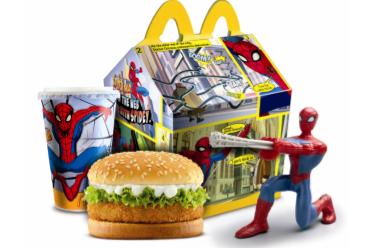 eting” (yep, that’s what they call it, getting into your kid’s head) she probably wouldn’t mind them having a Happy Meal now and then.
But McDonald’s aggressive marketing tactics have got to be reigned in. Any corporation that has so much impact on a child’s health must also have a moral responsibility to ensure they are serving healthy food and not paving the way for toddlers to become obese before they turn into teenagers.
A lot of thought—which spells mega-profit—is behind the marketing of Happy Meal toys. According to the CSPI lawsuit, QSR (quick service restaurant) magazine quoted Roy Bergold, Read the rest of this entry »

Find us on


Archive by Category
- Accidents (24)
- Airlines (9)
- Asbestos Mesothelioma (262)
- Automotive (25)
- Celebrity (14)
- Class Action (84)
- Complaints/Comments (15)
- Consumer Fraud (84)
- Contest (2)
- Court of Public Opinion (5)
- Crazy Sh*t Lawyers See (61)
- Criminal Law (4)
- Defective Products (111)
- DePuy ASR Hip Recall (2)
- Discrimination (22)
- Drugs/Medical (248)
- Elder Care Abuse (4)
- Emerging Issues (462)
- Employment (54)
- Environment (52)
- Financial (28)
- Food Illness (15)
- Human/Civil Rights (4)
- Insecurities (5)
- Insurance (16)
- Intellectual Property (16)
- Internet/E-commerce (19)
- lawsuits (161)
- Lawyers (20)
- Lawyers Giving Back (43)
- Lex Levity (10)
- Personal Injury (106)
- Pleading Ignorance (53)
- Real Estate (2)
- Recall (6)
- Scam (3)
- Securities (13)
- Settlement (81)
- Tort Reform (2)
- Totally Tortelicious (81)
- Veterans (11)
- Whistleblower (9)