Author Archive
Testosterone: Mojo for Hire or in Bed with a Liar?
April 21st, 2014. By Hunter West
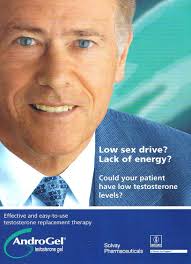 Funny thing happened on the way to the fountain of youth: the road was littered with lotions and potions, Botox and fillers, false claims and false tits—and, of course, facelifts. Even vaginal rejuvenation. Everything a gal could want for trying to hold onto what nature will ultimately take away—regardless of whether a false veneer of youth is gotten and paid for, or not. But left in dust behind every woman of the desperately-clutching-to-twenty-nine set was someone who did not have such readily available magic…such opportunity: the common, and aging, man (well, Bruce Jenner and David Hasselhoff plastic surgery rumors aside.)
Ah, but the conundrum was worse than imagined. Never mind that men may have felt excluded from the pulled face and tummy tucked echelons of society. Another quandary was rearing its ugly head, tucked away in the offices, cubes and conference rooms of Big Pharma: the very product that could tout itself as the male fountain of youth had only limited reach.
The product? Testosterone.
Testosterone: Who Needs you Baby?
Ok, there’s little doubt that the current debate over low-testosterone has given rise to the broader issue of need vs. want. Medical necessity vs. vanity.
Is this something I truly need, or am I just being sold a bill of goods…nothing more than a well-marketed lie?
The pharmaceutical industry (aka Big Pharma) takes up a huge footprint in American commerce. Pharmaceuticals have helped us live longer, free of disease. Ongoing research—and the treatments that follow—has succeeded in elevating our lives and collective life expectancy well beyond the point at which our forefathers checked out for good.
But where will all this end? And will Big Pharma remain unsatisfied until they have a pill for every small, niggling thing that emerges as the natural process of aging?
Need to get up several times at night to go to the bathroom? There’s a pill for that. Wrinkles? There’s Botox for that. A middle-aged man with flagging energy? There’s a testosterone topical gel for that…
It seems—at least through the lens of the pharma co’s—the fountain of youth can, and should, be found at your friendly, neighborhood drug store.
On the testosterone front, there is fierce debate. And with good reason. Testosterone supplementation, originally approved for conditions such as hypogonadism (undescended testes) and extremely low levels of testosterone (or no testosterone at all), is and has been for decades a legitimate treatment for men suffering from low testosterone.
Like any and every drug on the market, there are testosterone side effects. Testosterone can spur the production of red blood cells, and in some cases a level of testosterone that is too high can lead to cardiovascular issues such as testosterone stroke or testosterone heart attack. But drugs, medical devices and treatments are approved by the US Food and Drug Administration (FDA) based on the mantra that so long as a drug’s benefits outweigh the potential risks for the intended constituency of patients, then the drug is appropriate for the market.
Manufacturers are always lauding their drugs as ‘safe and effective.’ But the FDA talks only in terms of ratios involving benefit v. risk. The risk of side effects is an unspoken given.
Thus, testosterone. For patients with hypogonadism or otherwise extremely low levels of testosterone, the benefits of supplementation to elevate quality of life can be profound, and well worth the risks.
Testosterone supplementation does have its place. But should it be used to treat the natural symptoms of simply getting older?
Low-T: It’s a Thing!
Most people not associated with pharmaceutical companies that stand to make huge profits through the identification of new markets, would probably agree that it should not. But that doesn’t stop an already-wealthy industry from the need and greed to be richer still, by way of a limitless quest for new markets in order to flog products well beyond the uses for which they were approved in the first place.
You don’t have to stretch too far to imagine that some marketing whizzes in a Big Pharma back room—their own testosterone racing—sniffed around for new testosterone markets and came upon a Venn diagram showing the sweet spot where age-induced Low-T intersects with an ever-growing baby boomer population. The solution! There it was! The Low-T Low Hanging Fruit! Yes, indeed there was a broader market to be tapped that could deliver broader market saturation: the aging boomer whose energy is flagging, breasts are sagging (probably caused by another drug), overweight, a bit lethargic, and not quite as prolific in the bedroom as they used to be. Tough to get to the arena for that late-night pickup hockey game, when you’re falling asleep after dinner…The storyboards were already starting to fly off the pads of the wannabe Art Directors!
But what’s even better than identifying that hypothetical sweet spot in a marketing plan? Finding the reality that…men actually CARE about this stuff now. Suddenly they’re not satisfied with slowing down at middle age. Self-improvement suddenly matters, and the pursuit of the Fountain of Youth is no longer reserved for women.
That’s right. Let’s tell the men we have their back, with products that can boost their energy, help them lose weight, help them think more clearly, and return them to hero status in the bedroom.
Next thing you know ‘Low-T’ (as marketing catchphrase) was born. And now Low-T has become ‘A Thing’.
Thing that Makes you go Hmm?
A testosterone lawsuit recently filed by a plaintiff who succumbed to flashy marketing and at 61 was hospitalized with blood clots, zeroes in on the origins of the Low-T phenomenon, insights gleaned from a revealing expose appearing in The New York Times last fall.
‘Selling That New Man Feeling’ (New York Times, 11/23/13) paints a vivid picture of just how we got here—and how plaintiff Roger Gibby found himself in the hospital with blood clots in his legs and lungs.
“None of the testosterone products have indications for weight loss, increasing energy or improving mood,” said Andrea Fischer, a spokeswoman for the FDA, in comments published in The New York Times. In other words, testosterone products were never intended for anything other than hypogonadism and extremely low levels of testosterone that required medical intervention.
Author of Low-T Quiz: it’s a “Crappy Questionnaire”
And yet this incredible market has risen like a Phoenix—with annual sales in the billions of dollars—built on a foundation of male vanity, intensive advertising, dubious need and a $40,000 questionnaire jotted down within 20 minutes on toilet paper during a bathroom break.
Say what?
Dr. John E. Morley, director of endocrinology and geriatrics at St. Louis University School of Medicine who has previous ties to the pharmaceutical industry through paid speaking engagements, was asked by Organon BioSciences, a Dutch pharmaceutical company, to come up with a screening questionnaire that highlighted symptoms common to older men with low testosterone. He was told to keep it short and make it somewhat sexy.
In exchange for 20 minutes in the bathroom, Morley’s employer received a $40,000 research grant. And those 20 minutes in the bathroom has gone on to become an online staple now known as the ‘Is It Low-T Quiz.’
Dr. Morley admitted to The New York Times that it wasn’t his best work. ‘I have no trouble calling it a crappy questionnaire,” Morley told The Times. “It is not ideal.”
That quiz is now utilized by many of the biggest manufacturers of testosterone supplements. The idea is to attempt a self-diagnosis of ‘Low-T’ online, then bring that to your doctor to lobby for testosterone supplementation. And many doctors have bought into the idea of testosterone as a viable method for restoring sagging energy levels.
That’s not what testosterone supplements were approved for. But then, doctors have the legal, moral and ethical authority to circumvent FDA approval parameters and prescribe products for use off-label.
Here’s the question: have doctors bought into the hype, in the same fashion as their sagging, flagging male patients searching for that fountain of youth?
Who’s Buying it?
There is little doubt that manufacturers of testosterone supplements identified a market and exploit it for all its worth. In its statement of position, the Gibby Low-T lawsuit picked up on the naming of two AbbVie executives by Medical Marketing & Media as “the all-star large pharma marketing team of the year,” for 2013. The New York Times noted that the plaudits were for promotions involving AndroGel and unbranded efforts to advance Low-T.
“It didn’t hurt that baby boomers have proven less than shy about availing themselves of any product that they believe will increase their quality of life,” an article in the magazine said. AbbVie’s unbranded site DriveForFive.com, was lauded for encouraging men to have regular checkups and to ask their doctors about five tests, among them checks for cholesterol, blood pressure—and testosterone.
AbbVie takes the high road, officially stating that all it’s doing is making men aware of the potential for low testosterone, the potential benefits of testosterone supplementation, and the importance of starting a dialogue with their doctor on the issue.
But even the availability of the on-line screening quiz, dubbed ADAM, flies in the face of a position maintained by The Endocrine Society, which recommends against screening of the general population for Low-T. The Society makes the point that testosterone levels in most men fluctuate a great deal depending on several factors, from sleep levels to stress, or time proximity to the latest meal consumed. Even the time of day, or if a favorite sports team is losing, can affect testosterone levels.
As such, a single testosterone reading may not indicate a problem. But that hasn’t stopped Big Pharma from advancing Low-T to status of ‘A Thing’ that brings in billions of dollars each year. And one study says that men have bought into it so conclusively, a full 25 percent of men who were given testosterone prescriptions did not have the requisite blood work to back that need up.
Hence, the suggestion that doctors have bought into it, too.
This has fueled the debate between those who believe testosterone is not the pariah many make it out to be, vs. the anti-testosterone camp who want supplements banned.
Both sides have points. For some men, testosterone supplementation is both necessary and a godsend. And as has been historically the case prior to the recent creation of the ‘Low-T’ phenomenon, testosterone supplementation as a response to a real medical condition such as hypogonadism, or extremely low levels of testosterone based on sound medical testing and diagnosis, is indeed appropriate.
Just as there are risks associate with advanced levels of testosterone, so too are there risks associated with seriously low levels.
However, helping to fuel the debate over testosterone side effects on the too-high side, is the proliferation of the Low-T market that suggests there are a lot of men out there having been persuaded to adopt testosterone supplementation in the absence of sound, medical need.
And that puts them at risk for testosterone stroke, or testosterone heart attack, needlessly—perhaps all because Big Pharma saw a market with potential dollar signs, and went to work…
Proponents of testosterone as a means to foster men’s health have found fault with some studies—and one in particular—that paint testosterone supplementation as a villain.
There have also been accusations of fear-mongering levied against the media and anti-testosterone advocates, who are accused of needlessly inflating worry and blowing the issue out of proportion.
In contrast, there are those who accuse the testosterone industry and pro-testosterone advocates of ‘disease-mongering,’ by promoting a need—a problem—that doesn’t really exist for the general population.
In so doing, testosterone is flying back and forth unabated, as tensions continue to rise amid a debate that tries to differentiate between the natural processes of aging vs. the wisdom to intervene needlessly in such a natural process.
Medical need is one thing. Exploiting a potential market is quite another.
What is the need, really? And do we put our faith in an industry, with already deep pockets and looking to make them deeper, that tries to convince us that we need this stuff?
I don’t think so. I’ll take the unbiased, unvarnished opinion of my doctor who stands to reap no reward other than the realization of a healthy patient who thinks it’s okay to grow old gracefully. But I’ll be damned if I’ll give money to a pharmaceutical company claiming to have my best interest at heart, because they don’t. They have a conflict. If they convince me I need testosterone, they make a buck.
A long time ago I was taking a business course, and the course lead asked of the room, the reason why people go into business. To fulfill a dream? To help your fellow man? To make the world a better place? To leave behind a legacy?
Nope. All wrong answers.
The reason—is to make money. Profit. That’s it. Everything else is secondary.
It’s enough to get my testosterone racing—what little I have left…
Keeping Your Private Parts Private Online
April 9th, 2013. By Hunter West
 There is little doubt the evolution of communication towards electronic or social platforms such as email, Facebook, LinkedIn and Twitter has effectively taken over our lives. Social networking, while great for reconnecting with long-lost friends or career networking, can also carry substantial risk–and often the fallout is nothing short of devastating.
While figures are not yet available for 2012, The Wall Street Journal (WSJ 3/15/12) reported last year that incidents of identity theft increased 13 percent in 2011 over the same period the year before. That translates to 12 million Americans.
What’s worse, it can take, on average some 30 hours and about $500 to resolve online identity fraud, according to TransUnion, a credit-reporting firm.
Think of it. 30 hours represents almost an entire week’s worth of lost productivity – so the financial costs can be even higher. And beyond examples of simple identity theft, are cases that are far more complex and damaging, for which legal representation is often necessary.
As our use of smart communications technology and social media increases, it’s useful to be aware of who is at risk for identity theft: 7 percent of smartphone owners were victims of identity theft in 2011, and are considered one-third more likely to fall prey to identity theft than the general population.
The reason, is that smartphones are actually mini-computers–but users tend not to protect their smartphones with passwords and other security features, as they would their PCs or laptops. According to a recent survey, 62 percent of smartphone users fail to use a password to access their home screen.
You might be surprised to know that according to a survey conducted by Javelin Strategy & Research, the business social network LinkedIn had the highest identity-theft rate at ten percent, vs. five percent for the general population. The rate for Google+ users was 7 percent, 6.3 percent for Twitter and 5.7 percent amongst users Facebook. Note that these figures are all about a year old and are probably much higher today. Facebook, says Javelin, is probably the lowest due to the availability and awareness of those much-maligned but highly effective privacy settings.
On the other end of the scale, LinkedIn is probably high because users perceive LinkedIn as a business platform and take fewer precautions, given an assumption you are connecting with like-minded business people rather than spammers, or worse.
And here is another sobering thought–you will recall that large security breaches involving Sony, Epsilon and RSA together with several government entities in 2011 represented a whopping 67 percent increase over the same period in 2010.
Ways you can protect yourself include keeping your antivirus software updated on all devices, the consistent use of strong passwords (featuring a mix of letters, numbers and symbols), and the use of different passwords for each account. And avoid storing personal information on a mobile device. All it takes is the laying down of your Blackberry or iPhone for a split second in a crowded venue and suddenly, it’s gone – with all your personal information along for the ride.
Even emails can get you in trouble, by inadvertently hitting ‘Reply all’ instead of just ‘reply.’ In so doing you may have sent sensitive, hurtful or even libelous information out to the masses.
There is little doubt that electronic communication and social networking are here to stay, as is the growing e-commerce. Protecting your identity is of paramount importance.
Big Pharma’s Big Credo: Money is King
September 8th, 2011. By Hunter West
 A long time ago, in a different life, the instructor in a business course I was taking asked the class the Number One Reason why people go into businesses. The answers varied from creating jobs, to bringing new products to market, to the prestige that can come with being a business owner, to ultimately helping mankind and make the world a better place.
As I sat there, listening to all of this, it suddenly struck me what the basic foundation for any business enterprise was, is and always will be.
“Making money,” I blurted out.
And apparently, I was right.
The successful former businessman in his own right, the founder of his share of multi-million dollar corporations, maintained that different businesses would have different credos, goals and objectives.
But all of that takes a back seat to profits. You don’t have any of the other stuff—prestige, job creation, R&D, charitable good works—without the money.
It’s all about the money, stupid. Show Me The Money.
Think about that the next time you take that pill for the umpteenth time, or undergo that hip replacement, or accept that pacemaker.
The drugs, the devices available to prolong our lives in the modern age are, in many ways, nothing short of remarkable. They really are. And I like to think that the doctor, who prescribes all this stuff to me, truly has my best health and welfare uppermost in his mind.
But you have to wonder at a regulator like the US Food and Drug Administration (FDA) that is partially funded by the industry over which it is charged to police on our behalf.
You have to wonder about the various loopholes and shortcuts that allow manufacturers to bring ‘promising’ new product to market faster—with minimal testing—only to have a lot of these drugs and medical devices turn out to be hugely problematic, if not outright dangerous.
You have to wonder at an FDA that acknowledges side effects as a necessary evil to the ingestion of chemicals whose benefits outweigh the risks for the largest segment of the population (there is no such thing, therefore, as a completely safe drug…).
You also have to wonder, the next time your grandmother breaks out her pill organizer and proceeds to ingest an insane number of different-colored pills…
How many of those pills are actually prescribed to treat an actual condition, v. the number that are needed to counteract the side effects from other pills?
And I wonder just how important that is to the drug companies, and their respective bottom lines? (And, I’m not the only one who’s wondered–I’m recalling the documentary “Big Bucks Big Pharma” from a few years ago.)
Their profits…
Pharmaceutical companies, and medical device manufacturers appear to be licenses to print money—especially with the large Baby Boomer sector approaching retirement. There’s so much money, in fact, that the cost of defending lawsuits is simply a cost of doing business.
There’s that word again. Business. Profits, and revenue, and dividends for shareholders. How important is it for drug companies to know their products are helping us to live longer, v. the money they are making off of us to their ultimate benefit and that of their investors?
I know what my business instructor, all those years ago, would say…
There’s nothing wrong with running a business—with making profits. That’s what business does.
What bothers me about the pharmaceutical and medical device industries, is that the consumer doesn’t have a choice…
Need a car? You can buy GM, or Toyota, or Honda, or Chrysler Fiat, or Mitsubishi…
If you need a TV, there’s Samsung, or LG, or Sony, or…
Or maybe you don’t want to buy one at all…
The difference with prescription drugs and medical devices is that more often than not, we don’t have a choice. We are mandated to take it, conscripted to do it. We rarely have the capacity to choose. And, if we’re lucky, the one choice we might get is to go for the generic version.
I’m at the age now where I’m on a low-dose aspirin a day, to keep my blood from getting as thick as my own head. I’ll probably be doing that for the rest of my life. But I’m also on a statin for high cholesterol, and I hate it. The sooner I can get my bad cholesterol in check by my own hand—diet and exercise—the happier I will be, and I can kiss the statin goodbye.
Ultimately, I don’t want to take something that I don’t need. But beyond that, I loathe being made to take something against my free will—something with which Big Pharma is laughing all the way to the bank.
I’ve always maintained that health—products, devices, drugs, health care of any kind—should be not-for-profit, free from greed and the blind pursuit of revenue.
But then, it wouldn’t be America, would it?
When Cancer Research is Faulty, is it Fraud?
August 30th, 2011. By Hunter West
 Cancer is so widespread that it touches us all in some way. Either you have lost a loved one or friend to cancer, you know someone who is afflicted—or you, yourself might be in the throes of battling some kind of cancer. It’s everywhere. Without getting into the debate as to why cancer rates appear to be rising, at least we can take solace in the research that we hope will one day result in a cure.
But perhaps that day may never happen. And recent events involving cancer research and fundraising have raised some doubts as to the effectiveness—and worth—of the cancer machine.
The New York Times recently chronicled the rise and fall of Dr. Anil Potti, a cancer researcher at Duke University Medical Center. Dr. Potti and colleagues had undertaken promising studies on genomic testing for molecular traits of cancerous tumors, and determining which chemotherapy treatment would be most appropriate.
Lung cancer patient Juliet Jacobs had a lot to gain and everything to lose, to that promise. Jacobs was part of the Duke University study, hoping for a breakthrough that would prolong her life.
Instead, the promising research was discredited due to the discovery of errors. Four gene signature papers were retracted, three trials at Duke were shuttered and the lead researcher resigned.
Juliet Jacobs died a few months following treatment that promised much but proved ineffective. Her family has launched a lawsuit, as have the relatives of other similarly doomed patients who had high hopes from the Duke research, since dashed.
Then, there’s the controversy in Canada over the allocation of fundraised dollars to research, compared with other needs of an apparently ravenous cancer machine.
A consumer advocacy arm of the Canadian Broadcasting Corporation last month looked at the financial records of the Canadian Cancer Society, following a complaint from a cancer researcher that research dollars appear to be harder to get—even though more people are Read the rest of this entry »
Asbestos: Safe Enough to Sell, So Long as it Goes to India
August 15th, 2011. By Hunter West
 The Canadian government was talking out of both sides of its mouth recently when it decided to reject a recommendation from Health Canada, the Canadian answer to the US Food and Drug Administration (FDA), to add asbestos to the so-called Rotterdam list of dangerous substances.
That’s partly because Canada still mines and exports the stuff. It’s worth about $90 million dollars a year to the economy of Quebec alone. And the Prime Minster said that as long as there are people willing to buy it, Canada would export it.
Well, Stephen Harper has a point. There are countries around the globe—especially India—that consider asbestos to be a cheap and handy commodity for the building trade. If the rest of the world is taking it out of their buildings, they don’t seem to care.
And Canada is not prepared to take a moral stand, as some countries have done, by either placing asbestos on a blacklist, or banning its use altogether. The US hasn’t banned it, either. 
It does serve to illustrate that in the shadow of big business, health often takes a back seat.
Drug companies have for years been doing an end run around safety in the quest for profits and revenue, to the point where they have the FDA—described by some as largely a political entity—largely in their back pocket. The FDA, for its part, has never required a drug or medical device to be completely safe before it is allowed on the market. So long as the benefits outweigh the risks for those to whom the drugs are directed and intended, then all is well.
So long as a drug, or medical device company makes more revenue from a drug than the money they lose defending it, then…well…that’s just good business, isn’t it?
In Canada’s case given the asbestos issue, the reasons why the feds rejected the recommendation from their health regulator are both economic and political.
First, the sudden ending of a $90 million dollar-per-year industry would have a huge impact on the Quebec economy, as well as the country as a whole. Canada, while geographically larger than the US, is sparely populated in comparison.
From the political side, the largely French-speaking Quebec has been waffling over its wish to disenfranchise with Canada and go it alone as an independent, sovereign state since the beginning of time. At the moment, the separation flame has cooled and the government wishes to avoid doing anything that may turn up the heat.
And—the governing Conservative Party is hoping to take Quebec seats away form the New Democratic Party in the next election, which is five years away. The NDP took a whack of seats away from the Bloc Quebecois—a separatist party—this past May, and the governing Conservatives see that as an opportunity.
So let’s do nothing to upset Quebec. So what if Heath Canada urges a ban on asbestos? It comes from Quebec. So asbestos mining stays, and asbestos continues to be exported.
Besides, Health Canada notes that while it can’t say asbestos is safe (nobody can), it does admit to the fact that in its view chrysotile asbestos—which is the stuff that comes from Quebec—is not quite as destructive as other forms of asbestos. Of course, the feds have seized on that point, too.
Here’s the thing. If asbestos is so bad, why has that same Canadian government been removing asbestos from Canada’s Parliament buildings, and from the official residence of the Prime Minister?
The Prime Minister was asked about that very contrast. His response? As long as people are willing to buy it, the government won’t stand in its way.
“This government will not put Canadian industry in a position where it is discriminated against in a market where sale is permitted,” Harper said.
And yet three years ago, the stated in an editorial “Canada is the only Western democracy to have consistently opposed international efforts to regulate the global trade in asbestos. And the government of Canada has done so with shameful political manipulation of science.”
It should be noted that all countries participating in the Rotterdam Convention met June 20th. Canada has yet to formulate a position on asbestos, and presumably will continue to waffle for at least the next five years.
If someone came up with a way to replace that $90 million dollar windfall every year with something safe and clean, then watch it happen.
If drug companies could make just as much, if not more from drugs that are completely safe, then watch it happen.
But as long as there are lobbyists making sure that drug and medical device manufacturers in their districts are happy and healthy—and as long as there are emerging countries ready and willing to buy a product that carries both health risks for the customer, but also political and economic risks for a government with an eye towards re-election, nothing will happen.
Asbestos will continue to be mined, and exported. Drugs and medical devices will continue to be marketed with risks both known and unknown.
It’s just business. It’s a democracy. It’s civilization. And we’re all so very, very civilized.

Find us on


Archive by Category
- Accidents (24)
- Airlines (9)
- Asbestos Mesothelioma (262)
- Automotive (25)
- Celebrity (14)
- Class Action (84)
- Complaints/Comments (15)
- Consumer Fraud (84)
- Contest (2)
- Court of Public Opinion (5)
- Crazy Sh*t Lawyers See (61)
- Criminal Law (4)
- Defective Products (111)
- DePuy ASR Hip Recall (2)
- Discrimination (22)
- Drugs/Medical (248)
- Elder Care Abuse (4)
- Emerging Issues (462)
- Employment (54)
- Environment (52)
- Financial (28)
- Food Illness (15)
- Human/Civil Rights (4)
- Insecurities (5)
- Insurance (16)
- Intellectual Property (16)
- Internet/E-commerce (19)
- lawsuits (161)
- Lawyers (20)
- Lawyers Giving Back (43)
- Lex Levity (10)
- Personal Injury (106)
- Pleading Ignorance (53)
- Real Estate (2)
- Recall (6)
- Scam (3)
- Securities (13)
- Settlement (81)
- Tort Reform (2)
- Totally Tortelicious (81)
- Veterans (11)
- Whistleblower (9)